vyv_cox
Well-Known Member
I expect he is to direct competition but that does not include Danforths.Of course Peter Smith couldn't be even a teeny weeny bit biased, could he?

I expect he is to direct competition but that does not include Danforths.Of course Peter Smith couldn't be even a teeny weeny bit biased, could he?
So what are the holding characteristics of a hereschoff anchor on a 2:1 scope in rock or weed? Or shall I just make an educated guess that holding in rock/weed is so variable that you cannot make a reliable claim, which then must call into question the wisdom of anchoring in rock/weed at all. It would then fall into the realms of seamanship and wise skippers should know that if their plan A needs a plan B based on anchoring in rock, then plan A is no longer viable. If an anchorage is full, go to your plan bThe only figures are for a Mk 1 and the Mk 2 would produce similar figures for rocks, weed and cobblestone. You will find that when anchoring in a busy anchorage you do not always have a choice of where you anchor, or the sea bed is marked as mixed. In some countries the charts are based on incomplete surveys as regards new coral heads, weed beds and debris in particular. Additional warp is not going to help a modern anchor hold in heavy weed or rocks, at best you might get lucky and get the anchor jammed betwween 2 rocks, but if it's not a real tough anchor, it will gent bent as a result. That's why commercial anchors are all thicker in terms of shank and flukes.
No anchor is perfect, and the Herreshoff is not too good in sand, but none of the modern anchors can function in any type of sea bed without getting bent in the case of rocks, or simply failing to reach the bottom in the case of weeds. The Bruce is closer than most and is OK, but not good in rocks, but hopeless in even light weeds. It can't hold with a 2 to 1 rope rode but might start to hold with 3 to 1 of rope. In many cases of sudden local winds or squall line related incidents there is no time to join the Panama canal lines together or pull some monster heavy storm anchor like a ships anchor out of the bilges, so you will be stuck with using the 2 anchors on the bow and their associated rodes.
Don't forget that most sailors who really know how using just one anchor in bad conditions can suddenly turn out to be a bad idea, often due to a patch of weeds, plastic bags, clumps of coral, tin cans and other types of debris not marked on any chart, will be using 2 anchors, and it's the combination of a Herreshoff with a Danforth, Spade or genuine CQR that is the real class act in ultimate holding power terms.
Many countries including the UK have anchorages that are open to a greater or lesser extent, or have too much fetch to be safe in strong winds. You can easily be forced to leave in a hurry when a low pressure or tropical disturbance passes by on the wrong side to that in the forecast. You then have to get into the new lee, and anchor up in what might well be a poor holding area in a much greater depth than normal. If you are going to get involved in more serious cruising you do need a selection of anchors, including a spare and a few small ones for the dinghy.
Yes, the purpose of this thread is a private asylum for one poster - facts or reality not requiredWe seem to be in danger of sharing actual knowledge rather than trolling wild statements and claims.
You certainly haven’t convinced me to change my solution and wonder if your proposed lecture would change anyone else’s ideas…..

So what are the holding characteristics of a hereschoff anchor on a 2:1 scope in rock or weed? Or shall I just make an educated guess that holding in rock/weed is so variable that you cannot make a reliable claim, which then must call into question the wisdom of anchoring in rock/weed at all. It would then fall into the realms of seamanship and wise skippers should know that if their plan A needs a plan B based on anchoring in rock, then plan A is no longer viable. If an anchorage is full, go to your plan b
Based on your conclusions that a) people only use the anchors on their bow, b) you don’t have time to deploy a locker stowed anchor in a storm and c) your herreshoff is too valuable to come out of the locker, I wonder if sitting down with a good cup of tea and reviewing the thoughts you have shared on this forum might save you some cash? You certainly haven’t convinced me to change my solution and wonder if your proposed lecture would change anyone else’s ideas…..
At a boat show a couple of years ago I was talking to a very experienced yachtsman called Don Street, who has cruised widely in 'Iolaire', and he told me the best all-purpose anchor is the Herreshoff anchor.
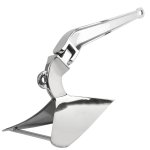
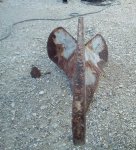
I had never heard of it before, and I have never seen one in this country. I have googled it and it looks like a fisherman anchor with extra large flukes.
Anyone here tried one? Any good?
<snip> If you are forced to go modern because you feel the image of your boat has to invole a new generation anchor, the Excel plow seems OK, as it's a copy of a Delta with bent edges.
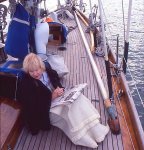
PS: If you look at the picture below, the Herreshoff is mounted just starboard of the Bow.
OFF TOPICThe worst anchor for shank bending is probably the humble Danforth, which TNLI appears to be quite keen on - I have seen so many here that have been bent like a pretzel with not a lot of force when folk are retrieving them.
Edit later on, after @vyv_cox post #75 below - I should have clarified this to say mostly generic Danforth knock offs, not the genuine Danforth.
Perhaps you could enlighten us about these anchors with weak shanks. No new generation steel anchors that I know of have unhardened shanks, other than those that derive their strength from having three dimensions. The best of the SHHP ones are made from seriously strong grades that far exceed what is provided for HHP, although even there Delta is an excellent heat treated grade.
I cannot recall hearing of a broken shank on any modern named anchor and bends are very rare indeed. So evidence please.
It’s statements such as these that bring your ‘opinions’ into complete disrepute. What on earth do you mean by ‘just as good’? Where’s your evidence for ‘sets or resets slightly faster’? Under what conditions? What seabed? What scope? What depth? (Required scope and depth are not simply related). Slightly lower holding power in what seabed?The Lewmar Delta is just as good as a Lewmar CQR, and does set or reset slightly faster, although with a slightly lower final holding power.
Cutting them up and testing them is exactly what I do. Once again you present your opinion as facts. The best modern anchors have astonishingly strong shanks that will stand up to massive abuse.There is no way of knowing what most modern anchors are made of, as no one seems to be drilling holes in them and sending off a sample to a lab. All you have a web site and advertising claims of what they are supposed to be made of. All of them except the Spade seem to be light weight modified copies of existing designs.
They are not too common in the UK, and the Lewmar Delta still seems to be no 1. Never seen a picture of a Delta that was bent and they do seem to tollerate a certain amount of weed, which can be a serious problem with any non plow anchors and it's that weed that is the main cause of unexpected dragging.
Oddly enough if you consider how popular the genuine CQR and Herreshoff are in the very difficult anchoring conditions in the Pacific North West, not one picture of either type shows one bent or broken. The only picture of a broken and bent CQR was of the very first cast Iron version that is worth avoiding, (It's the one with 1/2 lb wight marks), luckily I've got an almost new genuine steel version.
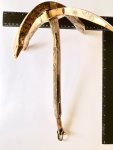
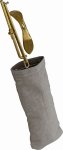
Alas my folding Herreshoff is probably made of recycled cast Iron, so will rust very quickly, (Good quality cast Iron that has a smooth surface does not). I've decided it's the best version of the Herreshoff available, but will weld it in position so it will be just a 2 part anchor and stored on deck clamped to a stanchion like one class of RNLI boats that carry an Admiralty fishermans.
One odd thing I can't understand about replies on any of the anchor threads is why boaters insist that only one main anchor is the way to go, when it defintely is not the way to go in a storm. It's the combination of 2 different anchors, with one good for some weeds and another good for cobblestones or rocks. In the real world you often have to use anchorages where the holding is listed as moderate and the bottom as mixed. I've used a lot of anchorages like that and most boats were using 2 anchors, normally a CQR or Delta and some type of cobblestones and rocks anchor. That seemed to be either a Herreshoff or some type of fishermans, or a Bruce if it was a US flagged boat in particular.
Most local boats used a grapnel rather than a fishermans or a Herreshoff, and a Danforth or a CQR copy. Grapnels and Danforths are both cheap, although not so good in a storm as they are easily bent.
I was tring to sell my small bar type fishermans and a red folding grapnel, but a chap that came around to look at them noticed they were not in the best condition, and made an offer for a Spade I was going to restore that I could not refuse, although that was because the hot dipped galvanising is going to cost half the cost of a new one!! I did take a look around for a good used Delta, but they seem to be unobtainium at a sensible price.
Double anchor the complex way, (I do not use this method):
How to Set a Double Anchor | Cruising World
Double anchor the simple way:
Boat Anchor Tips - How to Set Two Anchors in a "V" Pattern - YouTube
Note the 10 to 1 rode is for rope, not chain and anyone that uses 2 anchors of the same type has not done their homework, cos you really do need to have 2 different anchors when the bottom is marked mixed or unknown. A Delta or CQR and a Danforth that I used to use is no good in cobblestones or Rocks, A Delta or CQR and a Bruce is good for anything apart from moderate or heavy weed. BUT having done my homework, I'm convinced the best all bottom pair is a Plow, (A genuine steel CQR in my case , AND a Herreshoff. That should work in almost any situation or type of bottom. It will even work if you try and drag into deep water, as theHerreshoff works well with 2 to 1.
Final note: I only set the CQR which does need a lot of setting, as the Herreshoff will set itself. That way I can lift and move it more easily using a dighy. That second anchor can even be used to move sideways without starting the engine, you just recover it and take it to the opposite side.
PS: Here is one funny clip about how difficult it is to unbend a bent anchors shank without a hydraulic press. The blow torch is far too small!
How To Straighten a Bent Boat Anchor 2016 S/V LADY PENELOPE II - YouTube
You tube ha a whole bunch of clips of bent anchors, although I could not fond one of a bent Herreshoff, Delta or genuine steel, (Not cast Iron or a copy), CQR. Top of the list are Danforths and alloy ones in particular.
This article should be compulsory reading for owners or users of modern light anchors:
Bends and Breaks: Anchor Shank Strength - Practical Sailor (practical-sailor.com)

There is no way of knowing what most modern anchors are made of, as no one seems to be drilling holes in them and sending off a sample to a lab. All you have a web site and advertising claims of what they are supposed to be made of. All of them except the Spade seem to be light weight modified copies of existing designs. ...
TNLI :
It’s statements such as these that bring your ‘opinions’ into complete disrepute. What on earth do you mean by ‘just as good’? Where’s your evidence for ‘sets or resets slightly faster’? Under what conditions? What seabed? What scope? What depth? (Required scope and depth are not simply related). Slightly lower holding power in what seabed?
I could go through your lengthy posts and find numerous examples similar to the above but it’s tedious. So many of your stated ‘facts’ and ‘certainties’ are really just your opinions and many of your opinions are highly dubious.
Might I humbly suggest that you stop throwing your OPINIONS around as if they are facts. You also keep quoting sources that are either irrelevant or don’t actually support your opinions.
Seamanship is NOT a simple black and white subject.
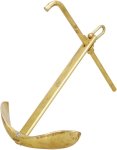
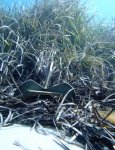
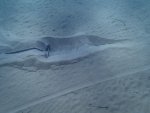
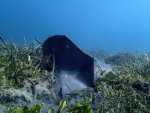
Finally, if you like posing just look at those lovely storm anchors below, and just imagine how you street cred's would soar with the more educated anchor specialists in your local marina.

They are not too common in the UK, and the Lewmar Delta still seems to be no 1. Never seen a picture of a Delta that was bent
TNLI said
" All of them except the Spade seem to be light weight modified copies of existing designs. ..."
The Spade shank profile is a copy of the Delta shank.
As most anchors are made from similar grades of steel very few of them are lightweight - the exceptions being Fortress, Aluminium Spade and aluminium Excel. The Supreme, Rocna, Epsilon, steel Excel, steel Spade all have roughly the same hold for the same weight of anchor - and twice the hold of a similarly weighted, well set, CQR or Delta.
Interesting that TNLI says Excel is a copy of a Deltas - yet Excel has twice the hold (for the same weight steel anchor).
TNLI seems to Iive in an alternative universe and if he reads the posts of others - completely ignores what is scripted.
Is the FOB Lite still available?
Jonathan
The link to the article that you are quoting is 23 years old! Do you really believe that anchors have not developed in that time?Alas you are comparing anchors by weight and that is only correct if you do not have a good windlass or pair of arms. With most boats the limiting factor is the deck area and how it fits in the rollers or other mounts, NOT WEIGHT. The lightweight thin or alloy anchors produce almost the same or less holding power than a CQR if you look at the practical sailor tables based on deck area. Solidly built anchors like the genuine steel CQR are almost impossible to bend, and a storm anchor must not be too easy to bend. The only pictures of a bent Delta are of one that is so rusty it's hard to see if it's a copy or not.
The Excel is a modified copy of a Delta, but with thinner plates and cut out letters to help it bend. Obviously if you weaken the anchor by making it lighter it will have twice the holding power per pound, or four times if it's a even more easily bent or broken aluminium version.
If you are not concerned by how strong an anchor is, and can't lift a heavy Herreshoff or CQR, but have plenty of space for a light weight anchor, then the Fortress will outperform all of the new generation anchors, unless it picks up any significant weed, or finishes up in cobblestones or rocks. It's only safe to use in clean mud or sand. The same issues with weed and rocks apply to all Danforths.
So for a weight critical race boat, a Fortress main and a Excel plow would make a lot of sense, unless you get into real heavy weed or rocks. So forget that pair and try a Fortress and a light weight bar type fishermans. That combination would work, although using an anchor that does hold in mud and to a lesser extent sand, in addition to heavy weed and rocks makes more sense.
Don Street and all the boat manufacturers who sell their boats with either a Lewmar Delta in the UK, or a Lewmar CQR in the USA, (The Lewmar Claw is often used as a secondary), and who often carry a 2 or 3 piece Herreshoff or Admiralty pattern fishermans below decks, are not fools, as are the folks from Practical sailor or Steve from SV Penope testing fame. Results by size, often of more interest:
Anchor Reset Tests - Practical Sailor