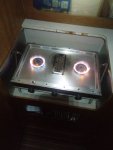
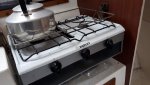
Testing an original gas hob

conks01

Well-Known Member
Joined
3 May 2012
Messages
240
Visit site
Hi,

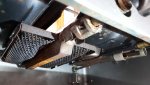
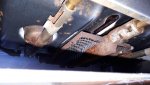
I have what I believe is the original gas hob in my Westerly Pageant. I cannot recall the name of it but it's in an OK condition apart from the grill burner which is very rusty. I think it's over 30 years.

The small propane bottle is stored in the cockpit locker. I know that I will need to replace the regulator and probably the rubber hose which leads to the hob itself as again I think they're original. Ordinarily I would probably discard the hob given it's age but as these are circa £250+ and cosmetically it looks fine I'm hoping to retain it.

My problem is whether I can trust it. Can anyone recommend the procedure for checking that it's working correctly & safely? Naturally I will purchase a Co2 detector but is there anything else I can do or use to test the whole system?

Thanks
 
Hi,

I have what I believe is the original gas hob in my Westerly Pageant. I cannot recall the name of it but it's in an OK condition apart from the grill burner which is very rusty. I think it's over 30 years.

The small propane bottle is stored in the cockpit locker. I know that I will need to replace the regulator and probably the rubber hose which leads to the hob itself as again I think they're original. Ordinarily I would probably discard the hob given it's age but as these are circa £250+ and cosmetically it looks fine I'm hoping to retain it.

My problem is whether I can trust it. Can anyone recommend the procedure for checking that it's working correctly & safely? Naturally I will purchase a Co2 detector but is there anything else I can do or use to test the whole system?

Thanks

It is recommended that regulators should be replaced every 10 years and that hoses should be replaced after 5 years . The dates of manufacture should be marked on them.

Dont even think about risking 30 year old hose

Carry out a leak test on the whole installation or better get it professionally tested when you have refurbished it.

You ought to look at the gas bottle locker too to see if it comes anywhere near current standards

You need a CO ( carbon monoxide ) detector not a CO2 detector. Also a gas ( LPG) alarm. A bubble type leak detector is also worth fitting while you are refurbishing the system.

Chapter 7 of the Boat Safety Scheme should be your guide to a safe gas installation https://www.boatsafetyscheme.org/media/180428/bss guide 2005 complete web.pdf


There are two tests that should be done. One on the pipework before any appliances or the gas supply are connected. It is done by pressurising the system with air to a little above the normal operating pressure and monitoring for any fall in pressure with a manometer.
The other is on the complete system and is done at slightly less than the operating pressure by prssurisng with gas and then venting a little off

Used to have a link to to the tests on the Westerly Owners Association forum but they've built a new website and the old forum together with all the useful information has gone
 
Last edited:
...My problem is whether I can trust it. Can anyone recommend the procedure for checking that it's working correctly & safely? Naturally I will purchase a Co2 detector but is there anything else I can do or use to test the whole system?

Thanks

By all means clean it up yourself, but I'd suggest a professional gas fitter checks it before you start using it. And you should get a CO detector, not CO2.

(cross posted on the CO/CO2 confusion)


It is recommended that regulators should be replaced every 10 years and that hoses should be replaced after 5 years . The dates of manufacture should be marked on them.

Dont even think about risking 30 year old hose

Carry out a leak test on the whole installation or better get it professionally tested when you have refurbished it.

You ought to look at the gas bottle locker too to see if it comes anywhere near current standards

You need a CO ( carbon monoxide ) detector not a CO2 detector. Also a gas ( LPG) alarm. A bubble type leak detector is also worth fitting while you are refurbishing the system.

Chapter 7 of the Boat Safety Scheme should be your guide to a safe gas installation https://www.boatsafetyscheme.org/media/180428/bss guide 2005 complete web.pdf


There are two tests that should be done. One on the pipework before any appliances or the gas supply are connected. It is done by pressurising the system with air to a little above the normal operating pressure and monitoring for any fall in pressure with a manometer.
The other is on the complete system and is done at slightly less than the operating pressure by pressurisng with gas and then venting a little off


Used to have a link to to the tests on the Westerly Owners Association forum but they've built a new website and the old forum together with all the useful information has gone

I beg their pardon. The WOA have restored the old forum and the info regarding gas system test is here https://westerly-owners.info/forum/viewtopic.php?f=9&t=9&sid=2a0a30ad0e5a7492e16a7b5391d466b2
I]ts out of date of course but should still enable you to test the system
 
Most certainly get it checked over by someone Gas Safe qualified. However, worth speaking to them first to ensure they don't go over the top. Your boat is probably outside the RCD requirements, which are a very good standard and a good thing to aim for but not essential from day one. I've known Gas Safe people condemn an installation because it doesn't comply and also want to fit vent pipes to outside when the locker is already vented. My recommendation would be Peter Bell of Mistral Yachts whose certificates and occasional minor caveats have always been accepted by my insurers.
 
I have a Flavell Vanessa cooker - original fit in my 1977 boat. It passed it's GasSafe check last year. The fitter was unconcerned with it's age and lack of flame fail device on the burners. He was pleased to see the bubble leak detector in the gas locker, though. It seems to me that if you keep the system leak free and ensure the burners have blue flames your cooker is fine, and you will be, too!
 
Your cooker won't have a flame failure which makes it unsafe in my opinion and I would replace it. Sell the old one on eBay to someone who is not concerned about safety.
 
As long as it doesn't leak (which is easy to check - see above) and burns all the gas it gets it will be fine. Gas systems are best kept simple - fancy stuff like bubble testers are useful on complex systems, but simply add points of failure in a basic bottle - pipe - hose - cooker system such as yours.

Flame failure devices are nice, but we survived for years without them and without boats going bang! all over the country, just as we survive without domestic gas cookers going bang! to this day.
 
And how often does that happen except on the yachting monthly wreck a boat 'test'?

Which had to be specially set up was hard to get to work.

Really the only way to get a gas explosion on a boat is truly terrible maintenance or, as in the case of that army boat, completely incompetent management of the system.
 
Fit carbon monoxide tester and bubble-tester. Bubble tester go in gas locker below lid level, fit new regulator and new hose - hose gotta be made up crimped ends with date on. Gas cooker if got nice blue flame work good, yellow flame mean poor air to burn or dirty burners so easy to see burning right.

You got cooker in boat is old - so what? Your BSS not make you change "original equipment" so long you not fit it from old caravan like that but come with boat. If work, save euros, buy beer!
 
i installed a new campingaz canister, regulator and flex hose last night. the stove had not been used by myself since getting the boat a year ago, its had dust etc on it over the years work and the burners had gotten surface rust. i hooked it up and looks ok. there was some smoke coming off the burner on the right, likeley from the dust or surface rust.

20181101_201532.jpg
 
Looks good for many cups of tea! I have to clean the rust out of the burners on my cooker every now and then to keep the flames nice and blue. I also put a sticker behind the cooker to remind me to stay near the stove while the burners are lit.
 
Top