Tender conversion to sailing

Might not be that soon I'm afraid as planning to travel west in week if weather permits. Looking for quiet waters to venture in blow up canoe once moored up though so might not be that much help in any rescue

if you paddle upstream from there you have the quiet stretch of the Itchen. or drive to Woodmill and launch there either side of the wier - upstream of the weir is very sheltered and pretty. Parking is free
 
You don't need any ballast Mark. As far as the laws of physics are concerned you have basically built a sailing catamaran...flubbers by nature don't roll like a monohull dinghy does. All ballast will add is weight...you sitting to windward will be more then enough.

If it were me, I think I'd be tempted to add a little bit of positive angle of attack on the leeboards to help it keep the height upwind.
 
You don't need any ballast Mark. As far as the laws of physics are concerned you have basically built a sailing catamaran...flubbers by nature don't roll like a monohull dinghy does. All ballast will add is weight...you sitting to windward will be more then enough.

If it were me, I think I'd be tempted to add a little bit of positive angle of attack on the leeboards to help it keep the height upwind.

thanks Iain, i was just sweating a bit about the vee bottom, but I guess you are right. The simpler the better so no ballast would be good.
 
I agree about not needing ballast, inflatables are super stable hull shapes.

For lee boards I would have them independently hinged - presumably the mast frame comes out to the gunwales for the shroud attachment. Just need a couple of control strings to raise/lower them. The challenge will be getting them in the right place to allow you to tack; consider that you have a bunch of drag on the leeward side, making it hard to turn through the wind. May need to switch before the tack to help you through.

As for structure I would have gone for a triangular frame:

1 - big transverse tube with shroud attachments and leeboard pivots at the ends. Lashed down to the thwart/rowlocks/under the hull.
2 - two tubes running forwards to the bow, forestay attachment at the apex. Lashed down to the painter strongpoint.
3 - mast step is a small cup, held on wires running down from the three corners of the frame (or rather slightly inboard to clear the hull).

The nice thing about this is that it forms a tensegrity structure which always look pleasing and would hold the mast as per its design (no applied bending moments).
 
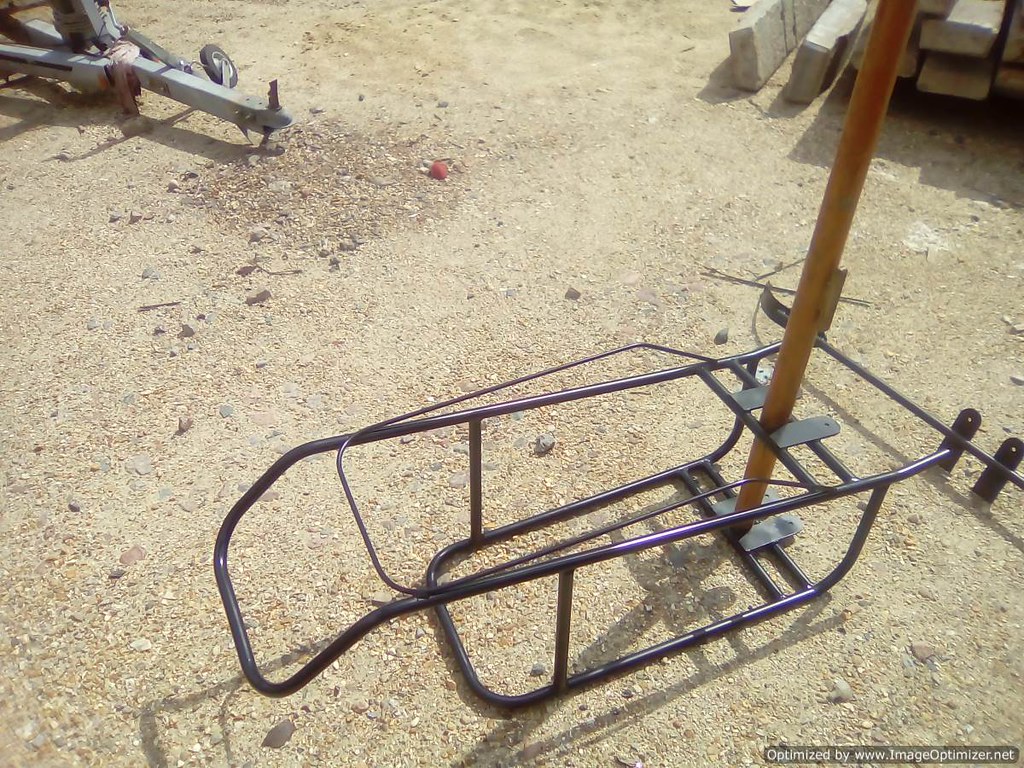
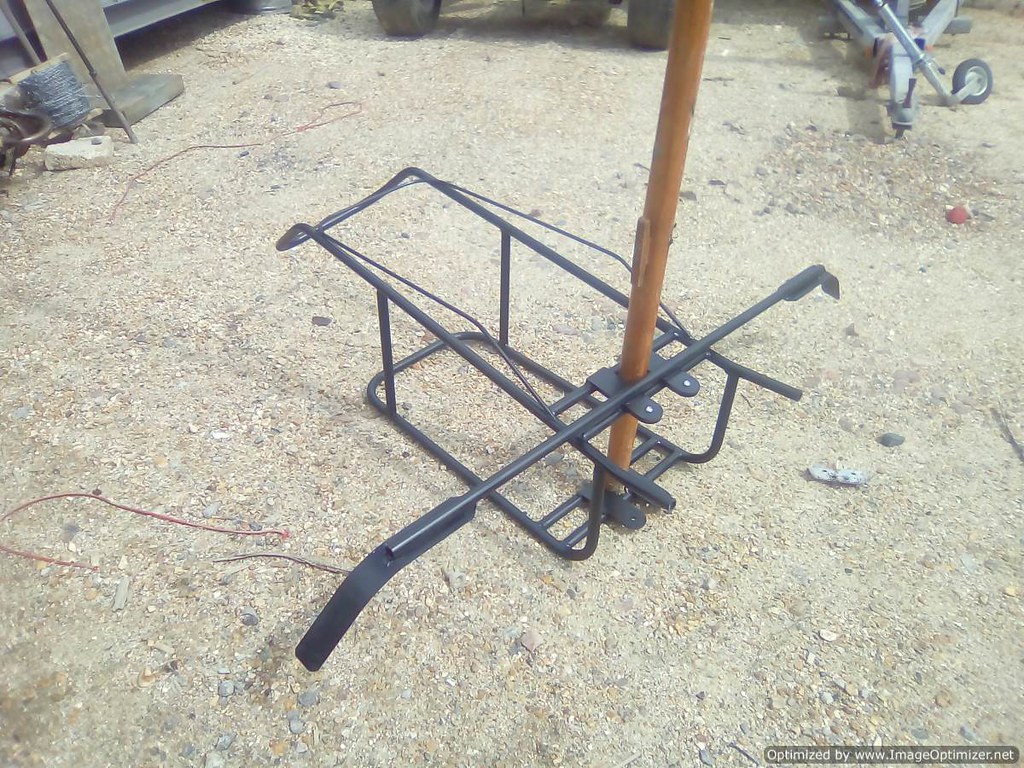
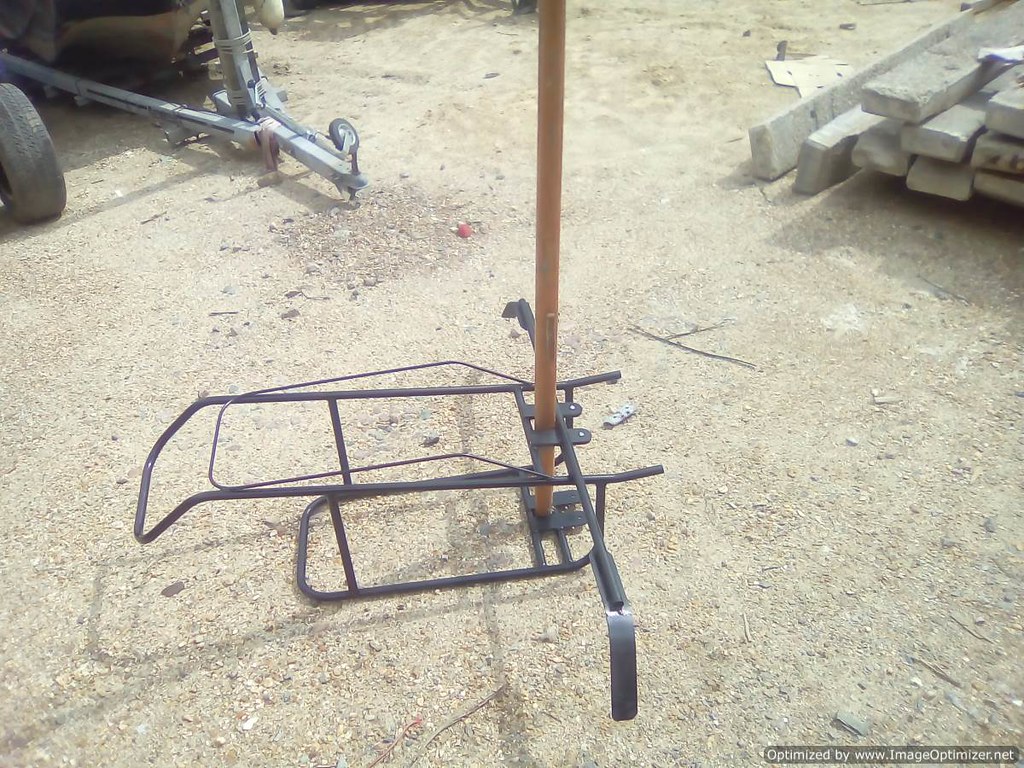
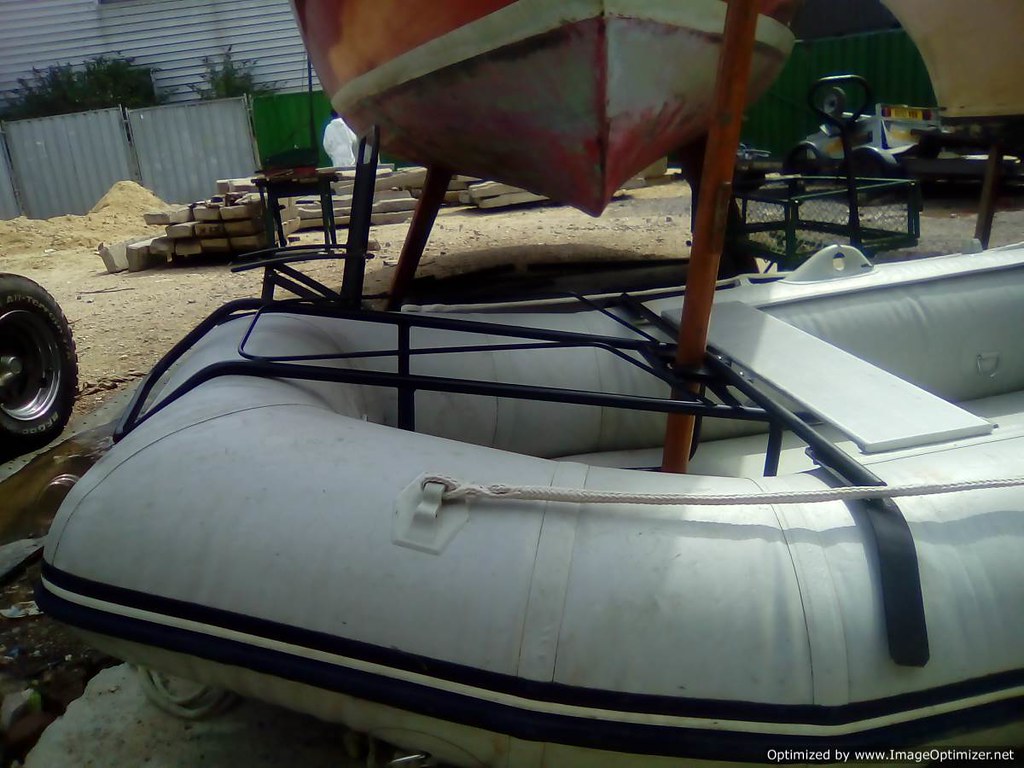
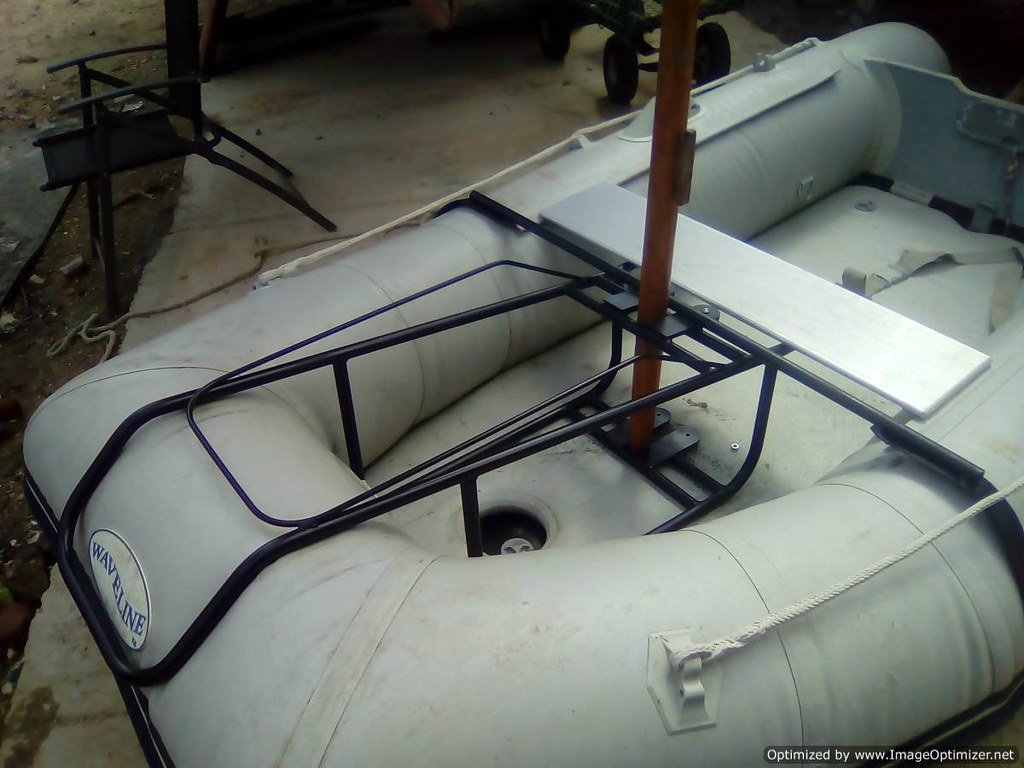
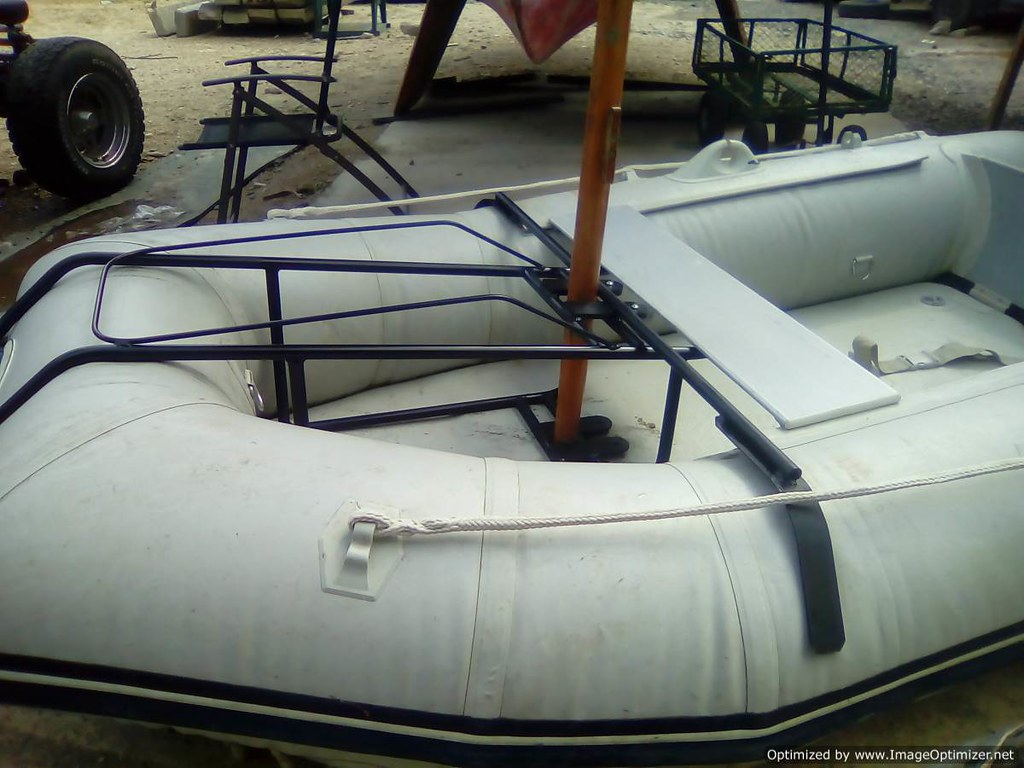
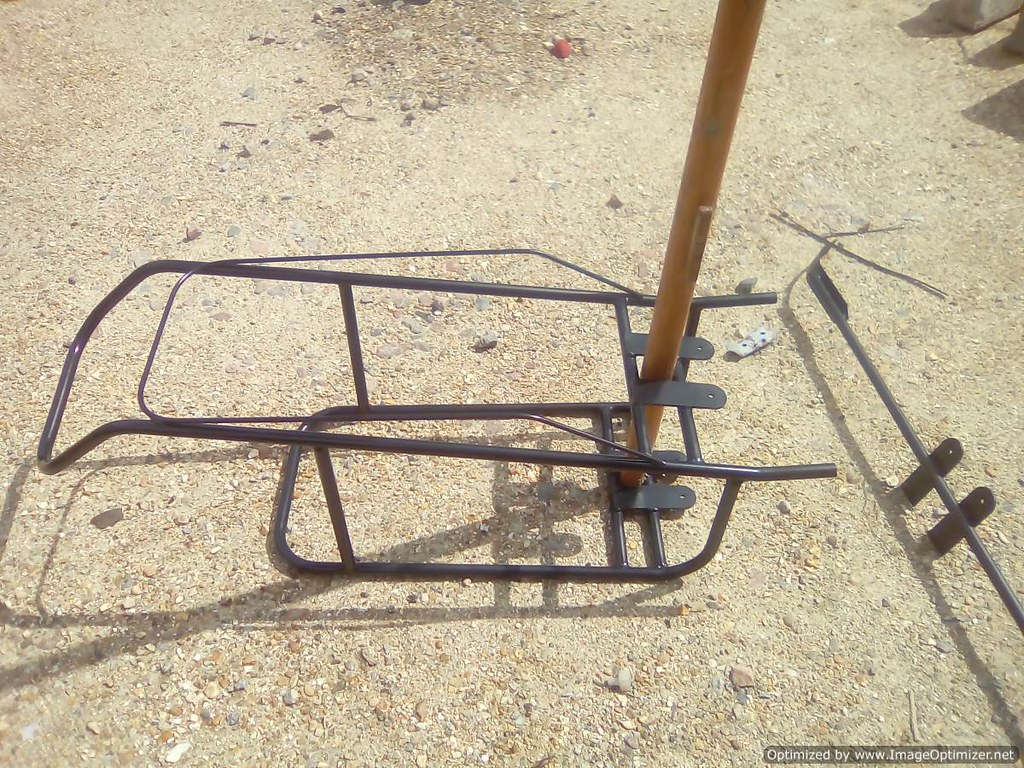
well, it's lunchtime so I had better post a few pics of it so far so you get the idea. The lugs on the top section carry the transverse tube arrangement that when complete will carry the shrouds - though I may try to run the mast unstayed for simplicity - the bearings for the lee boards, and the cleats for the jib. It will be more than the simple tube you see there, this is merely the dimensioning to get it to fit, and make it demountable enough to store on a yacht.
the bottom lugs will be mountings for the tubes that will run back to the transom.

IMG_20180814_120504 by mark punksteel, on Flickr

IMG_20180814_120509 by mark punksteel, on Flickr

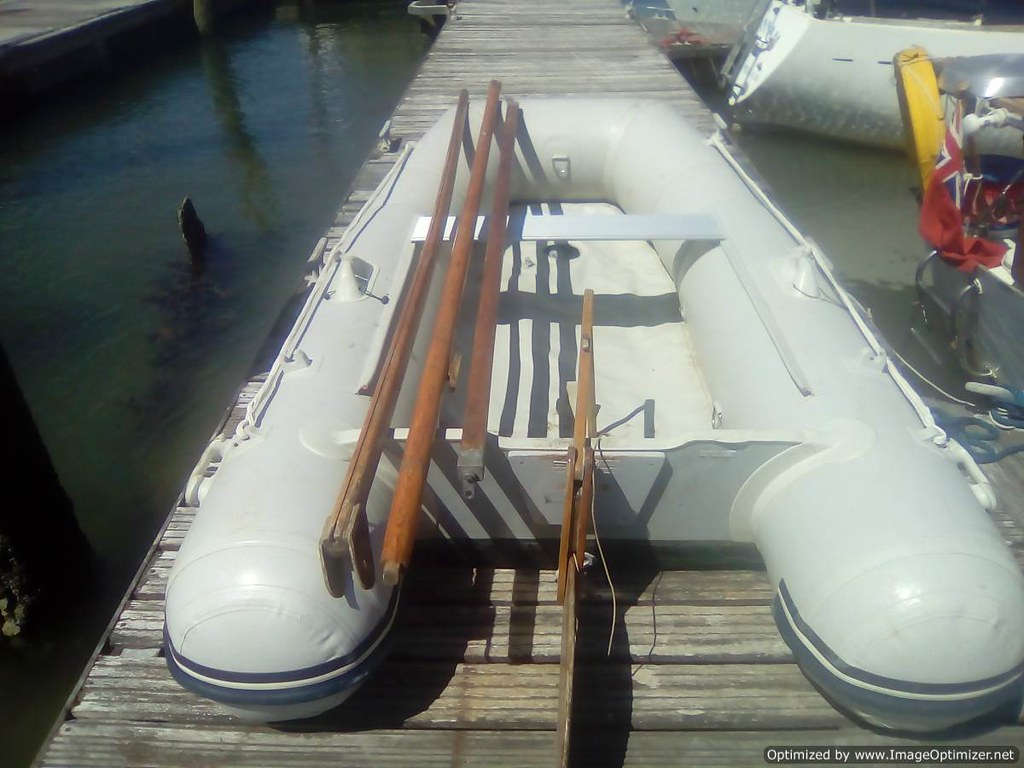
IMG_20180814_120520 by mark punksteel, on Flickr

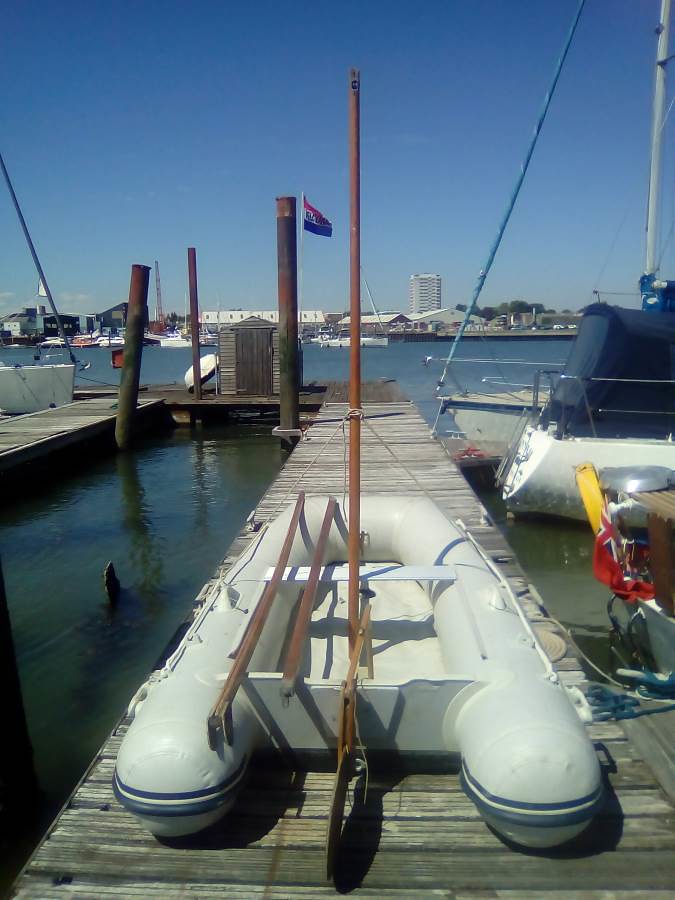
IMG_20180814_120544 by mark punksteel, on Flickr
 
Last edited:
it is not a heavy thing, I reckon sub 5kg so far. It isnt unweildy to fit either, but will get a bit more complicated when I brace the transverse tube Main idea is to be able to stow it easily in a locker or lashed to the pushpit
 
if you paddle upstream from there you have the quiet stretch of the Itchen. or drive to Woodmill and launch there either side of the wier - upstream of the weir is very sheltered and pretty. Parking is free
Thanks for info will have a look at the maps on google . So far only place I have thought of having a paddle is Haslar lake but not exactly pretty .
 
Thanks for info will have a look at the maps on google . So far only place I have thought of having a paddle is Haslar lake but not exactly pretty .

the whole of the Itchen from the bridge/ocean village is absolutely fine for paddling, you can easlily get all the way up to woodmill and back in a morning.
 
Very impressive. It's good to have the skills and equipment to do this kind of thing.

Ages ago when we lived in the US we bought a second hand large-ish inflateable that had paraphernalia for attaching a rig.
IIRC the leeboards pivoted on a wider attachment (about 8" across) hooked across both tubes by the thwart and I thinkthe rig was more of a tripod, with one leg each side by the leeboards and a third support forward. All joined at the base to form a rigid triangle (as suggested above). The sail was more of a lateen type, with the angled "gaff" suspended from the tripod and a loose foot. But I'm far from sure about that.
I think we proved once that it would sail in light airs on a lake and that was the extent of our trials. It's in storage now but I've been meaning to drag it out and either use or sell it. I'll post some pictures of the rig eventually, just for curiosity.
 
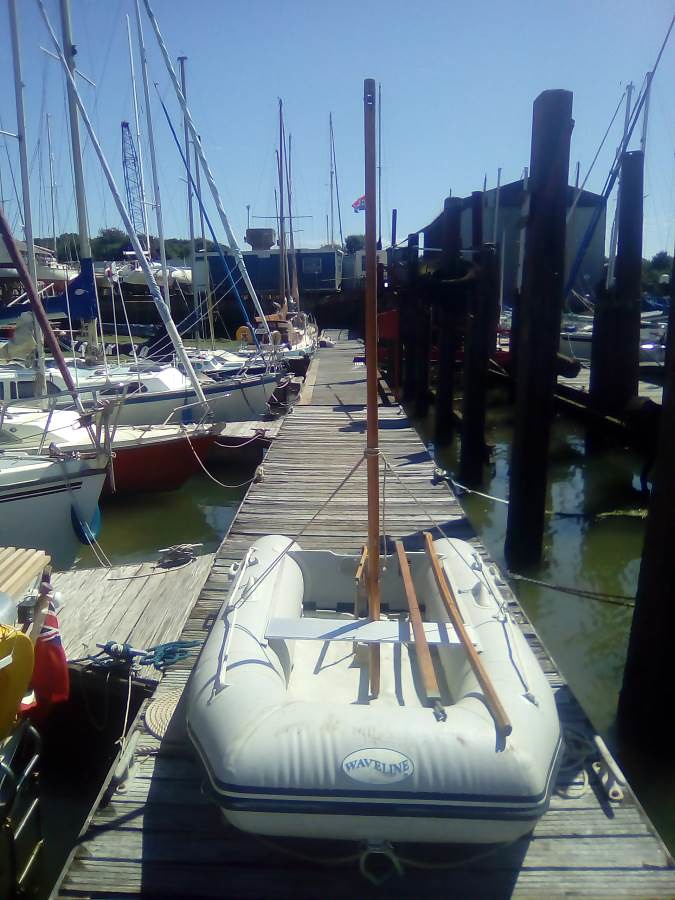
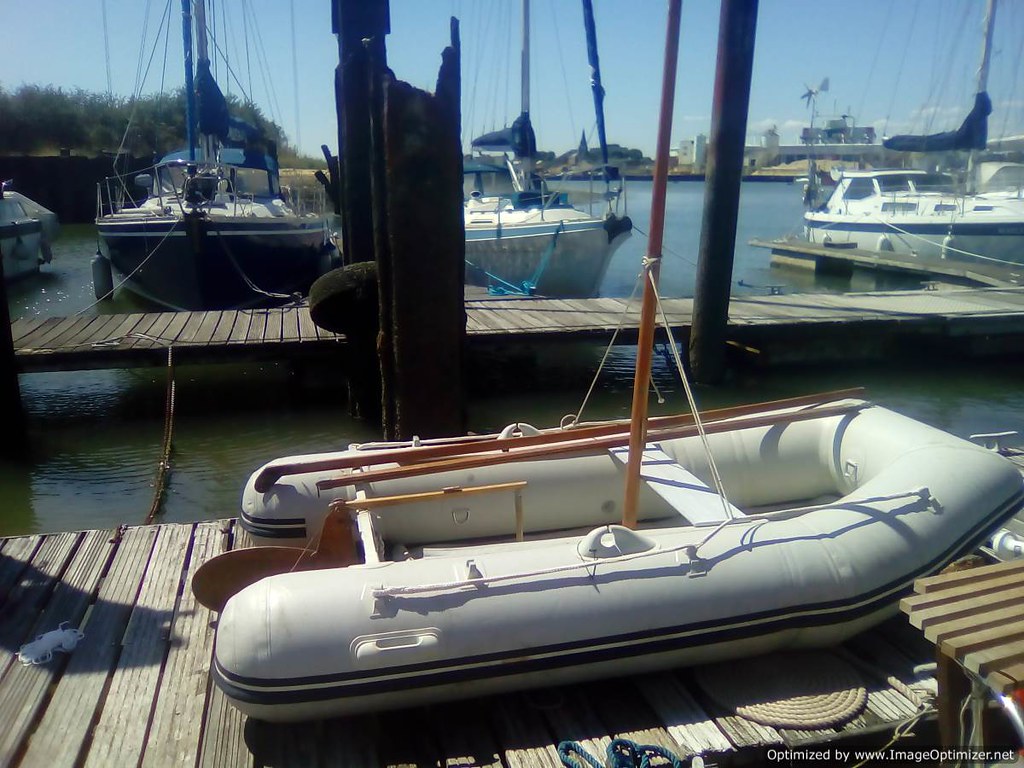
Having posted on another thread about the possbililty of towing a sailing dinghy, then deciding that towing would be simply too involved and complex with too many opportunities for mishaps I have decided to actually go ahead and build a conversion subframe to allow us to try and sail our inflatable dinghy. I have designed the frame, and will make a steel prototype tomorrow for testing (should it actually work I will go for either stainless or aluminium)
The onlt part that really had me scratching my head was the lee boards. I cannot stick a centrebaord in as it is an inflatable vee hull. So I plan to run a transverse tube with a leeboard on each end, this will run through two plastic bushes and have a simple handle in the centre to raise and lower the boards, Is ther any real reason I cannot just use the one shaft and raise or lower both together? It is never going to be a racing machine and need not look too graceful. I have no experience of using lee boards hence the ask.
The mast will be stayed within it's own subframe which will also carry the cleats for the jib etc. The flubber itself will be "largely" unstressed except in compressiom if I have this subframe right.

I have left the keel deflated for ease, so pics just for fun mock up. .
url=https://flic.kr/p/MGemmy]
29991319328_2e15a2e38e_b.jpg
[/url]IMG_20180805_131612 by mark punksteel, on Flickr

IMG_20180805_131933 by mark punksteel, on Flickr

IMG_20180805_131958 by mark punksteel, on Flickr

IMG_20180805_131915 by mark punksteel, on Flickr

Mark,

my first ' sailing ' dinghy was pretty much exactly what you have in mind; the floor was plywood with a socket for the mast ( which was a couple of aileron torque tubes from a scrapped Hawker Hunter ) with another tube athwartships for the leeboards lashed to the rowlocks - so it was still rowable, just as well !

I completely agree with having the leeboards separately adjustabe, even in this little boat the force on the leeward board was considerable, a windward one left down would probably have been torn off ( dad supplied stainless plates about 2mm thick, say 18" wide and 2'6" deep, the windward one stayed up by friction but a lanyard would be a better idea.

It barely made any progress to windward so Plan B oars were essential !

A great success though as it convinced me to save up my pocket money and buy a proper sailing dinghy, a Caricraft 10 ( much the same as a Mirror with a pointy stem ).
 
Very impressive. It's good to have the skills and equipment to do this kind of thing.

Ages ago when we lived in the US we bought a second hand large-ish inflateable that had paraphernalia for attaching a rig.
IIRC the leeboards pivoted on a wider attachment (about 8" across) hooked across both tubes by the thwart and I thinkthe rig was more of a tripod, with one leg each side by the leeboards and a third support forward. All joined at the base to form a rigid triangle (as suggested above). The sail was more of a lateen type, with the angled "gaff" suspended from the tripod and a loose foot. But I'm far from sure about that.
I think we proved once that it would sail in light airs on a lake and that was the extent of our trials. It's in storage now but I've been meaning to drag it out and either use or sell it. I'll post some pictures of the rig eventually, just for curiosity.

if I had not already gone ahead witgh the way I did this, I might have gone for the rigid triangle as suggested, it could in theory all fold away then. My idea with this "box" arrangement was to build a grp enclosure into which the rigging and sails would fit. That way it is just this frame and the mast/boom to store. I have been giving some thought to using our spinnaker pole as the mast, maybe not bothering with a boom at all, but I think the sailing part of this idea is already pretty compromised. It wont stop us experimenting though. Need to borrow a windsurf sail from someone to try that too, just to see
 
Mark can I also suggest a mocked up trial sail before you put any more effort into your very impressive spaceframe (although it might be a bit late!)

Basically is everything going to be in the right place in terms of centre of effort (from the rig) and centre of lateral resistance (from the foils). I know you're not exactly building a racing dinghy here, but it might mean the difference between sailing along with an armful of rudder just to keep going in a straight line, or even being able to tack or gybe. There's probably some tweaks you can do if it's not far out (rudder angle, leeboard position, mast rake) but it would be good to know that the mast is at least roughly in the right place fore and aft for a degree of balance.
 
The hinged fin would make the boat a surprising lot deeper and more hassle to launch and recover; I know you're a serious engineer but the side loads must not be underestimated - and the effect on towing it could be crucial as it will try to pivot around the fin even if part raised.

Personally I'd go for leeboards or a proper sailing dinghy.

The comment about sailing dinghies filling via the centre / daggerboard casing is spot on though, when sailing with Moby 2 last year we helped out an elderly chap in a cruising Gull dinghy, while I sorted him out Moby had to get in the dinghy and bail like a nut with a big bucket, as it was swamped and flooding though the centreboard case; I have seen boats like Mirrors used as tenders, with a lid clamped down on the daggerboard case.

However towing a dinghy around the Solent seems more likely to cause bother ( or even danger if the thing gets swamped in heavy weather and one tries to save it - see Adlard Coles ' Heavy Weather Sailing ' ) - and in a lot of places will be in the way of other boats, possibly leading to heated discussions and / or extra berthing fees - so best kept deflated in a locker until required.
 
Last edited:
However towing a dinghy around the Solent seems more likely to cause bother ( or even danger if the thing gets swamped in heavy weather and one tries to save it - see Adlard Coles ' Heavy Weather Sailing ' ) - and in a lot of places will be in the way of other boats, possibly leading to heated discussions and / or extra berthing fees - so best kept deflated in a locker until required.

yes. not wanting to tow is why we are making this inflatable. If it works then happy days, frame lashed to pushpit, flubber in locker.
 
Mark can I also suggest a mocked up trial sail before you put any more effort into your very impressive spaceframe (although it might be a bit late!)

Basically is everything going to be in the right place in terms of centre of effort (from the rig) and centre of lateral resistance (from the foils). I know you're not exactly building a racing dinghy here, but it might mean the difference between sailing along with an armful of rudder just to keep going in a straight line, or even being able to tack or gybe. There's probably some tweaks you can do if it's not far out (rudder angle, leeboard position, mast rake) but it would be good to know that the mast is at least roughly in the right place fore and aft for a degree of balance.

I am on it' had the same thoughts so I am lashing up a rig now. Will get it on the water tonight or tomorrow for a try. probably tomorrow as by the time I have made a rudder mount the water will be gone.
 
what could possibly go wrong....;)

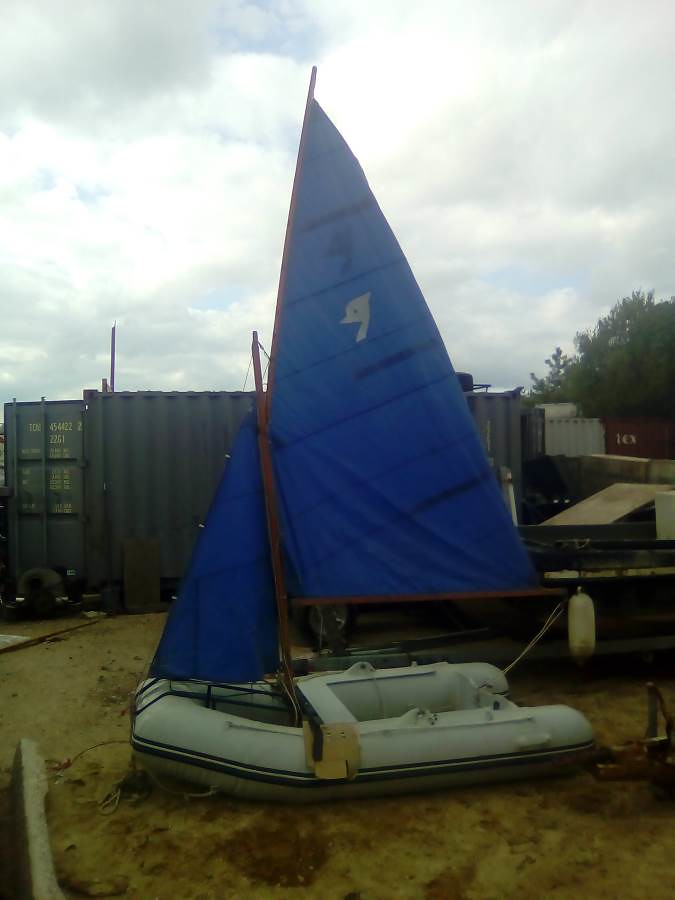
Just mocked up there, I need to move the boom gooseneck slider down as I feel the main is too high.
Unfortunately I have been called away so no more play today. I would say that when it catches the wind you can see it begin to compress the tube a tad and the rig goes tight, all seem ok so far in this land test.
Blocks and halyards to fit properly, rudder to fit, maybe take the jib forward on a bolt on sprit. Test tomorrow without leeboards to make sure it is at least kind of useable, if so then we will carry on tweaking. If not then the scrap pile just got bigger. I am hopeful it will be fine.

IMG_20180814_164135 by mark punksteel, on Flickr
 
You are of course hooting daft, but it's going to be brilliant on Youtube :encouragement:

yes daft, unless it works... If it does it will tick all the boxes for us, especially with a trolling motor or a seagull on the back for cheating. It will all tuck away fine in the Berwick. Main section is a foot by a foot by three foot so not huge
 
Top