Temporarily removing calorifier?

davethedog

Well-Known Member
Joined
13 Feb 2016
Messages
847
Visit site
Afternoon all,

May have to remove the calorifier in our boat in order to get access to the port fresh water tank as thinking we have a slow leak in that tank that is putting fresh water in the bilge (less than 500ml a day but enough to be annoying).

SO, how easy to do this as understand it as follows:
  • Drain the hot water from it by turning off the cold water feed and then running the hot tap until empty? Is this correct?
  • Disconnect the water feed hoses for the domestic plumbing.
  • Disconnect the engine coolant to calorifier hoses, how do you do that without losing all the coolant?
  • Remove the tank.
  • Inspect the area and get annoyed that you still can not find the sodding leak!
  • Refit.
  • Then how do you bleed the coolant to the calorifier? Is it a case of running the engine until the thermostat opens and then topping up the water level? then top up the header tank?
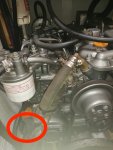
  • Finally, what is this little access port thing on the calorifier hose for near the engine?IMG_20200505_133751 copy.jpg

Now if I could just get enough access to not have to disconnect the engine hoses it would be a lot easier!

Thanks

DTD
 
Afternoon all,

May have to remove the calorifier in our boat in order to get access to the port fresh water tank as thinking we have a slow leak in that tank that is putting fresh water in the bilge (less than 500ml a day but enough to be annoying).

SO, how easy to do this as understand it as follows:
  • Drain the hot water from it by turning off the cold water feed and then running the hot tap until empty? Is this correct?
  • Disconnect the water feed hoses for the domestic plumbing.
  • Disconnect the engine coolant to calorifier hoses, how do you do that without losing all the coolant?
  • Remove the tank.
  • Inspect the area and get annoyed that you still can not find the sodding leak!
  • Refit.
  • Then how do you bleed the coolant to the calorifier? Is it a case of running the engine until the thermostat opens and then topping up the water level? then top up the header tank?
  • Finally, what is this little access port thing on the calorifier hose for near the engine?View attachment 89709

Now if I could just get enough access to not have to disconnect the engine hoses it would be a lot easier!

Thanks

DTD
Are you a 100% its the tank not the calorifier leaking?
 
on my engine there is two ball valves on the engine so I can close of the circuit going to calorifier, if you don't have that amount of water running out would depend on the elevation the calorifier.
 
For the coolant from the engine you just need a bit of copper pipe and two hoseclips, disconnect flexible return clamp on copper, take off feed and stick it on the other end, you now have a simple bypass loop and can run your engine. For the domestic water you should be able to shut off at or near your tanks while you sort out the rest. it is very simple plumbing. Anyone who has had one of those shiny leaky Isotemps which start leaking at the gasket if you jump off a big wave will have had plenty of practice.
 
Afternoon all,

May have to remove the calorifier in our boat in order to get access to the port fresh water tank as thinking we have a slow leak in that tank that is putting fresh water in the bilge (less than 500ml a day but enough to be annoying).

SO, how easy to do this as understand it as follows:
  • Drain the hot water from it by turning off the cold water feed and then running the hot tap until empty? Is this correct?
  • Disconnect the water feed hoses for the domestic plumbing.
  • Disconnect the engine coolant to calorifier hoses, how do you do that without losing all the coolant?
  • Remove the tank.
  • Inspect the area and get annoyed that you still can not find the sodding leak!
  • Refit.
  • Then how do you bleed the coolant to the calorifier? Is it a case of running the engine until the thermostat opens and then topping up the water level? then top up the header tank?
  • Finally, what is this little access port thing on the calorifier hose for near the engine?View attachment 89709

Now if I could just get enough access to not have to disconnect the engine hoses it would be a lot easier!

Thanks

DTD

1. The cold water pressure feeds the calorifier. Once turned off the calorifier will remain full of water unless it is higher than any of the taps, which is very unlikely. There may be a drain on the calorifier, but, even then it doesnt usually allow all the water out. Unbolt and tip it up so it drains.
2, If you are quick removing the coolant pipes and raising them above the height of the engine and sealing the ends not much coolant will be lost.
3. Replenish the coolant via the header tank with approporiate anti freeze added. If you run the engine and the calorifier doesnt get hot there is an air lock. Some are easier to get rid of, than others.

There is a good chance the calorifier is leaking - they do, often. I would bet on that 9 out of 10 times, but only exploring the problem will of course reveal all.

Mine was leaking so I have just been through the whole process.

If you do need to replace, think very carefully about what features you might like on the new one (including for future mods) it isnt the sort of thing you want to replace or modify in a hurry.
 
Thanks all and I have looked all around the calorifier twice so far and could not see any leaks at any of the connections or under the tank (it sits in a plastic tray under one on the saloon seats) and so am 99% confident (not 100% as this is a bloody boat issue after all) that it is not the calorifier.

As the fresh water leak is about 1L every 24hrs it will take a while to show on the port water tank as I filled that yesterday and have put a mark on the side to see if it goes down , after isolating it, and I can hear a faint dripping noise in the area of the water tank!

DTD
 
I have only read this, not tried it so apologies if it's bolleaux.

I guess (hope) that you carry wooden bungs onboard.

Would it work if you rammed one in the filler hole and one in the breather pipe?

I'm not convinced as it's possible that air could get in replacing the dripping water, but I read that it's possible if that doesn't happen then a vacuum would be created in the water tank stopping the leak. Sounds like a Blue Peter project to me.

Not convinced ?
 
Top