
Seajet
...
But here was no hurricane in 87! Hurricane force winds maybe but no hurricane.
I take it you weren't there...

But here was no hurricane in 87! Hurricane force winds maybe but no hurricane.

Remember that all insurance companies would require an out of water full survey before offering cover. Therefore, the quality of work that you will have done (or that which others have done for you) will need to pass muster. If the finished boat fails you will find yourself stuck between a rock and a hard place.

2009 Beneteau oceanis 43. Don't know how much as insurance company want offers. Storm damaged, split and holed in the stern, right on waterline. Sporadic gravel rash on rest of the hull, inside total mess, all needs replacing. Mast, boom and sails ok but not on the boat and rigging cut away. Engine in place and works for now. Winches, blocks and clutches all still on boat and working, no running rigging.

2009 Beneteau oceanis 43. Don't know how much as insurance company want offers. Storm damaged, split and holed in the stern, right on waterline. Sporadic gravel rash on rest of the hull, inside total mess, all needs replacing. Mast, boom and sails ok but not on the boat and rigging cut away. Engine in place and works for now. Winches, blocks and clutches all still on boat and working, no running rigging.
>why would it need a shaft and prop? The engine is running apparently according to the OP.
The OP is asking if it is a good idea to buy a sunken yacht nowhere does he say the engine is running.


>why would it need a shaft and prop? The engine is running apparently according to the OP.
The OP is asking if it is a good idea to buy a sunken yacht nowhere does he say the engine is running.
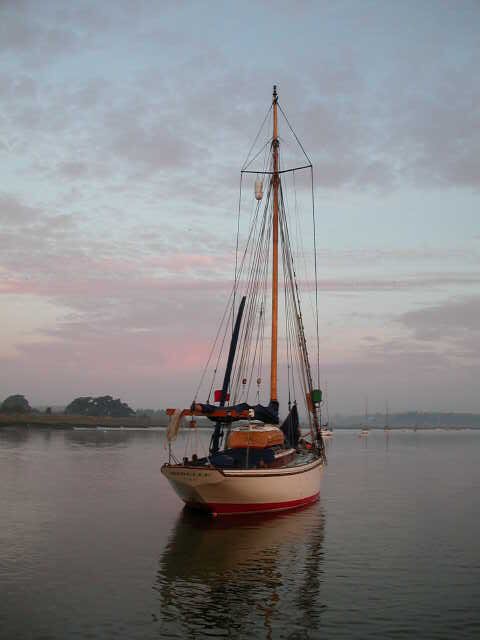
I was a boatbuilder & did a lot of wooden boat restoration & also used to do a lot of heavy duty GRP repairs. I had a long run of work after the 87 hurricane, I was working for a local salvage agent. We did some spectacular repairs & being honest if some were cars they would have been crushed & rightly so. Despite this I took pride in my work & as far as i know none ever failed subsequently. A GRP boat can be smashed to bits & still put back together strongly.
One large boat i did whose keel was torn right off is still racing hard 30 years later. (My lips are sealed) Ones that were too bad we chopped up but they had to be bad!
Things to look for, water staining on bulkheads & other plywood woodwork, edges on production boats are never sealed adequately & sea water will get in, being salty it will never dry out properly & will often show up on a moisture meter in the middle of the topsides, likewise cored areas can get wet & are the devil to dry out.
Wiring is always toast as the batteries short fiercely when immersed & destroy all wiring nearby, Engines usually survive but must be flushed asap several times. I wouldnt trust electrics on an engine that had been under. Look for signs that modular units have been removed, extra screws are a giveaway. Bunk cushions can be washed out but will nearly always feel damp.
If you have the skill to do it yourself it can be a way of gettting a bigger boat but is it economic? I would say in todays world probably not.
>Well, nowhere except post number 5.
Post 5 is an assumption about the engine running not fact." Let us say its a production yacht, 35-45ft, 5 - 10 years old, GRP, holed and sunk, engine still in place and runs, mast boom and sails removed but sold with it. Value of non damaged similar yacht £75/£100k"