Standard Horizon chart plotter keeps re-booting itself

I see the other ports are allocated to NMEA . . .
What is on them?
If nothing, why not disable them?
Is the speed correct for the AIS?
What happens if you put the AIS on a different port?

Nothing currently on the other ports so won't harm to disable them, but not sure if would make any real difference?

AIS speed set to default (not on boat so can't check actual) but, as noted previously, this speed worked without hitch for the first few years before the fault started.

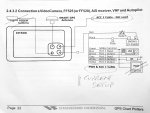
It might indeed be worth trying a different port for the AIS. Apart from the sockets for the GPS antenna and video-camera (not used), there are two multi-pin sockets on the rear of the CP300: PWR & ACC1, and ACC2. (The CP180 only has a single PWR & ACC1 socket, so the following won't apply.)

At the moment the ACC2 socket isn't used on my boat, the combined VHF/AIS wires (green, blue, brown & grey) all connecting into the ACC1 cable at the chocolate-box, for output at Port2:
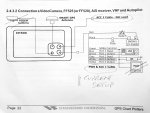
DSC_0042.JPG

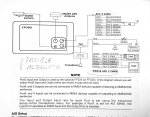
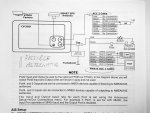
The manual however shows that AIS wires (green & blue) can branch off to feed an ACC2 cable to output at Port4, while green, blue & brown remain connected to ACC1 cable:
DSC_0043.JPG

I'm no electronics expert, but I assume branching off green & blue at the chocolate-box to feed AIS to ACC2/Port4 won't effect the same colours (plus brown, but less grey?) feeding VHF via ACC1/Port1...?
 
Last edited:
I can reiterate whats been said above ,on previous boat we had same problem as some , ie cp180 restarting its self , it got worse and worse over time , untill engine wouldnt start ,

Turned out it was the main battery isolation switch breaking down internally once replaced never a problem again .

Interestingly also had similar symptoms with a band g vulcan , this turned out to be supply wire too small and when power demand upped gps reset , this was resolved with larger lower resistance supply .

This makes a lot of sense and was my original line of enquiry. So much so that I even considered wiring the power-supply element of the plotter direct to the main battery isolator switch.

The fact that with the VHF off (or the AIS feed disabled via the menu) the plotter doesn't re-boot might indicate that, despite its specified 10-35v DC input voltage, it has an undue sensitivity to too much being expected of it at the same time as the voltage drops due to a slightly dodgy external connection and/or too much resistance in power-supply wire somewhere back down the line?
 
Do you have the latest SW on your SH plotter? There was an issue like this when using AIS which was cured by a SW update. I actually took my plotter into the office at Winchester to get the update.

But ... I also had an issue with rebooting caused by an intermittent power connection (bloody chock block).
 
It was already the last of the line with final firmware upgrade 16.22 when I bought it in 2013.

But your choc-box experience adds to MarkHomer's electrical supply experiences... to make me even more suspicious of a dodgy connection somewhere compromising the constancy of supply.
 
Did anyone get any further in diagnosing this?

Last weekend while sat in the marina I did the following:
Plotter on with the VHF off - 3 hours and counting with no reboot
Turned the VHF on and within 20 minutes the plotter rebooted and continued to do so
Turned VHF off - no further reboots

To me it does seem like a firmware issue. I cleared the plotter memory before the above test.
 
Hi Simon

I've personally not yet got any further as I've been busy at work.

Your experience is identical to mine, and your diagnosis that it is a firmware issue is probably correct.
The more people who have this problem with the CP300 or CP180, the less likely it is that a substandard electrical supply on any given boat (as I previously suspected on mine) has anything to do with it.

The firmware had its final update around 2012 (having been built around technology that was current twenty or more years ago) and SH have been completely out of the plotter market since then. The tech guy at SH in Winchester is of the view that it is a firmware issue: that something about current AIS signals (types rather than volume?) is causing it to have a fit?

The only thing left for me to try is to physically split the AIS feed at the junction-box away from the power-supply cable (ACC 1, which also feeds GPS back to the VHF) and run it into the plotter via a separate cable into the ACC 2 port, the wiring diagram for which is given in the manual. (This option is only for CP300 as the CP180 doesn't have the second port.)

DSC_0042.JPG

DSC_0043.JPG

DSC_0044.JPG
 
Marine electronics engineer attended today, and reported back:

CHECKED ALL CONNECTIONS TO ST HORIZON CP300. CHECKED NMEA PORT SETTINGS. NMEA PORT 2 OFF SO SET TO AIS38400 RATE. CP300 & AIS/VHF THEN SWITCHED ON/OFF SEVERAL TIMES AND LEFT FULL SYSTEM RUNNING 15 MINUTES NO MESSAGES AND NO REBOOTS SEEN. ALL WORKING WITHIN NORMAL PARAMETERS. POWER SUPPLY OK AND VOLTAGE OK.

Whether 15mins was a long enough wait I don't know. In the past its sometimes been just minutes before a random re-boot, sometimes much longer. Will see what its like on a longer test when I'm next down myself. But at least can rule out supply/voltage issues.

If it all works properly, then fine and good. If the problem recurs, then I'll just disable AIS feed to PORT 2 and go cruising this year with 'basic' colour plotter and with AIS available on the tiny VHF LCD screen.

Of course I cruised for years and crossed Channel lots of times without any AIS (or even plotter) so no big deal. If in heavy fog, then radar will go on anyway.
 
Port 2, the same as the guy re-activated it on.

To be honest, I don't think this guy was particularly interested in really solving the problem - 15 minutes wasn't really long enough - except that he did 'professionally' check the electrical supply side of the equation and found nothing lacking.
 
Top