Stanchion Ferrules/Bushing Supplier?

Matwill

Well-Known Member
Joined
1 Oct 2018
Messages
91
Location
Netherlands
Visit site
Hi Guys,

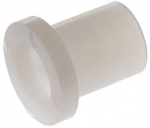
I'm making some new lifelines and wanted to add some chafe protection to the stanchions, the holes in the stanchions are 10mm diameter and 3mm thick, has anyone else done this and what did you use?

Mat
 
Hi Mat,

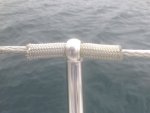
What are you going to use as the lifelines. Commonly lifelines would be stainless - there is no need for chafe protection. We replaced our lifelines with dyneema 7 years ago and we carefully polished the holes in the stanchions - we have had no chafe - but we sail a cat and no-one hikes out. The damage to dyneema will have been caused by the original stainless lifelines.

If you are doing something similar, replacing with dyneema, and are unsure of how well you can polish the stanchion holes I would use short length of braided dyneema sewn onto/into the lifelines at the appropriate places. Sew with braided dyneema fishing line. I am sure splicing the covers on is more professional - but well beyond my skills and patience. Braided dyneema covers are commonly available from many rope makers, it might also be known as branded dyneema hollow tape.

Jonathan
 
I can't picture what the 3mm relates to, so I may be misunderstanding the question, but a low tech solution might be a bit of fuel (or water) hose of suitable internal and external diameter, effectively creating a rubber or plastic grommet or ferrule in the hole through the stanchion.

If you can't find hose of exactly the right diameter, use next size up, slice hose lengthways, and trim parallel to the cut until it goes through the hole in the stanchion.
 
Obtain some thin wall s/s tube with outside diameter that will allow it to fit snugly in the stanchion holes.
Cut off lengths slightly longer than the diameter of the stanchion. These will be inserted through the stanchion holes.
Obtain two steel balls of larger diameter than the inserts.
Fit an insert into the stanchion and place a steel ball at each end of the insert. Put between the jaws of a vice and tighten until the ends of the inserts are sufficiently belled out so that the insert is held in the stanchion.
Repeat as necessary for each hole.
 
i did find a rubber ferrule but it was too hard to buy, so just went with the dyneema cover idea which I had also been thinking about

thanks everyone,

Yes im switching to dyneema lifelines
 
Good move.

Our boatbuilder used the same idea for our lifelines. I think our protective cover is actually polyester rather than Dyneema, but it has still worked well over over three years of full time cruising with no visible wear or chafe. The cover is easy to replace if needed. There is now reasonably readily available Dyneema (or other UHMWPE fibres) covers which we have used for other applications. This would be ideal.

One tip to is keep the actual lifeline thickness on the generous side. The strength is not the issue rather the UV degradation and handling. The UV radiation can only penetrate a short distance into the fibres, meaning thicker Dyneema will loose much less strength over time than thinner material. You can also get a better grip on thicker line.

From memory 5mm is the minimum recommended due to the UV issue (ours are 8mm).
image.jpeg
 
Last edited:
The only downside I have noticed is that it seems birds like perching on Dyneema more than stainless steel. Perhaps it is grippier or warmer/cooler depending on the conditions.

Anyway, without any scientific analysis the birds seem to prefer it, especially smaller birds. I love watching the little insect eating birds, but if you are not full time cruising cleaning up their mess after a long absemce away from the boat may be more of a problem.
 
Our lifelines were showing some signs of chafe where the stainless wires went through them. I threaded short bits of hard plastic pipe onto the guard rail wires and secured them in place with heatshrink on either side. The heatshrink is the stuff with glue inside and shrinks down to the wire size and over the end of the plastic pipe sticking out each side of the stanchion. Hope that makes sense?
 
Several years ago one of my aluminium stanchions snapped over winter lay-up after I fitted a cover over the lifelines. On inspection most of the holes were elongated. I fitted new stanchions and bases over winter with new wires. I also fitted a short length of nylon tube at each stanchion to prevent any corrosion between the stainless cable and the aluminium stanchion in the future. The nylon tubes were secured with a few wraps of self amalgamating tape.
 
You can buy heat shrink specifically for rope, for any diameter.

Its commonly used on sewn eyes.

What you need to watch are sheets that rub on the lifelines, spinnaker sheets - they can saw through (melt) the lifelines in prolonged use.

Jonathan
 
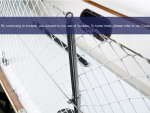
Maybe slightly off topic but how many use safety netting?

If a crewman slipped on deck in heavy seas I wouldn't put a lot of faith in the lifelines stopping the person going overboard.

Screenshot 2021-09-01 at 13-23-17 How to Install Lifeline Netting - Sailrite.png
 
Maybe slightly off topic but how many use safety netting?

If a crewman slipped on deck in heavy seas I wouldn't put a lot of faith in the lifelines stopping the person going overboard.

View attachment 121693
That netting is to stop small objects from falling overboard and to tie things like sails against. The wires are to tie fenders to. If you want to stop crew going overboard then put jackstays on and clip them on.
 
That netting is to stop small objects from falling overboard and to tie things like sails against. The wires are to tie fenders to. If you want to stop crew going overboard then put jackstays on and clip them on.

If its that bad - use two, independent, tethers. Ideally each tether has a long and short strop.

If you have one - tie the fenders to the toe rail, horn cleats - anything that is actually a strong point without the strong point being stressed by a long lever arm (like the top of a stanchion).

Jonathan
 
That netting is to stop small objects from falling overboard and to tie things like sails against. The wires are to tie fenders to. If you want to stop crew going overboard then put jackstays on and clip them on.

I think we are talking two different grades of netting.

INKED Screenshot 2021-09-01 at 15-06-04 How to Install Lifeline Netting.png

*******************************************​
Installing guardrail netting on a sailboat makes a lot of sense for keeping crew, gear, and pets safely aboard — and it's an easy DIY project.

Stay Safe On Deck
 

Attachments

  • Screenshot 2021-09-01 at 15-06-04 How to Install Lifeline Netting.png
    Screenshot 2021-09-01 at 15-06-04 How to Install Lifeline Netting.png
    21.1 KB · Views: 1
Last edited:
No, I think we're talking two different grades of safety - being safe vs looking safe

"Look around almost any anchorage and you can spot the serious long-distance voyager. You know, the boat with the extra fuel cans tied to the deck, wind generator, solar panels, and a couple of bicycles strapped to the pushpit. Look closer and you might also spot some netting strung between the lifelines and toe rails. "

I think the average coastal cruiser has 600mm high stanchions which are just high enough to trip you up and send you cartwheeling into the ocean. Of course netting would be useless in that situation

"Industry standard stanchion height (for boats up to 15m LOA) is 610mm, but some serious cruisers have stanchions of 800 to 900 mm"

How safe are your guardrails? - Yachting Monthly
 
Top