ST60 to NMEA2000

sfellows

Well-Known Member
Joined
15 Jan 2007
Messages
176
Visit site
We have a set of 3 x Raymarine ST60 instruments (Speed/Log, Depth and Wind) connected with Seatalk1 and want to upgrade to NMEA2000 so I can add further repeaters, or an MFD as well as make it open for other inputs/outputs

I can’t seem to find any specific information about linking these to a manufacturer agnostic NMEA2000 network.

I understand I can get a Raymarine Seatalk1 to SeatalkNG converter that creates a SeatalkNG Network, and I believe this is NMEA2000 but with Raymarine propriety cabling.

I’d prefer to have NMEA2000 agnostic cabling (so I can just add other NMEA devices in the future). For example a Garmin Plotter/MFD or the new Raymarine Axiom MFD (this appears to be NMEA2000 but without the Raymarine SeatalkNG cabling dependency?). Or, for example a Simrad Autopilot.
  • Does it make sense to have an NMEA2000 manufacturer agnostic backbone cabling?
  • Do other manufacturers use standard NMEA cabling to connect to the NMEA2000 network?
  • How do I do this?
I’m aware of Actisense, but they only seem to do a converter for each single device.

We also have a Standard Horizon (SH) plotter with SH VHF AIS radio linked (plotter therefore shows AIS traffic) with NMEA0183 input/output.

How could I get the SH GPS signal into the NMEA2000 network? My current thinking is the Actisense device.

Essentially I'd like an NMEA2000 Network that is flexible enough to add new devices but not be dependent on any one manufacturer. Am I smoking pot?
 
Just fit the Raymarine converter kit and then use a STNG to N2K cable to connect to your N2K network.

Raymarine SeaTalk1 to SeaTalk NG Converter Kit

This kit contains everything you will need, except the STNG to N2K cable. If you decided to go with the Axiom it will come with an N2K socket, but if you wanted to add a Raymarine autopilot (would make sense with a Raymarine MFD) you will need an STNG network too, as the Evo auto pilots use STNG. This kit connects ST to STNG and the cable bridges to a N2K network, so you can add any STNG or N2K devices at will.

There will be no point sending the SH GPS data to a new \N2K network with a modern MFD, as it will almost certainly have its own GPS and you won't want two GPS sources on the same network. |If you want to send the AIS to the network, for display on the MFD, there are a number of ways. An NMEA0183 to N2K converter is obviously one, Garmin plotters still have a NMEA0183 in/out port, so you can connect to that.
 
This More Expensive but also does a host of other things that you might find useful!

QK-A034 Bi-directional WiFi to NMEA 2000 Gateway Multiplexer with NMEA 0183 and SeaTalk input options - (quark-elec.com)

Sea talk NG is a fine system and the connectors are smaller in fairness if that matters to you. - I would say in general your system will work in a more integrated way if you try and stick to one eco system, so if your going ray marine then go that way and use NG (Some of their devices are starting to come with the device net connector like the axiom and the AIS units.. If your going Simrad or B&G then convert your ST60's and stick with the device net connector connectors.
 
https://www.quark-elec.com/product/...-multiplexer-with-nmea-2000-usb-wifi-outputs/

Almost double the cost of the Raymarine kit and still no STNG, which he'll need if he goes Raymarine with his upgrades. So he's got to spend double, convert to N2K, then convert back to STNG and fit an STNG network. Might be OK if he wants wifi, but the Axiom and most other new MFDs come with that as standard.

Sea talk NG is a fine system and the connectors are smaller in fairness if that matters to you. - I would say in general your system will work in a more integrated way if you try and stick to one eco system, so if your going ray marine then go that way and use NG (Some of their devices are starting to come with the device net connector like the axiom and the AIS units.. If your going Simrad or B&G then convert your ST60's and stick with the device net connector connectors.

What do you base this advice on ?

I fit a lot of systems where the customer wants to upgrade part of his system or wants to do it in stages. Leaving a set of ST60s in place whilst upgrading the plotter is a very common scenario, just like the OP wants. I've not had any problems connecting various bits of ST, STNG, N2K, NMEA 0183 and Simnet together.

If he goes Raymarine he'll need a split STNG/N2K network anyway, as i described in post #2. If he goes Simrad, B&G or Garmin he'll still need to convert the ST60 data and the Raymarine kit does exactly that.
 
I just did this and agree with Paul. I fitted the Raymarine converter and then a STNG to NMEA cable to connect my B&G plotter. Everything works flawlessly including sending waypoints from B&G to ST1 autopilot which I had not expected to be seamless.

I did this because I launched the day I took ownership (having antifouled the previous weekend!) and so it was too late to change the instruments once she was in the water (new depth and speed). In hindsight I'd have definitely changed the instruments first rather than convert. This isn't due to functionality - The reason is that ST60 requires the display remain in order to send the data on to the network so I'm unable to remove any of the old displays and modernise the helm despite all data being available on the new MFD. It also means that there is a bundle of ST1 and other cabling going to the helm which would otherwise have been a single N2k cable. I can't get an N2K cable to the helm now due to this bundle taking up all of the space in the tube, so the ST1 converter lives in the helm and effectively isn't a network to the rest of the boat. I won't be able to make it a network to the chart table now until next lift out when the old instruments will be pulled out. Check this before you commit as it's frustrating to not have the DSC or AIS connected to the plotter at the helm.
 
QK-A034 Bi-directional WiFi to NMEA 2000 Gateway Multiplexer with NMEA 0183 and SeaTalk input options -

Almost double the cost of the Raymarine kit and still no STNG, which he'll need if he goes Raymarine with his upgrades. So he's got to spend double, convert to N2K, then convert back to STNG and fit an STNG network. Might be OK if he wants wifi, but the Axiom and most other new MFDs come with that as standard.


What do you base this advice on ?

I fit a lot of systems where the customer wants to upgrade part of his system or wants to do it in stages. Leaving a set of ST60s in place whilst upgrading the plotter is a very common scenario, just like the OP wants. I've not had any problems connecting various bits of ST, STNG, N2K, NMEA 0183 and Simnet together.

If he goes Raymarine he'll need a split STNG/N2K network anyway, as i described in post #2. If he goes Simrad, B&G or Garmin he'll still need to convert the ST60 data and the Raymarine kit does exactly that.

Just another option, obviously the cost is higher but you also get a few extra Bells and whistles should you want them and useful if your considering tablet apps for navigation of course.

By integration I mean for example auto pilot control from the plotter, tends to be limited to within the brand (though the Nav sentences work) so you get functionality but you may not get full capability.

All depends on the OP’s future intentions for the network.
 
Just another option, obviously the cost is higher but you also get a few extra Bells and whistles should you want them and useful if your considering tablet apps for navigation of course.

By integration I mean for example auto pilot control from the plotter, tends to be limited to within the brand (though the Nav sentences work) so you get functionality but you may not get full capability.

All depends on the OP’s future intentions for the network.

Autopilots are commonly part of the upgrade route and many people leave the old ones in place, others will want an non Raymarine MFD but use a Raymarine wheel or tiller pilot. In all of those cases the MFD is unable to engage/disengage the autopilot. If fitting a new AP and that functionality is required, it has to be same brand. As well as having the same brand it also has to be of a similar vintage, you can't control an old Raymarine AP from the Axiom, for instance.

STNG, Simnet and N2K all use the same network protocol, so no real reason they shouldn't exist side by side.
 
ST60 requires the display remain in order to send the data on to the network so I'm unable to remove any of the old displays and modernise the helm

The transducers are standard Airmar analogue ones, so you could still leave them in place but convert directly to N2k with a black box nearby instead of via instruments at the helm. Raymarine's version is the iTC5, but I believe all the brands do one and there are probably third parties too. Only thing to watch out for is calibration - the offsets live in the black box so you *may* need a corresponding head unit (for example a plotter from the same brand) to set them.

A more ghetto (possibly interim) solution would be to just stuff the old displays behind a panel somewhere. They're doing what you need electrically, but nothing says you need to look at them if you have the data on your newer kit.

Pete
 
This so helpful (and easy to understand) - thank you Paul. I now know what to do - I think!. ST1 to STNG converter backbone then linked to N2K/Comnet via a STNG to N2K converter. Sounds simple!

In the first post I wasn't entirely honest (didn't want to make things too complicated) as:

1) I may not get an MFD yet - I'm thinking linking an Actisense Wifi Gateway to N2K and using my iPad as a temporary MFD - this is really a POC to prove it works! So I'll also need an Actisense NMEA0183 to N2K converter for the Standard Horizon Plotter I guess..
2) We already have a Simrad Autopilot. AP44 plus NAC3 computer.

We are already way-down the hybrid route!
 
The transducers are standard Airmar analogue ones, so you could still leave them in place but convert directly to N2k with a black box nearby instead of via instruments at the helm. Raymarine's version is the iTC5, but I believe all the brands do one and there are probably third parties too. Only thing to watch out for is calibration - the offsets live in the black box so you *may* need a corresponding head unit (for example a plotter from the same brand) to set them.

A more ghetto (possibly interim) solution would be to just stuff the old displays behind a panel somewhere. They're doing what you need electrically, but nothing says you need to look at them if you have the data on your newer kit.

Pete
I know you're right, but the cost of doing that would go a long way towards new kit so it seems the better option to upgrade to me. The old kit will then I'm sure be useful to someone around here who wants to upgrade to ST60. Far more useful second hand as a full working solution I'd have thought, otherwise I'm making paperweights.
 
This so helpful (and easy to understand) - thank you Paul. I now know what to do - I think!. ST1 to STNG converter backbone then linked to N2K/Comnet via a STNG to N2K converter. Sounds simple!

In the first post I wasn't entirely honest (didn't want to make things too complicated) as:

1) I may not get an MFD yet - I'm thinking linking an Actisense Wifi Gateway to N2K and using my iPad as a temporary MFD - this is really a POC to prove it works! So I'll also need an Actisense NMEA0183 to N2K converter for the Standard Horizon Plotter I guess..
2) We already have a Simrad Autopilot. AP44 plus NAC3 computer.

We are already way-down the hybrid route!
Many of the MFDs also act as a wifi gateway (B&G certainly does) for N2k so don't spend too much on that solution if you plan an MFD anyway. As I said, my Vulcan 9" was £500 after cashback and negates the need for wifi boxes on the NMEA network.
 
This so helpful (and easy to understand) - thank you Paul. I now know what to do - I think!. ST1 to STNG converter backbone then linked to N2K/Comnet via a STNG to N2K converter. Sounds simple!

In the first post I wasn't entirely honest (didn't want to make things too complicated) as:

1) I may not get an MFD yet - I'm thinking linking an Actisense Wifi Gateway to N2K and using my iPad as a temporary MFD - this is really a POC to prove it works! So I'll also need an Actisense NMEA0183 to N2K converter for the Standard Horizon Plotter I guess..
2) We already have a Simrad Autopilot. AP44 plus NAC3 computer.

We are already way-down the hybrid route!

Argh, you moved all of the goal posts, that's a completely different setup t what you described in post #1 !

The Raymarine ST to STNG plus the two Actisense converters will set you back about £400. You'd be better of buying the Quark device that jwfrary suggested in post #3. Connect the Seatalk and NMEA 0183 from the plotter to it and it will send the lot over wifi.

If you install a N2K MFD later, just built a N2K network and connect it the the Quark N2K input. You should already have a N2\K network for the Simrad autopilot, if you connect that to the Quark now it should steer to waypoint or wind (assuming you have ST60 wind).
 
Sorry Paul! That's why this is so confusing to me. Just slightly changing the parameters seems to have such a big impact (both personally :cool: and electronically)

I have just found out that I do, indeed, already have an NMEA2000 SIMNET setup that links the Compass and AP (the AP is also linked to the Plotter and ST60 Wind but I think this is done via 2 x NMEA0183 links. I'm trying to determine this from the installer)

In many respects I would prefer just "plug and play" in the future. I'm not great with electrics, and the Quark Device appears to have wires for ST1 instead of a plug - this is confusing as the ST1 cabling between the current ST60 devices is all plugs which also (I think) carries the power

And could I connect the SIMNET to the device from Day 1?

And how does the power side work? I'm led to believe you should ONLY have one power source for an NMEA2000 Network?

So much to consider!
 
Sorry Paul! That's why this is so confusing to me. Just slightly changing the parameters seems to have such a big impact (both personally :cool: and electronically)

Using the Raymarine converter made sense if you didn't want wifi, but then adding two Atisense devices makes that an expensive route, although it would still work.

I have just found out that I do, indeed, already have an NMEA2000 SIMNET setup that links the Compass and AP (the AP is also linked to the Plotter and ST60 Wind but I think this is done via 2 x NMEA0183 links. I'm trying to determine this from the installer)

In many respects I would prefer just "plug and play" in the future. I'm not great with electrics, and the Quark Device appears to have wires for ST1 instead of a plug - this is confusing as the ST1 cabling between the current ST60 devices is all plugs which also (I think) carries the power

And could I connect the SIMNET to the device from Day 1?

And how does the power side work? I'm led to believe you should ONLY have one power source for an NMEA2000 Network?

So much to consider!

The AP44 and NAC3 are both on an N2K network, using standard N2K connectors and cables (except that the Tees have a different offset to everyone elses, so they fit, but don't sit in a neat line, no problem, just stick to Simrad Tees).

The NAC3 has a single 0183 input, so could connect to the plotter, but not wind. It's possible you have a ST60 with 0183 out, that's connected to the plotter and the plotter passes wind data on it's out port, but i can't remember is the SH plotters did that, been a while since i've worked with one.

Anyway, if you used the Quark device you would disconnect the NMEA 0183 from the AP and disconnect any ST60 NMEA outputs too. You connect a plotter out to the quark 0183 in and a cable from one of the ST60s to the Quark. You then add a Tee to the N2K network and a drop cable(included) to the Quark. Should all work, the Seatalk data and 0183 from the plotter will be on the N2K network fro the AP to use and everything will be sent over wifi.

Don't be put off with bare wires, there simply is not a plug and play option for you as you want to use NMEA0183 and ST1.

NMEA 0183 from the plotter to the Quark is two wires.

Seatalk to the Quark is also only two wires, the power wire is not used. You can get a ST cable with a plug one end and bare wires at the other (i suspect you already have one if you are getting wind data to the AP.) Or, just chop the plug off of one end.
 
Last edited:
Using the Raymarine converter made sense if you didn't want wifi, but then adding two Atisense devices makes that an expensive route, although it would still work.


The AP44 and NAC3 are both on an N2K network, using standard N2K connectors and cables (except that the Teeshave a different offset to everyone elses, so they fit, but don't sit in a neat line, no problem, just stick to Simrad Tees).

The NAC3 has a single 0183 input, so could connect to the plotter, but not wind. It's possible you have a ST60 with 0183 out, that's connected to the plotter and the plotter passes wind data on it's out port, but i can't remember is the SH plotters did that, been a while since i've worked with one.

Anyway, if you used the Quark device you would disconnect the NMEA 0183 from the AP and disconnect any ST60 NMEA outputs too. You connect a plotter out to the quark 0183 in and a cable from one of the ST60s to the Quark. You then add a Tee to the N2K network and a drop cable(included) to the Quark. Should all work, the Seatalk data and 0183 from the plotter will be on the N2K network fro the AP to use and everything will be sent over wifi.

Don't be put off with bare wires, there simply is not a plug and play option for you as you want to use NMEA0183 and ST1.

NMEA 0183 from the plotter to the Quark is two wires.

Seatalk to the Quark is also only two wires, the power wire is not used. You can get a ST cable with a plug one end and bare wires at the other (i suspect you already have one if you are getting wind data to the AP.) Or, just chop the plug off of one end.

great detail :-)

I just wanted to add that I’m not 100% on that quark model but the one I have (ais, 2k WiFi 0183) is quite well contructed in its aluminium case but by no means water proof or spray proof. Fine in an electrical locker but obviously we are sure where your planning to mount this hardware!

Quark elec were quick on the email support though when I wanted a firmware update.
 
I know you're right, but the cost of doing that would go a long way towards new kit so it seems the better option to upgrade to me. The old kit will then I'm sure be useful to someone around here who wants to upgrade to ST60. Far more useful second hand as a full working solution I'd have thought, otherwise I'm making paperweights.

True, I guess - though as the kit ages I think replacing instruments and transducers separately may be more common than installing full sets of second-hand ST60s from scratch. Certainly I've replaced both depth and speed transducers on their own (sold new as Airmar parts) and the speed instrument on its own (second-hand from eBay). I've also sold a pilot controller and a depth instrument (sans transducer) that were surplus to requirements, and found willing buyers who had the other bits.

Pete
 
Bought st70’s and an itc-5 on eBay and very happy, with them.

transducers are fairly long lived! - I hope!

tri data and a multi up for sale shortly!
 
I'll certainly do that once it's all "modern" kit as it'll make sense. I feel like N2k will be around for a few decades even once Ethernet takes over, so sensors supporting that themselves make sense. There's a limit to how many converters and intermediary bits and bobs I want on the boat so my main goal is to convert the lot to get rid of the legacy.
I suspect I'll end up giving the old gear away at some point, although who knows when as I've had the old Garmin plotter waiting to go for 3 months now :D
 
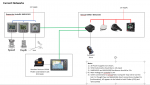
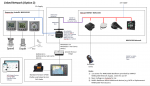
Thanks for all your inputs (and a special thanks to @PaulRainbow. Well here's my current thinking....

1609955875772.png

And proposed solution......

1609955932685.png

At the design phase......

VERY interested in the Actisense EMU as a phase 2 to add into the Network.
 
Thanks for all your inputs (and a special thanks to @PaulRainbow. Well here's my current thinking....

View attachment 106558

And proposed solution......

View attachment 106559

At the design phase......

VERY interested in the Actisense EMU as a phase 2 to add into the Network.

From post #14

The AP44 and NAC3 are both on an N2K network, using standard N2K connectors and cables (except that the Tees have a different offset to everyone elses, so they fit, but don't sit in a neat line, no problem, just stick to Simrad Tees).

Simnet connectors are small and yellow. The cable below has a Simnet connector at one end (small, yellow) and a standard NMEA 2000 connector on the other.

Simrad_24005729_31832XL_2.jpg
 
Top