Solar panel on swinging mooring...thoughts

The sun's near enough overhead when the sun's at its strongest

I really didn't think it was necessary to go into the fact that the sun rises and sets. If someone really needs every last watt hour of power from their panels, I suggest they they need to get more panels or find a way to use less power. Do they really need to run the watermaker for three showers a day, or serve melon on a bed of ice?

I most certainly will have as many panels as I can sensibly mount but the yacht is a ketch so there is no point in mounting them if they are going to be shaded.
 
The sun's near enough overhead when the sun's at its strongest

I really didn't think it was necessary to go into the fact that the sun rises and sets. If someone really needs every last watt hour of power from their panels, I suggest they they need to get more panels or find a way to use less power. Do they really need to run the watermaker for three showers a day, or serve melon on a bed of ice?

Your use as described in #39, 40w panel with no fridge, being OK for weekend use in UK, bears no resemblance to living aboard for extended periods in hot climates with just solar for fridge running 24/7 + fans, computer charging etc. Having had flat mounted panels initially, we find tilting them gives much better output so, can I suggest - don't knock it until you've tried it.
 
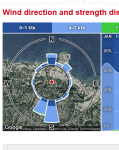
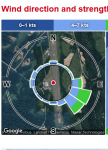
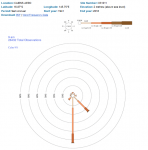
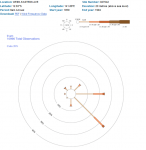
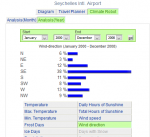
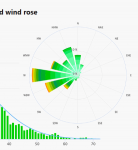
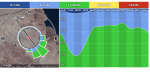
In the tropics wind direction can be quite predictable.

Honiara (Solomon Islands Pacific)
Screenshot_2019-11-28 Windfinder com - Wind and weather statistic Honiara Guadalcanal.png

Christmas Island (Northern Indian Ocean)
Screenshot_2019-11-28 Windfinder com - Wind and weather statistic Christmas Island.png

Cairns (Northern Australia)
Screenshot_2019-11-28 Bureau of Meteorology - Wind Roses.png

Weipa (Northern Australia)
Screenshot_2019-11-28 Bureau of Meteorology - Wind Roses(1).png

Seychelles (West Indian Ocean)
Screenshot_2019-11-28 Wind direction - Mahe - Climate Robot Seychelles.png

Bermuda
Screenshot_2019-11-28 history+ - meteoblue.png

Galapagos
Screenshot_2019-11-28 Windfinder com - Wind and weather statistic Baltra Galápagos.png
 
Last edited:
I don't see the YouTube bloggers(Delos, la vagabond, nanji, another adventure etc.) manually tilting their solar panels.

Is that relevant? Tilt your panels towards the sun a few times a day you get significantly more power out of them. Do that or not is down to you.
Anyway, Delos & La Vaga have big gennys, Delos is Lithium & Nandji went on to lithium as their lead acid was trashed through not getting fully charged.
 
Yes it is relevant. The type of battery isn't. Also, when sailing, my boat heels up to 30° to port or starboard, should I tilt my panels on each tack? I suspect that panel tilters don't do that much actual sailing.
Is that relevant? Tilt your panels towards the sun a few times a day you get significantly more power out of them. Do that or not is down to you.
Anyway, Delos & La Vaga have big gennys, Delos is Lithium & Nandji went on to lithium as their lead acid was trashed through not getting fully charged.
 
Yes it is relevant. The type of battery isn't. Also, when sailing, my boat heels up to 30° to port or starboard, should I tilt my panels on each tack? I suspect that panel tilters don't do that much actual sailing.

I have read a text by Hiscock, Cornell or ? that the average cruising yacht spends 90% of time at anchor or in port.
 
I have cruised on two yachts with adjustable panels (one axis only) and one boat with fixed panels. In each case solar provided virtually all the power. We have now been cruising full time for well over a decade.

Adjustable panels do provide significantly more power, especially in when the sun angle is low over winter and this is when living entirely from solar power becomes more difficult.

However, installing the panels in a shadow free location is more critical. There will always be limitations with shadows on sailboats, but many installations install aerials, lights etc above the panels without realising the disproportionate effect the small shadow will have on solar output.

Our current boat has a large fixed array and we could not be happier. The non adjustable nature keeps things simple and strong. With a large array of high efficiency panels in a shadow free location, and good installation, and equipment chosen with some consideration for energy efficiency, we can still generate enough power to provide all the comforts in areas of quite poor solar isolation.

However, for a smaller boat with more limited area for solar panels, tilting panels are a sensible choice if you have similar goals. On the other hand, if you restrict your cruising areas to ones with good solar isolation or you have alternative sources of energy that you are happy to use, then once again the simplicity of fixed panels is likely to be better even for smaller yachts.

Solar power is great. Durable, reliable, no maintenance or noise or vibration or heat. It is worth some effort to install it correctly.
 
What do you mean by "solar isolation"?

Obviously that is a typo.

Solar Insolation is the amount of electromagnetic energy (solar radiation) incident on the surface of the earth. Basically that means how much sunlight is shining down on us.
 
What do you mean by "solar isolation"?

Sorry, the spell checker at work :).

It should read solar INSOLATION, which is the integrated solar irradiance. Basically it is the amount of sunlight available. There are tables for the solar insolation in various locations at different times of the year often listed as an average per day.

A simple rough comparison of different locations and times of the year, that is easy to look up, is the maximum sun angle reached at solar noon. This is particularly usueful when thinking about installing tilting solar panels, but it does not take into account factors such as the typical cloud cover.

Edit: Coopec is spot on.
 
Last edited:
I've cruised quite a bit but not been a full-time liveaboard.
Take a clamp meter next time maybe if you don't have a victron blue solar, then have a play and you'll see tilting solar towards the sun significantly increases power output. What some boats on youtube have doesn't actually change the laws of physics. Then your choice.
 
Take a clamp meter next time maybe if you don't have a victron blue solar, then have a play and you'll see tilting solar towards the sun significantly increases power output. What some boats on youtube have doesn't actually change the laws of physics. Then your choice.

No one will adjust the panels every hour but every 2/3 hours would not be too demanding.
My friends take their vans and camp on the beach 30km from the nearest civilization They must be self-sufficient and both have portable solar cells on mounts and they adjust the inclination as necessary to achieve maximum power output.

" Again, a PV panel is nearly always labeled according to its peak power output. However, this figure is about as reliable as the fuel consumption figures quoted by the automobile industry. In reality, a 100W panel, for example, is likely only going to supply around 60 percent of its peak output if mounted horizontally, due to the shading that almost inevitably occurs aboard a sailboat and the fact the sun is rarely hitting it at a right angle.

This figure can increase to 80 percent if the panel is tilted toward the sun and adjusted every hour. However, even this level is rarely achieved, because at anchor a boat can easily swing through an arc of 180 degrees due to wind or tidal shifts. (It is for this reason that, in practice, most owners simply leave their panels horizontal.)


https://www.sailmagazine.com/diy/switching-to-solar-offshore
 
Last edited:
thanks guys...thats helped a lot. I think ill set it up horizontal...with a semi flex 40w /50w panel...and dump any excess juice... we have two 100 amp hr batteries...one engine/one domestic.. we have very little led technology...still old school. We have auto helm / prob draws 2 amps/ and cabin lights/ radio etc. Ta Nik

I am sure you will be fine. I have a 10w panel that generally keeps up, with a not dissimilar set up - on a marina. *
Huge panels are a waste unless you have a) A fridge b) A laptop or similar or c) want to anchor for weeks or take very long trips under sail.

PS

I replaced all my festoon type cabin bulbs for about 8 quid for 10 off the 'Bay. The warm colour is a bit dodgy but none of them have failed in the first 5 years.

PPS

* I should add on a marina without shore power !
 
Last edited:
No one will adjust the panels every hour but every 2/3 hours would not be too demanding.
My friends take their vans and camp on the beach 30km from the nearest civilization They must be self-sufficient and both have portable solar cells on mounts and they adjust the inclination as necessary to achieve maximum power output.

" Again, a PV panel is nearly always labeled according to its peak power output. However, this figure is about as reliable as the fuel consumption figures quoted by the automobile industry. In reality, a 100W panel, for example, is likely only going to supply around 60 percent of its peak output if mounted horizontally, due to the shading that almost inevitably occurs aboard a sailboat and the fact the sun is rarely hitting it at a right angle.

This figure can increase to 80 percent if the panel is tilted toward the sun and adjusted every hour. However, even this level is rarely achieved, because at anchor a boat can easily swing through an arc of 180 degrees due to wind or tidal shifts. (It is for this reason that, in practice, most owners simply leave their panels horizontal.)


https://www.sailmagazine.com/diy/switching-to-solar-offshore


33% increase - sounds about the right ballpark :cool:
 
No one will adjust the panels every hour but every 2/3 hours would not be too demanding.
My friends take their vans and camp on the beach 30km from the nearest civilization They must be self-sufficient and both have portable solar cells on mounts and they adjust the inclination as necessary to achieve maximum power output.

This application is not quite the same as a boat. Unfortunately, there is enough swinging and movement when on a boat at anchor, on a mooring or sailing to make any alignment less effective than on land. It is also difficult to arrange marine panels that can tilt in two axes and still be secure enough for stronger wind. It can be done, but usually only with a small solar array. Often a larger array mounted horizontally or tilt-able in one axis will produce more power.

" Again, a PV panel is nearly always labeled according to its peak power output. However, this figure is about as reliable as the fuel consumption figures quoted by the automobile industry. In reality, a 100W panel, for example, is likely only going to supply around 60 percent of its peak output if mounted horizontally, due to the shading that almost inevitably occurs aboard a sailboat and the fact the sun is rarely hitting it at a right angle.

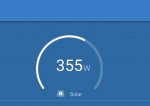
On of the indications of a good solar installation is the peak solar output should match or be very close to the rating of the panel and this should be achieved even with a flat panel at reasonable latitudes. This performance will only be seen occasionally and usually briefly but it is shows everything is working correctly. The typical output will be less, but the article overall is a little pessimistic.

This is for for a 335w panel as you can see this considerable exceeding its rating despite a flat mounting position:
 

Attachments

  • D815FFDC-B094-43F9-8915-ECE902DD3F2A.jpeg
    D815FFDC-B094-43F9-8915-ECE902DD3F2A.jpeg
    39.9 KB · Views: 0
Last edited:
I think everyone has agreed if the boat is swinging on its mooring or sailing there'd be no point in tilting the panels.

But as I have already stated I lived in Nauru Island and the wind came relentlessly from one direction. The ships were loaded on the other side of the island and in my year there I don't think they had to stop loading because of the winds. If it was possible to anchor there the yacht would not have wandered.
 
Top