

DangerousPirate
Well-Known Member
I am aware that I am in NW England during spring and I don't expect the absolute maximal possible output (14.2 amps btw), but I do expect a little more than 1.7 amps.
Could my solar panel be faulty? I don't see any faults on the panel, and it's clean as well. One of the connectors sort of broke at the plastic bit that holds the two pieces together, but they are touching well and I taped them so they don't slide apart. I am mentioning it to find a culprit, but I really don't think this should be a big deal as long as the metal inside has good connection.
Panel is a renogy 170w flexi with a renogy voyager PWM charge controller. I know, not MPPT but still shouldn't be that terrible.
I ran the batteries low overnight to get to 12.3 or 12.2 or something like that. That way I could see the amps rise. But no, they don't. I get the same sort of output.
Any clues?
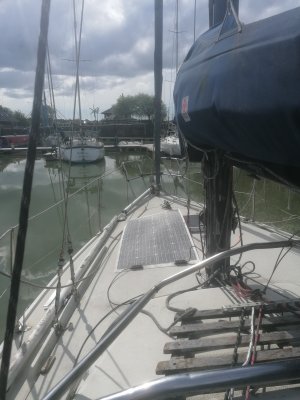
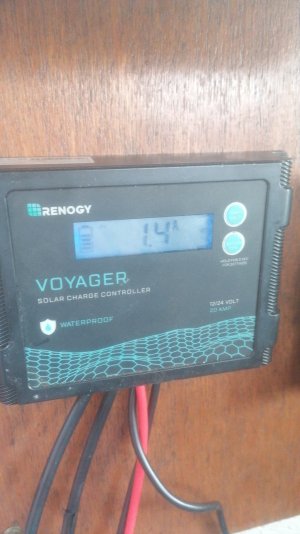
I tried it differently like this as well
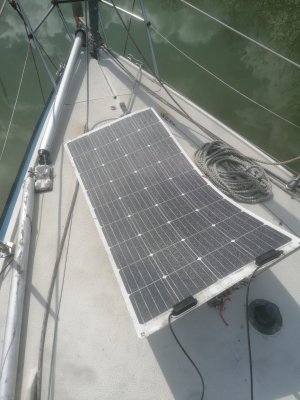
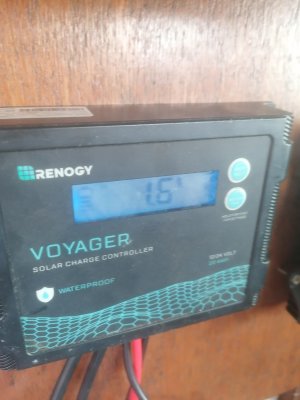
The readings, both, were taken BETWEEN clouds when the sky was unobstructed.
Could my solar panel be faulty? I don't see any faults on the panel, and it's clean as well. One of the connectors sort of broke at the plastic bit that holds the two pieces together, but they are touching well and I taped them so they don't slide apart. I am mentioning it to find a culprit, but I really don't think this should be a big deal as long as the metal inside has good connection.
Panel is a renogy 170w flexi with a renogy voyager PWM charge controller. I know, not MPPT but still shouldn't be that terrible.
I ran the batteries low overnight to get to 12.3 or 12.2 or something like that. That way I could see the amps rise. But no, they don't. I get the same sort of output.
Any clues?
I tried it differently like this as well
The readings, both, were taken BETWEEN clouds when the sky was unobstructed.


