so who buys them?

I think we all know you think that though
Not really. What I've always said is that you have to judge a boat against its design criteria. And not all boats are designed to win races, or to plane easily. In fact, most aren't.

The problem with saying "this boat is rubbish" is if what you actually mean is "this boat would be unsuitable for my needs", then you're not being objective about whether or not the boat is suitable for the sort of sailing it's designed to do.
 
I meant you're a racer, and often post with explanations from a racing point of view, so I assumed you love fast boats :)
I do... But I was a YM with a lot of family cruising miles under the keel before I ever started racing.

My boat is technically a cruiser racer, and we have started family cruising in it. I wouldn't own it just to cruise though, other boats of a similar value do that better.
 
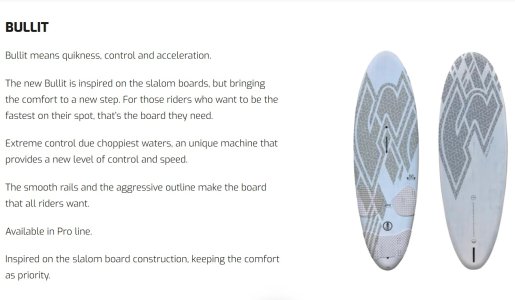
Feels as if 'big boat' design is going through a similar design evolution to that of sailboards:

F2_Bullit_1990.jpg

Back in the 90's, this was the shape of my trusty F2 Bullit. Lean and pointy. With a state of the art carbon rig and monofilm sails (to replace the heavy GRP / alloy spars & stretchy Dacron sails of the 1980's)! I loved it, until..........

F2_bullit_2025.jpg
...... Board designs changed markedly through the noughties: How we scoffed at the 'wide body beginner boards.' Until we saw how early they planed and how well they handled (albeit with some adaption of technique required).......

Iqfoil_youth_class.jpg

Now they are up on foils. Is that where it's all heading?
 
Last edited:
Now they are up on foils. Is that where its all heading?
I imagine so, yes. Modern electronics could easily take the difficulty out of foiling to the point a cruiser could use them. It takes a level of trust, but then so does the electronic only braking and steering in modern cars.
 
Not really. What I've always said is that you have to judge a boat against its design criteria. And not all boats are designed to win races, or to plane easily. In fact, most aren't.

The problem with saying "this boat is rubbish" is if what you actually mean is "this boat would be unsuitable for my needs", then you're not being objective about whether or not the boat is suitable for the sort of sailing it's designed to do.

Absolutely. there is a lack of empathy, though I admit a lot of it is just a wind up and not to be taken that seriously.
I don't suggest that you personally prefer the simplistic but many seem to, or pretend to.
.
 
….

BTW. The trap door in the back of that boat is another example of dodgy design ideas. Heavy, vulnerable, expensive and less useful than a sugar scoop but does give more room in the cockpit at a boat show.

…….
Again, each to their own opinions, but to dismiss a lowering stern platform as “dodgy design idea” could be just your personal viewpoint. Many think this is the ideal stern design for a cruising boat.
Having moved from a sugar scoop stern to a lowering platform, I much prefer the more modern version.
I certainly prefer the lifting platform to an open stern for a cruising boat - as when lifted, no concerns about grand children falling in, plus provides a secure place to put things like ropes, fenders, and other stuff temporarily. It also feels more secure mid ocean, especially at night.
When open it provides easy access to a tender, as well as swim platform. And if mooring stern to, it acts as a bridge to the gap between boat and pontoon. Without paying marina fees for a metre of dead space with a sugar scoop.
So with direct experience of both, I definitely prefer our stern platform over sugar scoops.
 
Again, each to their own opinions, but to dismiss a lowering stern platform as “dodgy design idea” could be just your personal viewpoint. Many think this is the ideal stern design for a cruising boat.
Having moved from a sugar scoop stern to a lowering platform, I much prefer the more modern version.
I certainly prefer the lifting platform to an open stern for a cruising boat - as when lifted, no concerns about grand children falling in, plus provides a secure place to put things like ropes, fenders, and other stuff temporarily. It also feels more secure mid ocean, especially at night.
When open it provides easy access to a tender, as well as swim platform. And if mooring stern to, it acts as a bridge to the gap between boat and pontoon. Without paying marina fees for a metre of dead space with a sugar scoop.
So with direct experience of both, I definitely prefer our stern platform over sugar scoops.
In our often polluted and cold waters I’ve not used our “swim” platform for much swimming but it’s VERY handy in marinas if you come in stern too it allows for much easier loading / unloading of the boat, allowed me to have my elderly mother onboard plus it’s a lot easier for the dog!

To be fair, if I was doing an ocean passage I would find a more secure method than a couple of clips to keep it secure but this could easily be down without having to alter it
 
Boat design and manufacturing techniques have come on in leaps and bounds, but haven't changed nearly as much as the expectations, lifestyles, tastes and income/wealth distribution of the potential punters.
Looks as though the small cruising boat with a cabiin has gone now. Still some .mileage perhaps for the open boats in this category.

The foilers look great fun but unlikely attractive for the weekend cruising yachtsman . Electronic nav aids doubtful of any further progress . With the comfort society we have now ,getting the family to rough it and go sailing has little attraction.

Interest in cruising sailing might depend on good or bad summer weather. Still loads of old blokes like me sailing but we have only so many miles left on the clock .
 
it’s VERY handy in marinas if you come in stern too
Anecdotally I’ve noticed the modern flap sterns seem to go bows in in marinas in the UK rather than lower the flap and park further out.
I don’t think it’s a dodgy design by any means I just prefer the sugar scoop. I certainly like them when down but approaching in a dinghy I prefer the old design and getting out of the water after an unplanned entry too. I certainly prefer the accommodation in flap sterns which have effectively knocked 2-3 feet off a given size yacht and a new 34 is as big as our 36 easily, especially with the wider stern.
I’m certain I’ll come around eventually 😂

All that said, I still like the look of classic sterns even though they’re a nightmare for getting on and off 🤷‍♀️
 
Again, each to their own opinions, but to dismiss a lowering stern platform as “dodgy design idea” could be just your personal viewpoint. Many think this is the ideal stern design for a cruising boat.
Having moved from a sugar scoop stern to a lowering platform, I much prefer the more modern version.
I certainly prefer the lifting platform to an open stern for a cruising boat - as when lifted, no concerns about grand children falling in, plus provides a secure place to put things like ropes, fenders, and other stuff temporarily. It also feels more secure mid ocean, especially at night.
When open it provides easy access to a tender, as well as swim platform. And if mooring stern to, it acts as a bridge to the gap between boat and pontoon. Without paying marina fees for a metre of dead space with a sugar scoop.
So with direct experience of both, I definitely prefer our stern platform over sugar scoops.
Plus one. Much preferred the drop down platform on my Bav 33 to the predecessor sugar scoop 37. Much better for mooring stern to because you can go right up to the pontoon with it up and pick up the stern lines while standing at the helm. Could not do that on the 37. Usually boarded from the side because the gate was alongside the cockpit. Option was still there to pull forward and drop the platform to act as a bridge. It was big enough to take the dinghy for inflating and deflating. Overall a great feature. Of course this was small enough to operate manually and I would have reservations about bigger ones that used electric motors. Bavaria used them in the late noughties and they were a disaster. Many were converted to manual.
 
Last edited:
Can’t tell if you’re in favour or not. Also you seem to confirm that they lead to not entering via the stern so unsure whether you agree or disagree with my observation. Side gates are nice but modern boats are a big step up from a pontoon so stern entry is generally easier.
 
Again, each to their own opinions, but to dismiss a lowering stern platform as “dodgy design idea” could be just your personal viewpoint. Many think this is the ideal stern design for a cruising boat.....

It's a very fair point, hoist by my own petard there. Though to be fair the sugar scoop has a lot of stuff in it's favour for the average Joe.
 
Looks as though the small cruising boat with a cabiin has gone now. Still some .mileage perhaps for the open boats in this category.
I think there’s still people making small boats with small cabins. It’s just that for that money it’s a niche buyer who wants new and compact/cramped rather than nice second hand with more comfort.
The foilers look great fun but unlikely attractive for the weekend cruising yachtsman .
They probably won’t attract the exact same demographic but they might appeal to the MoBo crowd, those who would have historically been racers, those who have built up foiling experience on wind/surf/dinghy etc but have reached an age where they (or their partners) want a little more comfort.

With the comfort society we have now ,getting the family to rough it and go sailing has little attraction.
I think that’s an old man’s viewpoint. Diesel heaters, USB chargers, toilets etc are all perfectly viable - there’s a huge market in small cramped camper vans which costs crazy money. There’s a booming market in bigger motorhomes / RVs often appealing to retirees - with new models getting into six figures if you want luxuries.

Interest in cruising sailing might depend on good or bad summer weather. Still loads of old blokes like me sailing but we have only so many miles left on the clock .
When I look around there’s plenty of younger folk sailing too - perhaps fewer owning because the cost of ownership (and berthing/storage in particular) is quite painful. And that probably answer the OPs question - who buys these? People who intend to charter them probably make up half the market at least.
 
Top