So how long does a Seacock last?

Firefly625

Well-Known Member
Joined
18 Mar 2009
Messages
6,379
Location
Home=Surrey / Boat=Hamble
Visit site
My Hardy was built 2001, has good quality fittings, seacocks I check regularly, when the boat is out the water I "service" them... ok, may be an overstatement, but a give them a squirt of spray oil inside and out and "work" the levers and give outside fittings a rubdown and antifoul.

But looking at my heads outlet seacock its going a bit green (verdigris I guess), so I was thinking this year I would re-new. Probably also do engine seacock.....that has bronze strainer attached...not sure if that comes apart... TBH they will be a bit of a sod to change as in engine bay... and that means going head first under wheelhouse floor into the bilges

Anyway, what does the collective think, about right time, 5 years too late? or if they seem OK, work OK, leave'em be...? or now I've thought of it and posted on here about changing the bloody things I best just get on with it.
 
Love this subject really as it is a "how long is a piece of string" ... type question ... and the answer lies in what material, how good install etc.... and you will find all sort of responses ... but this article is actually quite good... scary, but good!!

http://www.paulstevenssurveys.com/upload/Seacocks.pdf

But after 30 years, when bonding had disconnected on one, I found a problem this spring ...

IMG-20130519-00082_zpsfc0d473d.jpg
 
Last edited:
James,

I guess the most significant factor is the material they are manufactured from.

I'd say given she is 12 years old and lives in a marina with all sorts of stray current about the place and the relatively low cost of replacement that you do the whole lot.
 
Provided they're made of bronze or DZR, I don't think there's any need to change them unless they stop working. Plenty of old boats with 60s and 70s valves still going strong.

Pete
 
Love this subject really as it is a "how long is a piece of string" ... type question ... and the answer lies in what material, how good install etc.... and you will find all sort of responses ... but this article is actually quite good... scary, but good!!

http://www.paulstevenssurveys.com/upload/Seacocks.pdf

But after 30 years, when bonding had disconnected on one, I found a problem this spring ...

IMG-20130519-00082_zpsfc0d473d.jpg

Thanks Alf, yes it does seem rather a case of how long is a piece of string... probably will bite the bullet and get at least the toilet outlet changed... just don't like the greenish look, I'm thinking it looks like its had its day... may well last another 10 years

BTW, good article, I have read that before but have just re-read!
 
before replacing the "green" valve - give it a good wire brushing and a wash - its probably just verdigris. Time to worry is if the inside part has gone pink, because the zinc has gone. If you pull the hose off and run a rat tail file inside the fitting (careful of the valve seat - close the valve first) the scratched surface should be brass/bronze colour. Check that all the bonding wires are intact and electrically connected too.
 
The green verdigis is quite normal and not an indication of impending failure, just reaction of seawater on the surface. Clean it off if it offends you. as you have a bronze filter on the water inlet, this suggests that the valves are either bronze or DZR which is the material commonly used on quality built boats, so no reason to consider changing them if they still work freely. Main cause of failure are sticking because of deposit build up around the ball or the handle rusting away!
 
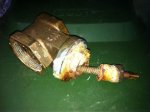
The seacock on my aft head outlet was looking a bit green and salty, then jammed up.

This happened (ashore fortunately) as I attempted to undo it for replacement ...

image.jpg

On a 38mm pipe the thought of this happening at sea was frightening.

DZR fitted now !


Edit ...

Erm verdigris you say !

I am not a metallurgist, but as far as I know brass doesn't form verdigris - copper does, suggests de- zincification. Time to change IMHO.
 
Last edited:
It depends on what the fitting is made of if its brass (CW617N) you will get between 5 and 7 years or 2 if you have an electrical problem.

If the whole fitting has gone green and you dry it and it "Sweats" it is brass and it had dezincified and id close failure.

Much better DZR

Best Bronze

Proper underwater plastic Ok but some spindles shear off.

Personally I would never ever use brass underwater which is what a lot of manufacturers do.
 
The green verdigis is quite normal and not an indication of impending failure, just reaction of seawater on the surface. Clean it off if it offends you. as you have a bronze filter on the water inlet, this suggests that the valves are either bronze or DZR which is the material commonly used on quality built boats, so no reason to consider changing them if they still work freely. Main cause of failure are sticking because of deposit build up around the ball or the handle rusting away!

Many thanks, good info. Indeed they are certainly not brass. Will attack with a wire brush and see what they look like.
 
what to do should a sea cock/skin fitting fail.

practical boat owner did a very good video (on youtube I think) a few years back demonstrating the effect of failed underwater skin fittings on an old yacht they got hold off. Although maintenance, testing, checking etc are key to safe boating, it is very surprising to see what does happen should one of your boats fittings fail and what you can readily do about it. They smashed a seacock with a big hammer with the boat in the sea and stood about chatting as water came into the boat. They then tried out various plugs, bungs, complex bits of plastic etc. The water comes in relatively slowly - much like when you pull in your speed log for a clean up, I used to have a forward looking sonar sensor on a previous boat and when you pulled that out it left an inch and a half diameter hole. quite a lot of water comes in but its quite easy to stop as the pressure is low. Anyway, the PBO team tried wood plugs, special plastic foams, but one of the best solutions was to jam an ordinary towel in the hole. It fitted complex shaped holes regardless of sharp edges and slowed the incoming water to a trickle which a regular bilge pump easily kept up with. Worth having a look just in case.
 
Here is a photo of a nice Groco bronze seacock from the USA, complete with a baseplate, bedded on to a plywood base set in epoxy - the whole unit screws onto the through-hull fitting, and the bolts are / can be extra security. Although here the bolts are simply applied from the inside, and are just used as pins.

Newseacock.jpg
 
Why is it wet ??

Is it sweating ie porous?

How do you know the material ?

If is has CW617N on it, it is **** plumbers brass that has no place underwater on a boat.

If its been there for 12 years it should be removed and inspected, but if you are going to that trouble its as easy to replace it with a new Bronze or DZR fitting that is good for the future.

See http://coxengineering.sharepoint.com/Pages/BrassandBronze.aspx

The failed ball valve photo is one I took.
 
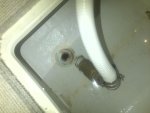
We had our 1.5" id toilet outlet skin fitting fail a couple of weeks ago, thankfully we were on board and in a marina, so when the bilge alarm went off we could take action and arrange an emergency lift out etc.

When we discovered the leak it was a fast weep that the pump could deal with by cycling on and off, but by the time we were lift out (hoist operator had to be called out as it was Friday night etc and boat driven around to hoist) the pump was continually running and we had to apply pressure and hold the valve arrangement to reduce the flow. As the slings took the load and we were lifted clear of the water i wiggled the fitting to let the water that had come into the bilges back out through the damage fitting and the whole lot came away in my hand with no effort!

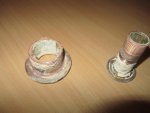
The skin fitting had dezincified and failed at the point it comes through the inside of the hull and abuts the securing nut. The failed was totally pink in colour and sheared off! The adjacent 3/4" I'd inlet skin fitting was also changed, Athough not as pink it was well on the way! When we removed the valves and bends etc from the skin fitting thread and cleaned them up (not that green verdigras colour just bidge grime) they were fine, still a lovely DZR Brassy / Bronze colour no pink at all anywhere.

The failed fittings look original fitment so are circa 8-9 season old depending on when the hull was actually commissioned / launched. The boat has had some electrical corrosion in earlier life and a previous owner subsequeently fitted a galvanic isolator and had to replace a couple of props.

New bronze skin fittings fitted.

My advise is to to thoroughly check at annual lift out and I would be tempted to change skin fittings now every 5 years or so as a precaution, as to check them properly you really need to take then out of the hull and get then clean them up so why not pop in some new ones as compared to the cost of an emergency lift out or your instance excess ( if the insurance will even pay out,) it is a cheap precaution.

Also glad I had soft wood bungs and a big hammer to hand as I very nearly needed them!

Mike
 
Here is a photo of the failed fitting in situ and one of the failed fitting and inlet fitting, that had not actually snapped after we had removed them.
 

Attachments

  • IMG_0265.jpg
    IMG_0265.jpg
    80.8 KB · Views: 5
  • IMG_2805.jpg
    IMG_2805.jpg
    93.3 KB · Views: 5
Top