ducked
Well-Known Member
and Eye of Newt. Never work.I forgot to add toe jam.

and Eye of Newt. Never work.I forgot to add toe jam.

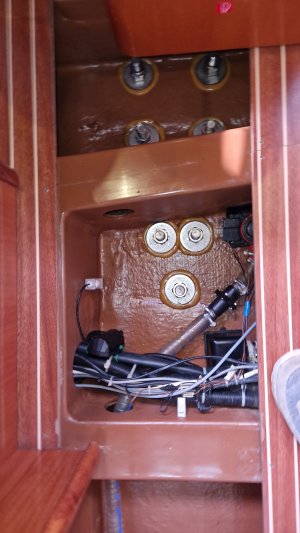

I’ve got a MAB. It’s too small for anyone but me to have ever considered fitting a shower, so it doesn’t have one.MABs, "manky auld boats" got their name because so many things leaked into the bilges where they mixed to create a unique perfume, which was a mix of diesel, oil, and stagnant salt water - if really unlucky, there was then a tank mounted over the lowest point in the bilge preventing decent access. Back in the day, stern glands were not particularly watertight, anchor lockers drained into the bilge, oil and diesel also leaked into the bilge from poor sealing - they never had the machining precision or the materials they have today - engines leaked fluids, and boats let water in. Condensation also formed on the inside of the hull as many used solid laminates - this then promoted mould growth behind trim panels and glued on coverings. The permanently damp bilges also caused mildew to form in the interior.
Why did people accept this at the time? ... because wooden boats, which were still common as family cruising yachts in the 70s & early 80s were even leakier. Every year I watch the wooden lake cruisers where I live getting launched at season start, and they are left tied to the pier in the shallow water because the hulls dry out over winter, the wood shrinks, and the boats sink when launched. They need a few days in the water to get the wood to swell and seal - then they get pumped out and moved to their moorings.
We really do have it good today, sail drives don't let water in, anchor lockers drain overboard, nothing drains into the bilge by default, and a modern engine doesn't leak its fluids everywhere. Any fluids in the bilge are a fault, a leak somewhere, usually in the fresh water system, but rain water is also a regular culprit.
The secret to a pleasant smelling boat is a clean and dry bilge, I vacuum mine out regularly as crumbs, sand, grit, and dust collect there over time. It smells a lot better than the boats of my youth - but even that filled with fresh water when my stern shower head sprung a leak.
View attachment 202371

Our Vega didn't have a shower either - we were a family of five living on board 2-3 weeks at a time during the school holidays. We didn't smell very nice.My Twister didn't have a shower but my wife and I managed to keep ourselves clean with a sponge and a washing up bowl of soapy water (which went over the side when finished with).
Nobody ever moved away from us in restaurants or on buses and trains because we smelled unpleasant.
Mind you, it was in France . . . .
Were the bilges where the showers drained into accessible and part of the cleaning schedule before handover to the next client?Many of the older broads hire craft had showers draining into the bilges, both wooden and fibreglass, my glass fibre ex hire boat does . Considering the hammering the showers get in season, the long winters unused with the bilges "maturing", they are remarkably free from smellies.
Also smegma, bogies and clingons. .........ahhh the human anatomy can produce some remarkable byproductsI forgot to add toe jam.
Essence of armpit?Also smegma, bogies and clingons. .........ahhh the human anatomy can produce some remarkable byproducts


That type of shower sump isn't great, will clog with hair and allsorts and smell disgusting when you come to clean it out.I just did a search for a shower tray with 12v pump.
This was the first one that came up. The are probably better ones available from elsewhere.
Shower Pump, Shower 12V 750GPH Sump Pump System Boat RV Bilge Marine Multi Port Drain Box, Multi Port Shower Sump Pump Drain Kit System : Amazon.co.uk: Sports & Outdoors
Still better than cleaning the same out of the bilge I would have thought.That type of shower sump isn't great, will clog with hair and allsorts and smell disgusting when you come to clean it out.
Definitely, but pumping straight overboard is even betterStill better than cleaning the same out of the bilge I would have thought.

Occasionally, on a good day, i have added a few other body fluids to the shower outlet.I think that is what HR may have thought...I assure you that I shed at least some of those substances,

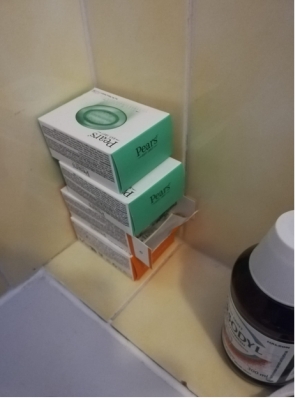
Let me guess...Then we started using Pears soap, now it rarely needs cleaning out.
Bit more expensive than most soaps but worth it.
£1.80 a bar to you guv.Let me guess...
You just happen to have.....

Gross. Jesus. You guys are adding to the weight of arguments in favor of a sterilising, purifying nuclear war.Also smegma, bogies and clingons. .........ahhh the human anatomy can produce some remarkable byproducts


