Sheared coupler through bolt

Billyo

Well-Known Member
Joined
6 Nov 2016
Messages
219
Location
Swanage
Visit site
I had a bit of a drama the other day, I had been motoring for quite a while and noticed a change in the sound of the engine, and a new vibration. So put her into idle and went below to check her over. Engine was fine so went to the transmission, clicked it into forward and no issue, clicked it into reverse and the prop shaft started walking backwards out of the coupler, Thankfully I got it into neutral before the shaft detached from the coupler or the prop had a fight with the rudder.

On examination the coupler through bolt had sheared off and fallen out. Its an 8mm bolt so the forces on it must have been extreme. Im wondering if this has happened to anybody, or anyone has knowledge of what could cause it to shear, and how to avoid it happening again?
 
I had a bit of a drama the other day, I had been motoring for quite a while and noticed a change in the sound of the engine, and a new vibration. So put her into idle and went below to check her over. Engine was fine so went to the transmission, clicked it into forward and no issue, clicked it into reverse and the prop shaft started walking backwards out of the coupler, Thankfully I got it into neutral before the shaft detached from the coupler or the prop had a fight with the rudder.

On examination the coupler through bolt had sheared off and fallen out. Its an 8mm bolt so the forces on it must have been extreme. Im wondering if this has happened to anybody, or anyone has knowledge of what could cause it to shear, and how to avoid it happening again?
Can you post a photograph of your coupler and a picture showing the fracture of the bolt? What size engine?

www.solocoastalsailing.co.uk
 
Failures like this where the bolt is described as 'sheared' are almost always due to fatigue . By far the most likely cause is that the bolt was under-tightened, allowing cyclic stress to act on it. A close-up photograph of the fracture face may well confirm this. it may be possible to see beach marks or polishing that would be typical. There is a page on fatigue on my website that you may find useful.
 
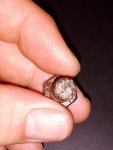
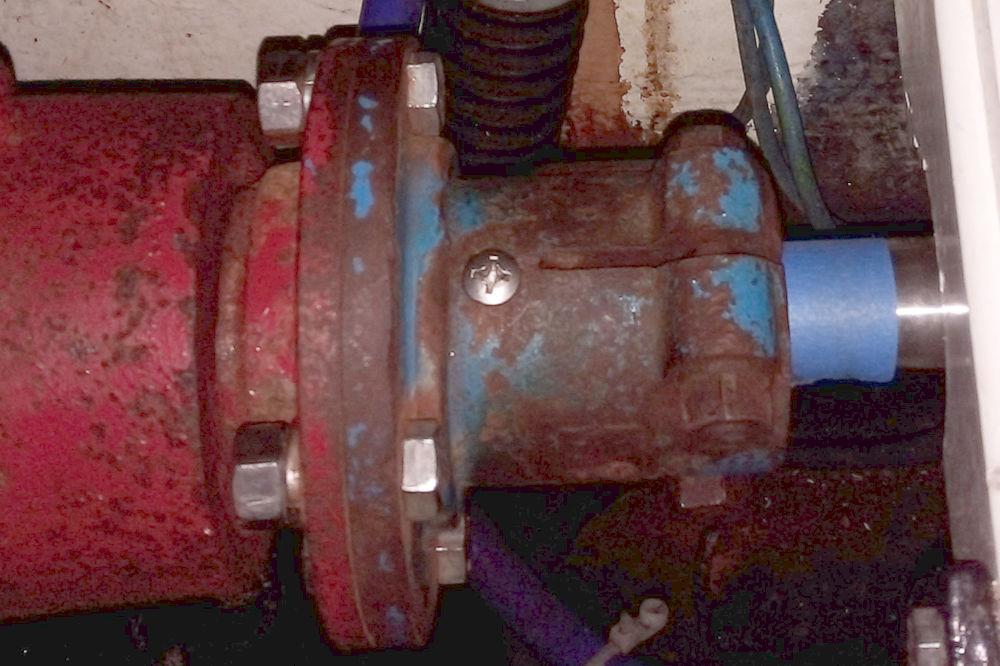
Thanks, ill check out your website. Its a 50 horse beta marine with a velvet drive transmission. Couple of photos attached, ignore tge replacement bolt im using, its temporary until i get close to a decent chandelry to get a proper bolt.20210528_200216-1.jpg20210528_200216-1.jpg
 
Not a conventional fatigue failure, too much damage to tell exactly, but the series of curved lines at the 4:00 position appear to be evidence of cyclic crack progression. I think I can see rusting on the face itself, which indicates that a crack has been present for some time. I think your pics support my suggestion of fatigue.
 
On your coupler are there any bolts that when tightened apply clamping pressure to the shaft? On my set up its these that do all the work to secure the shaft. Mine does have a single screw (similar to yours probably) but I can't see it adding any extra holding force and I've yet to discover it's use, my own theory is helps release the clamp when tightened. As I said, my own theory..
 
Yes there are a couple of bolts either side of the coupler that clamp it to the shaft. When i came to push the shaft back into the coupler they were proper tight and a very hard to undo. The prop shaft is drilled through and the bolt goes through the coupler and the prop shaft. I assume as a safety incase the clamp force from the coupler isnt great enough.
 
Yes there are a couple of bolts either side of the coupler that clamp it to the shaft. When i came to push the shaft back into the coupler they were proper tight and a very hard to undo. The prop shaft is drilled through and the bolt goes through the coupler and the prop shaft. I assume as a safety incase the clamp force from the coupler isnt great enough.
Lots of good advice already but you will have to ensure those clamp bolts do clamp the coupling tight on the shaft as they should do all the work. The fact that the throughbolt has sheered tells you that clamping was not sufficient. If the coupling has been rotating in the coupling after the throughbolt sheered the resulting wear may make it impossible to achieve a good clamping.

www.solocoastalsailing.co.uk
 
The shaft was replaced a couple of months ago, with a new shaft of the same spec as the old one, so, unless the engineer pulled a fast one, it is the same size. The shaft also has a keyway which I hope would have prevented any spinning. Getting a replacement shaft and fitting it in Fiji would be troublesome!
 
The shaft was replaced a couple of months ago, with a new shaft of the same spec as the old one, so, unless the engineer pulled a fast one, it is the same size. The shaft also has a keyway which I hope would have prevented any spinning. Getting a replacement shaft and fitting it in Fiji would be troublesome!
Would suggest taking the clamp bolts out to clean up the threads - check that there is spare thread past where the nut have been - lubricate & tighten with socket & knuckle bar.The rolls - royce answer would be a new R&D coupling which have multiple bolts to go with the new shaft.
 
I would suggest that the bolt should not have drilled through the shaft in the first place and that a locating screw dimpled into the shaft would have been more appropriate
 
Are you sure the shaft is the same spec?

shaft.jpg


That clamp on the old coupler looks as though it is meant to be gripping the shaft, but the tape seems to suggest it they tried to make it grip. Drilling a hole in the shaft is a bit of a 'simplified' way of getting over it and the bolt is way too small in cross-section anyway. Look at the massive bolts used everywhere else.
I'd suggest that calling him an 'engineer' is being a bit kind.
 
The shaft was replaced a couple of months ago, with a new shaft of the same spec as the old one, so, unless the engineer pulled a fast one, it is the same size. The shaft also has a keyway which I hope would have prevented any spinning. Getting a replacement shaft and fitting it in Fiji would be troublesome!
That does not sound right. The coupling is a clamp type so no need for a keyway - that is only normally used when the shaft has a taper on it. Clamp couplings like that don't have a keyway in them so there is nothing for the key to locate in. If the clamp bolts are so tight and the shaft still pulls out this suggests that either the shaft is the wrong size or the coupling bore is worn. Was there a through bolt before the shaft was replaced?
 
I would have thought the tape was put on before removal so it can be inserted back in the same position.
If the shaft was made correctly it should go in until it hits the end so you can't go wrong. The thrust is then taken by the coupling and not the clamp bolts.
 
Thanks again for all the responses!
So I put the tape on the shaft to mark how far into the coupler it goes (and yes it goes all the way) this was so the crew could check the shaft everyhour ro make sure it hadnt started backing out again.

The original shaft wasn't tappered, and was also through bolted the same way, and also had a keyway. The coupler has a slot for the key way that also looks original or at least from before my time on the boat so think for the coupler it was normal.
 

Other threads that may be of interest

Top