Securing hull anode bolts on inside of hull

Personally I don't think that design is very good , there is no way to prevent either stud from rotation when tightening the stud into the hull.
I would join the 2 studs with a steel strap inside with the studs welded to the strap. Tis will prevent the stud from loosing when tightening the anode nuts.
The strap between the two studs is what I already recommended that in my Posts #3 and #12 but welding the strap to the studs inside a GRP hull is surely a bit risky?

Www.solocoastalsailing.co.uk
 
The strap between the two studs is what I already recommended that in my Posts #3 and #12 but welding the strap to the studs inside a GRP hull is surely a bit risky?

Www.solocoastalsailing.co.uk

Who said welding inside a GRP hull. I would weld it in my workshop rather than lug my welder and gas bottle onto my boat.

Locking nuts together still does not always ensure the studs cannot turn when undoing the outside nuts when removing the anode.
 
Who said welding inside a GRP hull. I would weld it in my workshop rather than lug my welder and gas bottle onto my boat.

Locking nuts together still does not always ensure the studs cannot turn when undoing the outside nuts when removing the anode.
The OP is planning on using the MGDuff studs that have a square welded plate that goes on the outside of the hull so you can't weld the strip on before you fit the studs through the hull.

Locking the nuts together with the strip in between them has always worked for me.

Www.solocoastalsailing.co.uk
 
Last edited:
Need to replace my hull anode, and will probably do the bolts whilst I’m at it for piece of mind. They both came loose when I removed it, so they both need re-fixing anyhow.

Looking at replacement bolts, they all come with a square washer for the external side of the hull, which I presume is so that you can get a good seal with some Sikaflex etc. - but they don’t seem to come with anything to spread the load on the internal side of the hull?

Example of what I mean here: MGDUFF Fixing Stud for Bolt On Anodes M10BSS

Is it not necessary to use a washer or similar on the internal side to help spread the pressure on the internal side of the hull?

What do you do to fix the bolts internally?
Inside my GRP hull, there is a 3 inch plywood square for each bolt with sealant below. Then washer, nut, cable connector, nut, and finally, locking nut.
 
Who said welding inside a GRP hull. I would weld it in my workshop rather than lug my welder and gas bottle onto my boat.

Locking nuts together still does not always ensure the studs cannot turn when undoing the outside nuts when removing the anode.

How do you then fit the studs/plate to the boat ?
 
I've always had the square washer on the bolts inside the hull. It was like that when I bought the boat and I saw no reason to change. Bags of sealant around the plate and the first few threads ensures watertightness. the rubber gasket on the outside and then the anode, with nuts and locknuts has always served me well. I"ve only changed the bolts twice in over 20 years.
 
Obviously couldn’t weld the studs on a plate in situ on a GRP boat. And as I haven’t got a welder and don’t trust my welding that means careful measurement and paying someone to do it.

Our studs are held secure by the clamping pressure of the nut on the inside against the welded on square on the stud on the outside. A bit of sealant and they’ve never leaked. It’s how they’re sldesigned to be fitted. The pear anode we use lasts several seasons but I agree that the grip isn’t perfect and I always seem to end up twisting the studs when I’m undoing the nuts holding the anode and then I’m into re-bedding the studs so I put up with it. I’ve replaced the studs once in fifteen years so it’s no great hardship.
 
How do you then fit the studs/plate to the boat ?

The only difference is that the 2 holes for the sperate studs need to be the same distance apart as the the holes in the anode strap and the distance between the studs welded to the connection plate. these are then fitted from the inside with lots of sealant

The welds don't need to be pretty they only need to stop the stud turning.
 
I've always had the square washer on the bolts inside the hull. It was like that when I bought the boat and I saw no reason to change. Bags of sealant around the plate and the first few threads ensures watertightness. the rubber gasket on the outside and then the anode, with nuts and locknuts has always served me well. I"ve only changed the bolts twice in over 20 years.

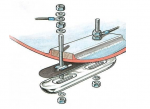
That's the wrong way of doing it. The square plates are supposed to be on the outside, with two nuts on the inside to stop the stud turning and to stop the studs coming out if the anode disintegrates.
 
The only difference is that the 2 holes for the sperate studs need to be the same distance apart as the the holes in the anode strap and the distance between the studs welded to the connection plate. these are then fitted from the inside with lots of sealant

The welds don't need to be pretty they only need to stop the stud turning.

Yes, it's rather obvious that the holes need to line up, i kind of guessed that bit.

What i'm asking is, not that you've pushed the studs through the hull, what do you do outside ? Do you just fit the anode, then washers and nuts ? Or some other way ?
 
I've always had the square washer on the bolts inside the hull. It was like that when I bought the boat and I saw no reason to change. Bags of sealant around the plate and the first few threads ensures watertightness. the rubber gasket on the outside and then the anode, with nuts and locknuts has always served me well. I"ve only changed the bolts twice in over 20 years.
This is the diagram that appears on MGDuff's and other websites . The isea is that the welded on plate and the first nut fitted inside fixes the stud in place,

1617183948454.png
 
The only difference is that the 2 holes for the sperate studs need to be the same distance apart as the the holes in the anode strap and the distance between the studs welded to the connection plate. these are then fitted from the inside with lots of sealant

The welds don't need to be pretty they only need to stop the stud turning.

The holes in the anode straps are usually slotted so its not the spacing between those that you would have to match ............. You would have to accurately match the spacing of the holes in the hull .

.
 
Yes, it's rather obvious that the holes need to line up, i kind of guessed that bit.

What i'm asking is, not that you've pushed the studs through the hull, what do you do outside ? Do you just fit the anode, then washers and nuts ? Or some other way ?

I would fit a big washer may be a square washer with lots of sealant underneath and in the countersink in the hull. Then a nut to lock/clamp the arrangment in place. Then I would fit he anode the inner nut spacing the anode from the hull to show then maximum area of anode exposed to the seawater.

The anode would be fitted with a spring washer an locknut then a locking nyloc nut to ensure the anode cannot fall off.

This ensures that the anode can be changes without the risk of dislodging the anode stud.
 
The holes in the anode straps are usually slotted so its not the spacing between those that you would have to match ............. You would have to accurately match the spacing of the holes in the hull .

.

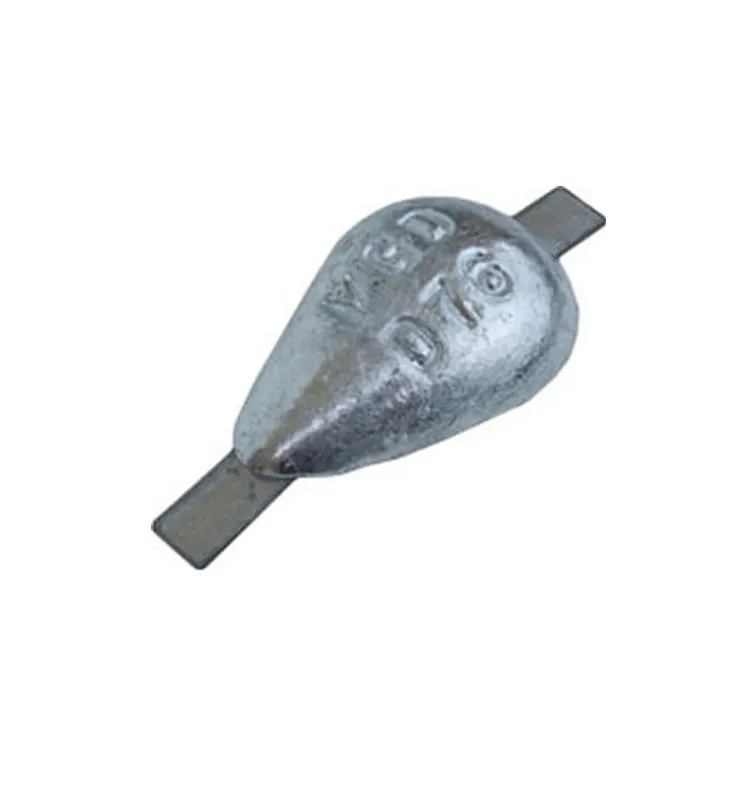
Not all anodes have slotted holes. The ones I use have a steel bar imbedded in the anode and I then drill holes in the mounting bar to suit the pitch of the studs.

zinc-salt-water-hull-anode-1295955490-l.jpg


HTB1rVOhSFXXXXXMaXXXq6xXFXXXy.jpg
 
i did mine last week i epoxy filler on the inside over the bolts as i have a habit of standing on them so wanted to make sure they are solid
 
Top