
Sea cock id (for servicing)

SandyP

Well-Known Member
Joined
20 Sep 2021
Messages
106
Visit site
Hi Everyone

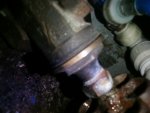
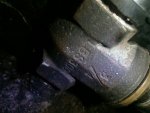
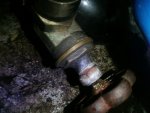
I've noticed a particular drip from the raw water sea cock on my old boat. It's probably the original and it looks serviceable

But I'd like to know what it is please!
Anyone recognise it?
Probably from around 1970

Thanks in advance
 

Attachments

  • IMG_20221119_120229.jpg
    IMG_20221119_120229.jpg
    555.6 KB · Views: 111
  • IMG_20221119_120251.jpg
    IMG_20221119_120251.jpg
    571.3 KB · Views: 112
  • IMG_20221119_120240.jpg
    IMG_20221119_120240.jpg
    646 KB · Views: 104
Hi Everyone

I've noticed a particular drip from the raw water sea cock on my old boat. It's probably the original and it looks serviceable

But I'd like to know what it is please!
Anyone recognise it?
Probably from around 1970

Thanks in advance
If I were you I would replace it, and the skin fitting if it's of the same age, with new DZR skin fitting and DZR ball valve from ASAP Supplies.

www.solocoastalsailing.co.uk
 
It is a gate valve. The nut directly below the operating wheel (not the large one) can be tightened to further compress the stem shaft packing / gland, or at least that is the usual solution for a leak at that point. Many of these gate valves, were bronze, which is likely why yours has survived so long, and also made to standard sizes and dimensions. When next out the water, remove the operating wheel, unscrew the nut and see what is in there, pick out and replace, very likely a standard part that can be ordered from many seal suppliers. Extra packing might be able to be inserted in the water just be removing the nut, but I don't know. If you undo the large nut the whole gate can be removed from the body.

My exhaust is similar but at 3" and if I tighten the nut, I can't operate the valve, so it requires just the right amount of pressure to seal. I believe over tightening this nut is an emergency method of sealing a stem packing leak. Sorry, I can't help with the make.

ASAP do have gate valves that look similar to yours.
 
I would also replace it - my experience with old gate valves is that it is difficult or impossible to repair. Replace with a DZR ball valve from ASAP for piece of mind and no leaks. Or as mentioned above, remove when ashore and service, if possible, on your workbench.
 
If one were replacing a valve today I’ve no idea why DZR would even be considered when composite are available. Strange that two recommendations have been made for this when the whole world has moved on.
 
If one were replacing a valve today I’ve no idea why DZR would even be considered when composite are available. Strange that two recommendations have been made for this when the whole world has moved on.
It appears that the OP has space to fit a composite valve but that can be a valid reason not to fit them. Definitely no room on my boat and my existing DZR ones are coming up to 40 years old, so little justification.
 
It is a gate valve. The nut directly below the operating wheel (not the large one) can be tightened to further compress the stem shaft packing / gland, or at least that is the usual solution for a leak at that point. Many of these gate valves, were bronze, which is likely why yours has survived so long, and also made to standard sizes and dimensions. When next out the water, remove the operating wheel, unscrew the nut and see what is in there, pick out and replace, very likely a standard part that can be ordered from many seal suppliers. Extra packing might be able to be inserted in the water just be removing the nut, but I don't know. If you undo the large nut the whole gate can be removed from the body.

My exhaust is similar but at 3" and if I tighten the nut, I can't operate the valve, so it requires just the right amount of pressure to seal. I believe over tightening this nut is an emergency method of sealing a stem packing leak. Sorry, I can't help with the make.

ASAP do have gate valves that look similar to yours.
I'd be astonished if it were bronze; I've never seen a yacht-sized gate valve that wasn't brass, although I'm not wholly convinced it is a gate valve, it may be an oddly shaped globe valve. I have no time for gate valves on yachts, they're too small to be renovated, old ones rarely seal tight and there are too many failure modes. I would replace it at the earliest opportunity. If you're married to the idea of keeping it dig out the packing and replace it, it's not a difficult job.
 
Last edited:
If one were replacing a valve today I’ve no idea why DZR would even be considered when composite are available. Strange that two recommendations have been made for this when the whole world has moved on.
Nothing wrong with DZR. If it had been available more widely in the past I doubt composite would have gained any foothold. In the US where Marelon valves have been available for many years metal sill dominate, although The composite are not a direct replacement for the standards ball valves or plug valves.
 
Hi Everyone

I've noticed a particular drip from the raw water sea cock on my old boat. It's probably the original and it looks serviceable

But I'd like to know what it is please!
Anyone recognise it?
Probably from around 1970

Thanks in advance
It is a standard 3/4" gate valve. Does it appear to work IE when you turn the wheel in one direction it turns many turns and then comes to a stop and if you then turn the wheel the other way does it again turn a similar number of turns and once more come to a stop. f so then this indicates the wheel and spindle are still working the gat up and down. If it just continues to turn in either direction then it is NOT operating the gate.

If the drip is coming from around the spindle this may be easily rectified . The nut on the body where the spindle comes out is a gland nut and if you turn it clockwise then you tighten the gland and the leakage may stop. The gland might need additional packing and for this you remove the handwheel and back off the gland nut. Your picture is not too clear but does indicate that there may be sever corrosion in the gland nut, a damaged gland nut and the gland body appears a pinky colour. If this is so then you might be wise to take the valve out or at least remove the valve head from the valve body for closer inspection.
 
Hi Everyone

I've noticed a particular drip from the raw water sea cock on my old boat. It's probably the original and it looks serviceable

But I'd like to know what it is please!
Anyone recognise it?
Probably from around 1970

Thanks in advance
The valve is a Class300 (PN50) 3/4" gate valve. If your lucky you may find a trim plate (disk with material data on it) under the nut that secures the hand wheel.
The burnished colour on the bonnet shoulder would to a keen eye give a possible indication as to whether its brass or bronze, but sadly I've long lost that eye. If I had to guess then as the colour is quite rich then I might pop for bronze but who knows, a trick of the light maybe.
As for the leak, unless you find a makers brand / name then it could have been made by any number of manufacturers, many no longer with us if its of an age. To cure the leak open the stem gland nut and have a look as there are several types of seal used within them and you may be able to find something or failing that make a running repair of one sort or another! While in there look for damage/ wear/ corrosion to the stem which is very possibly a contributor to the cause of the leak in the first place, causing rapid wear/ damage to the seal.
At the end of the day your first decision is to whether the valve is serviceable and I would suggest that if there is any doubt as to its longevity ( that is to say if its plain brass etc) then a change out is the sensible route. But your shout!
 
My own opinion on gate valves ( take it or leave it) ,after 45years in the industry, they have no place on a boat...
The most common problems are the leaky spindle as above, the gate often won't close completely due to obstruction in the gate park or worst still the gate will break away from the spindle caused by wear n tear , leaving it stuck in the closed position. This is usually discovered when you go to open the valve and the wheel just turns and turns and......This is a very common occurrence in domestic heating, closing a valve to do some service work and then it sticks closed and parts company from the spindle , problem solved by jumping the valve ( swapping it for a good un live ) bucket in your 3rd hand ,plenty of towels. Modern methods include freezing the water. Big however is you don't want this to happen on your engine raw water intake onboard your boat .
The main advantage of a gate valve is the fact once fully open it does allow a better flow through, due to its full pipe diameter opening as opposed to a ball valve which is restricting to the hole in the ball ( much reduced from the pipe diameter)
 
It is a standard 3/4" gate valve. Does it appear to work IE when you turn the wheel in one direction it turns many turns and then comes to a stop and if you then turn the wheel the other way does it again turn a similar number of turns and once more come to a stop. f so then this indicates the wheel and spindle are still working the gat up and down. If it just continues to turn in either direction then it is NOT operating the gate.

If the drip is coming from around the spindle this may be easily rectified . The nut on the body where the spindle comes out is a gland nut and if you turn it clockwise then you tighten the gland and the leakage may stop. The gland might need additional packing and for this you remove the handwheel and back off the gland nut. Your picture is not too clear but does indicate that there may be sever corrosion in the gland nut, a damaged gland nut and the gland body appears a pinky colour. If this is so then you might be wise to take the valve out or at least remove the valve head from the valve body for closer inspection.
Thanks to everyone, i guessed there would be good knowledge amoungst you!

The valve works as it should, just dribbling a little

I too was thinking it mght be best remove the main unit and fully service in the workshop

Knowing the packing needs replacing rather than anything else is good news (most likely)
I'm of the opinion it's bronze not brass and being a fresh water boat won't get the corrosion expected at sea, or the abuse
 
Last edited:
I'd be astonished if it were bronze; I've never seen a yacht-sized gate valve that wasn't brass, although I'm not wholly convinced it is a gate valve, it may be an oddly shaped globe valve. I have no time for gate valves on yachts, they're too small to be renovated, old ones rarely seal tight and there are too many failure modes. I would replace it at the earliest opportunity. If you're married to the idea of keeping it dig out the packing and replace it, it's not a difficult job.
Agree gate valves have no place upon a boat.
 
The main advantage of a gate valve is the fact once fully open it does allow a better flow through, due to its full pipe diameter opening as opposed to a ball valve which is restricting to the hole in the ball ( much reduced from the pipe diameter)
)
fortunately not always the case you just need to spec the right model......
RS PRO Stainless Steel Full Bore, 2 Way, Ball Valve, BSPP 25.4mm | RS

Yes, all my DZR ball valves are full bore.

Www.solocoastalsailing.co.uk
 
This reply has prompted me to wonder why stainless steel fittings are not used for all hull openings on a yacht. Their use would make a lot more sense (to me) than the corrosion-prone technology that we have inherited.
Primarily price and availability. While valve prices are comparable if 316, fittings are generally much more expensive. Like yellow metal there are different grades and cheaper industrial ones are usually 304. There are no advantages over DZR (but obviously better than plain brass) and you have the additional risk of potential crevice corrosion, particularly in threads of fittings, just like dezincification in brass.

Tradition also has a lot to do with it as yellow metals have always been connected with "marine" and corrosion resistant yellow metal alloys predate stainless by a long way.
 
Hi Everyone

I've noticed a particular drip from the raw water sea cock on my old boat. It's probably the original and it looks serviceable

But I'd like to know what it is please!
Anyone recognise it?
Probably from around 1970

Thanks in advance


My boat was built in 1979 and the gate valves to cockpit drains/ engine cooling and sink waste were all fitted then. Boat is Halmatic 30 so all good quality workmanship and fittings. The cockpit drains had become a little stiff over time, so about 3 years ago over the winter ashore I took the cockpit valves out, stripped, cleaned and sprayed them regularly with release oil. Just before relaunching I lubricated them and re-fitted/re-assembled the first, but whilst very gently tightening the bonnet it suddenly became loose. When I took it off I found that the threads had stripped. They were brittle and carrot coloured which could not be seen before they failed. I replaced the lot at short notice with valves from ASAP. I also carefully checked the skin fittings. It was pretty clear that screwing/unscrewing the valve could have dislodged the thread and caused a significant leak when afloat as you can apply a lot of weight on the valve hand wheel.
 
Top