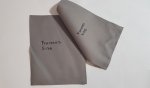
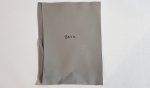
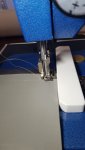
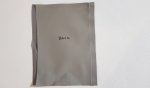
Sailrite Sewing Machine

IMO, you need to get some cheap fabric and try some techniques.
I suggest that you don't try to make anything yet.
Get an off cut, cut it in half and then join it back up again to make a seam.
Believe me this is an important step to get right.
Don't wait until you need to make a joint - experiment with some scraps first.
Otherwise when you are cutting your first job, you might not allow the right amount extra fabric for the seam.
Remember that a seam allowance needs to be on both parts that are to be joined.

IIRC, the Sailrite videos show three types of seams (I think they called them all French seams but I believe that a French seam is a bit more specific).
Anyway, this is how I make a seam:-
I usually place the first piece of fabric - finished side up
I then run some 12mm Venture tape along the side to be joined making sure that the tape is as close to the edge as possible without running over the edge.
Using the Venture tape, I then stick the second piece of fabric (finished side down) so that both finished sides are facing each other.
The join is then at the edge of the two pieces,
I then set the magnetic guide on the Sailrite to the 1/2" mark on the right side of the Sailrite.
Then I set the Sailrite needle offset to the left (furthest away from the magnetic guide).
Sew a line of stitches using the magnetic guide to position the stitches.
The machine will then sew a line of stitches about 15mm in from the fabric edge.
Remove from the machine.
I then stick another length of 12mm Venture tape along the top of the two pieces of joined fabric.
I then fold the top piece of fabric so that the finished sides are facing up.
Use the venture tape to hold it down but pull the fabric tight.
Be ruthless with the fabric so the the stitches that you have just sewn are almost showing through onto the finished side.
I have an old plastic ruler that I then run down the top side of the seam to get the fold nice and tight.
I then try to remember to set the needle offset to the middle.
Then I sew the top set of stitches to finish the seam - I use the edge of little square section of the Sailrite's inner foot as a reference to keep the stitches straight.

My machine is still out on the table so I could also make a sample of the above and take some pics if you think that will be helpful.

I have some notes in PDF format with drawings that I produced when Tim and I were exchanging ideas.
The idea is so that I can remember what I did when I get the sewing machine out again after a few months/years later.
My memory isn't very good!!
My notes cover Seams, Edge Binding and Zips.
I could post the notes on here if anyone is interested.
 
IMO, you need to get some cheap fabric and try some techniques.
I suggest that you don't try to make anything yet.
Get an off cut, cut it in half and then join it back up again to make a seam.
Believe me this is an important step to get right.
Don't wait until you need to make a joint - experiment with some scraps first.
Otherwise when you are cutting your first job, you might not allow the right amount extra fabric for the seam.
Remember that a seam allowance needs to be on both parts that are to be joined.

IIRC, the Sailrite videos show three types of seams (I think they called them all French seams but I believe that a French seam is a bit more specific).
Anyway, this is how I make a seam:-
I usually place the first piece of fabric - finished side up
I then run some 12mm Venture tape along the side to be joined making sure that the tape is as close to the edge as possible without running over the edge.
Using the Venture tape, I then stick the second piece of fabric (finished side down) so that both finished sides are facing each other.
The join is then at the edge of the two pieces,
I then set the magnetic guide on the Sailrite to the 1/2" mark on the right side of the Sailrite.
Then I set the Sailrite needle offset to the left (furthest away from the magnetic guide).
Sew a line of stitches using the magnetic guide to position the stitches.
The machine will then sew a line of stitches about 15mm in from the fabric edge.
Remove from the machine.
I then stick another length of 12mm Venture tape along the top of the two pieces of joined fabric.
I then fold the top piece of fabric so that the finished sides are facing up.
Use the venture tape to hold it down but pull the fabric tight.
Be ruthless with the fabric so the the stitches that you have just sewn are almost showing through onto the finished side.
I have an old plastic ruler that I then run down the top side of the seam to get the fold nice and tight.
I then try to remember to set the needle offset to the middle.
Then I sew the top set of stitches to finish the seam - I use the edge of little square section of the Sailrite's inner foot as a reference to keep the stitches straight.

My machine is still out on the table so I could also make a sample of the above and take some pics if you think that will be helpful.

I have some notes in PDF format with drawings that I produced when Tim and I were exchanging ideas.
The idea is so that I can remember what I did when I get the sewing machine out again after a few months/years later.
My memory isn't very good!!
My notes cover Seams, Edge Binding and Zips.
I could post the notes on here if anyone is interested.
Thanks Hurricane that is extremely informative ! I have been asking the wife for scrap material but she told me to look for myself. Any and all information and photos are greatly appreciated.
The mechanic has finished for today, he returns tomorrow morning to reinstall the clean after cooler. So I have this evening and most of tomorrow to practice
 
Thanks Hurricane that is extremely informative ! I have been asking the wife for scrap material but she told me to look for myself. Any and all information and photos are greatly appreciated.
The mechanic has finished for today, he returns tomorrow morning to reinstall the clean after cooler. So I have this evening and most of tomorrow to practice
Probably best if you can find some canvass.
The the material is too floppy you won't get a good feel for how the proper stuff will work later.

Old knickers won't do.

I will knock up a sample with some pics later this evening.
 
A live aboard yachtie in our marina recently bought a Singer 4423 machine.

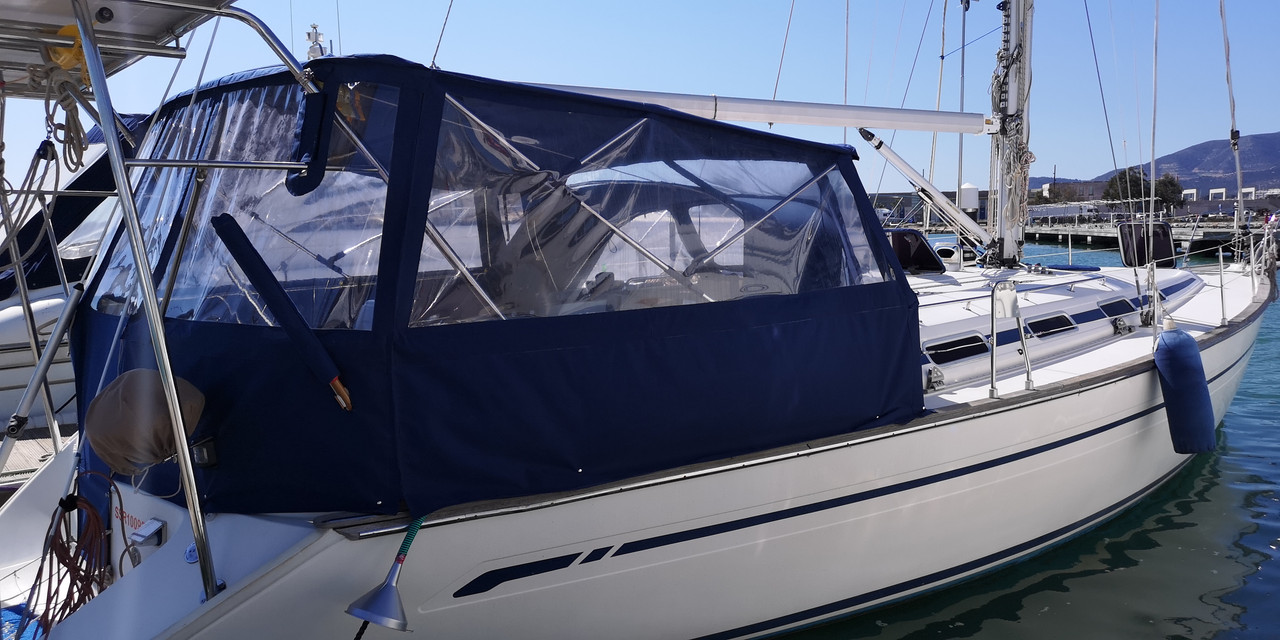
Last month, he made this:-

IMG-20210216-134207.jpg


He has just finished this:-

IMG-20210315-125405.jpg


Very frustrating for us in the UK when all that sun is beaming down out where we keep our boats.

@Bouba anyway, rest assured, you will get there in the end.
How is the experimenting going on?
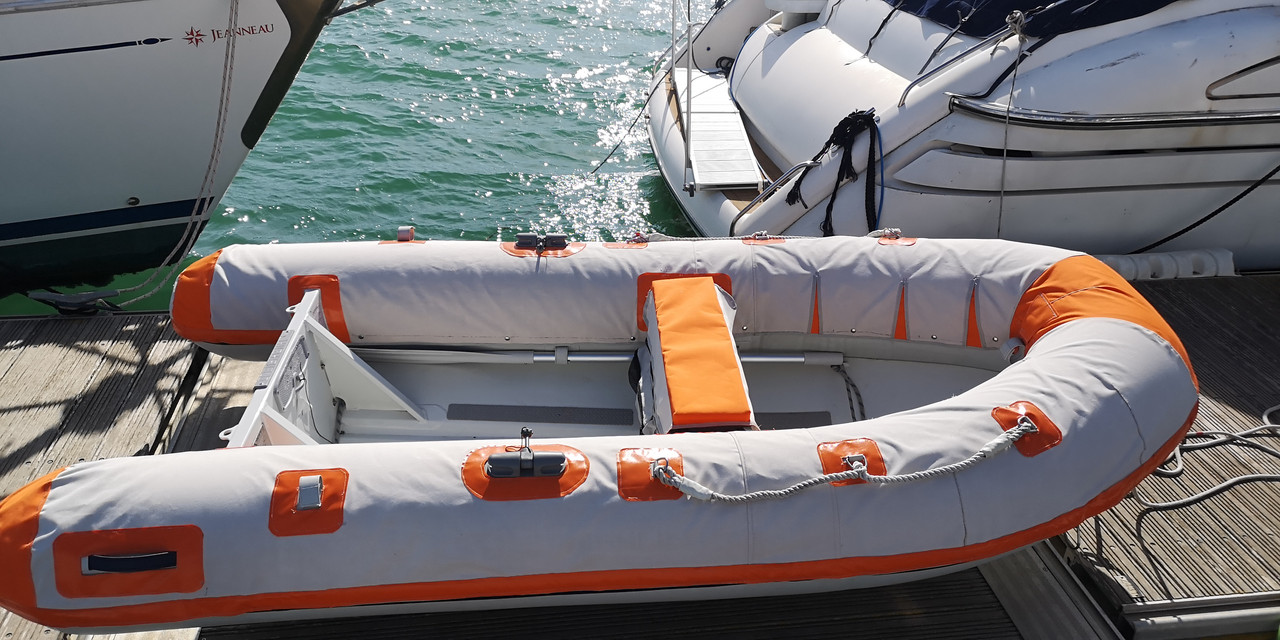
Looking closely at the dinghy chaps because that is my dinghy! That makes that a very interesting photo! Lots of ideas to steal
 
Hurricane, do you know if he has press studs on the outside as well (perhaps hidden under the orange stripe)?
 
Sorry, I don't know.
I haven't known him for long.
But @John100156 knows him well.
I will send John an email - I'm sure John will be along soon on this thread.
Maybe John and I can can get this guy to join in this forum thread he posts quite frequently on SCMCHAT.
If not, you could join SCMCHAT!!!
 
Hurricane, do you know if he has press studs on the outside as well (perhaps hidden under the orange stripe)?
Hi.
The press studs on the inside are called YKK snads. They are very expensive.
If you check out " sewing on boats" and " DIY dinghy chaps" both on Facebook, there's loads of information.
Happy to help, if I can.
Neil
 
I was intrigued by the press studs as well. I guess the part on the tubes is glued on somehow.

The only thing I made for the dinghy ( a 2.6m RIB) last summer was a sun cover... It was actually patterned to fit the dinghy in a right way up position on the foredeck (with a small umbrella shaped support on the seat). Made that way it also fits whilst dinghy stored on the snap davits.

20210318_183717.jpg
 
OK so I've done a REALLY quick demo of how I make a seam.

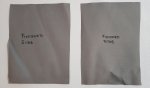
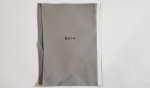
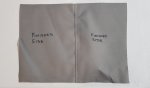
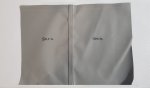
These are the off cut pieces that I am going to join with a seam.

1.resized.jpg

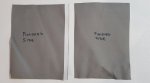
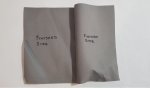
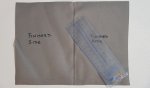
First I stick some 12mm Venture tape along one of the sides that are to be joined

2.resized.jpg

Using the venture tape, I stick the joint (finished face to finished face)

3.resized.jpg

4.resized.jpg

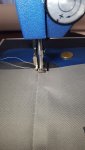
Then - off to the machine - with the magnetic guide set at 1/2" and the needle offset to the left.

5.resized.jpg

To produce this

6.resized.jpg

Next add some more 12mm Venture tape

7.resized.jpg

Fold the joint over and stick it down with the Venture tape

8.resized.jpg

Pull the seam hard apart intil you can see the stitches poking through.
I use an old plastic ruler to flatten the joint.

9.resized.jpg

Flatten it like this

10.resized.jpg


STUPID FORUM SOFTWARE AGAIN - NOT LETTING ME PUT MORE THAN 10 PICS IN A POST - UGHHH
MORE TO FOLLOW IN TH NEXT POST
 
Hi.
The press studs on the inside are called YKK snads. They are very expensive.
If you check out " sewing on boats" and " DIY dinghy chaps" both on Facebook, there's loads of information.
Happy to help, if I can.
Neil
Neil, is that your dinghy in Hurricane’s photo?
I have some snads (I ordered them with the machine, they have a sticky back).
My dinghy is a Highfield 2.6m aluminum rib
 
CONTINUING ON THEN

And then it is back to the machine again
Note the little square part on the inner foot - I use as a guide

11.resized.jpg

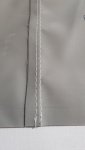
This is the finished top stitch.
I used white thread so that you can see it.
It will look much better if you use a thread that matches the colour of the fabric.

12.resized.jpg

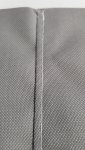
This is the back

13.resized.jpg

And here are a couple of closer shots.

14.resized.jpg

15.resized.jpg

I hope that is all self explanatory.

@Bouba - it is really worthwhile getting this bit right before you start.
Also I think it might be worth making a couple of simple bags first before starting on dinghy chaps.
 
OK so I've done a REALLY quick demo of how I make a seam.

These are the off cut pieces that I am going to join with a seam.

View attachment 111609

First I stick some 12mm Venture tape along one of the sides that are to be joined

View attachment 111610

Using the venture tape, I stick the joint (finished face to finished face)

View attachment 111611

View attachment 111612

Then - off to the machine - with the magnetic guide set at 1/2" and the needle offset to the left.

View attachment 111613

To produce this

View attachment 111614

Next add some more 12mm Venture tape

View attachment 111615

Fold the joint over and stick it down with the Venture tape

View attachment 111616

Pull the seam hard apart intil you can see the stitches poking through.
I use an old plastic ruler to flatten the joint.

View attachment 111617

Flatten it like this

View attachment 111618


STUPID FORUM SOFTWARE AGAIN - NOT LETTING ME PUT MORE THAN 10 PICS IN A POST - UGHHH
MORE TO FOLLOW IN TH NEXT POST

That is brilliant, I just wound a bobbin, which was the most complicated thing I’ve ever done until I threaded the needle ?
Anyhow I did a test on a piece of suede I found. Looks really good! Tomorrow, in the light of day, I will join two pieces of suede as you have shown in your photos. Thanks
 
And here is an attachment showing my notes.
As I said above, these notes are mainly for me to remember how I do stuff.
But they might be helpful to others.
That’s impressive!
Tomorrow morning the Cummins mechanic returns with my after cooler. I’m not sure if we are going to do a test run as the forecast has got very windy. So I should have all afternoon to try your technique. There is also an upholsterey shop outside of town, not sure if it’s open because of covid but I’ll see if they sell material to practice on.
 
one thing i found - especially when dealing with long pieces of fabric - is that it's really nice to have a large long area on the side from which the fabric is being fed.., that is the same height as the business area of the machine.

that way you can see, as the fabric approaches that it's all aligned correctly.

If the fabric has to go over a big bump just before it gets to the needle, it's more likely to not be aligned properly.

obviously you aren't going get something as nice as a sail loft floor.., but just finding or making some sort of platform the right height that you can put on your table adjacent to the machine will help
 
Top