Hurricane
Well-Known Member
IMO, you need to get some cheap fabric and try some techniques.
I suggest that you don't try to make anything yet.
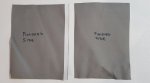
Get an off cut, cut it in half and then join it back up again to make a seam.
Believe me this is an important step to get right.
Don't wait until you need to make a joint - experiment with some scraps first.
Otherwise when you are cutting your first job, you might not allow the right amount extra fabric for the seam.
Remember that a seam allowance needs to be on both parts that are to be joined.
IIRC, the Sailrite videos show three types of seams (I think they called them all French seams but I believe that a French seam is a bit more specific).
Anyway, this is how I make a seam:-
I usually place the first piece of fabric - finished side up
I then run some 12mm Venture tape along the side to be joined making sure that the tape is as close to the edge as possible without running over the edge.
Using the Venture tape, I then stick the second piece of fabric (finished side down) so that both finished sides are facing each other.
The join is then at the edge of the two pieces,
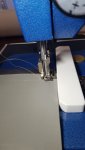
I then set the magnetic guide on the Sailrite to the 1/2" mark on the right side of the Sailrite.
Then I set the Sailrite needle offset to the left (furthest away from the magnetic guide).
Sew a line of stitches using the magnetic guide to position the stitches.
The machine will then sew a line of stitches about 15mm in from the fabric edge.
Remove from the machine.
I then stick another length of 12mm Venture tape along the top of the two pieces of joined fabric.
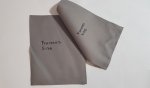
I then fold the top piece of fabric so that the finished sides are facing up.
Use the venture tape to hold it down but pull the fabric tight.
Be ruthless with the fabric so the the stitches that you have just sewn are almost showing through onto the finished side.
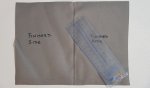
I have an old plastic ruler that I then run down the top side of the seam to get the fold nice and tight.
I then try to remember to set the needle offset to the middle.
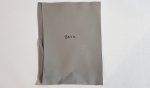
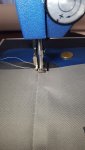
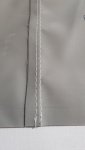
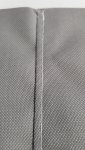
Then I sew the top set of stitches to finish the seam - I use the edge of little square section of the Sailrite's inner foot as a reference to keep the stitches straight.
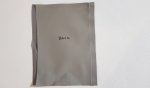
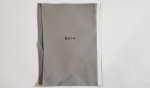
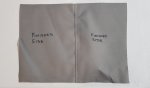
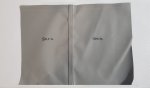
My machine is still out on the table so I could also make a sample of the above and take some pics if you think that will be helpful.
I have some notes in PDF format with drawings that I produced when Tim and I were exchanging ideas.
The idea is so that I can remember what I did when I get the sewing machine out again after a few months/years later.
My memory isn't very good!!
My notes cover Seams, Edge Binding and Zips.
I could post the notes on here if anyone is interested.
I suggest that you don't try to make anything yet.
Get an off cut, cut it in half and then join it back up again to make a seam.
Believe me this is an important step to get right.
Don't wait until you need to make a joint - experiment with some scraps first.
Otherwise when you are cutting your first job, you might not allow the right amount extra fabric for the seam.
Remember that a seam allowance needs to be on both parts that are to be joined.
IIRC, the Sailrite videos show three types of seams (I think they called them all French seams but I believe that a French seam is a bit more specific).
Anyway, this is how I make a seam:-
I usually place the first piece of fabric - finished side up
I then run some 12mm Venture tape along the side to be joined making sure that the tape is as close to the edge as possible without running over the edge.
Using the Venture tape, I then stick the second piece of fabric (finished side down) so that both finished sides are facing each other.
The join is then at the edge of the two pieces,
I then set the magnetic guide on the Sailrite to the 1/2" mark on the right side of the Sailrite.
Then I set the Sailrite needle offset to the left (furthest away from the magnetic guide).
Sew a line of stitches using the magnetic guide to position the stitches.
The machine will then sew a line of stitches about 15mm in from the fabric edge.
Remove from the machine.
I then stick another length of 12mm Venture tape along the top of the two pieces of joined fabric.
I then fold the top piece of fabric so that the finished sides are facing up.
Use the venture tape to hold it down but pull the fabric tight.
Be ruthless with the fabric so the the stitches that you have just sewn are almost showing through onto the finished side.
I have an old plastic ruler that I then run down the top side of the seam to get the fold nice and tight.
I then try to remember to set the needle offset to the middle.
Then I sew the top set of stitches to finish the seam - I use the edge of little square section of the Sailrite's inner foot as a reference to keep the stitches straight.
My machine is still out on the table so I could also make a sample of the above and take some pics if you think that will be helpful.
I have some notes in PDF format with drawings that I produced when Tim and I were exchanging ideas.
The idea is so that I can remember what I did when I get the sewing machine out again after a few months/years later.
My memory isn't very good!!
My notes cover Seams, Edge Binding and Zips.
I could post the notes on here if anyone is interested.