ross84
Well-Known Member
Would a smaller yacht even survive those sorts of seas?


Would a smaller yacht even survive those sorts of seas?

I have often dreamed about crossing the atlantic single handed in my 31 ft yacht, but the biggest worry has always been the motion that I would encounter. I have never really had a serious answer to my queries about motion.
I have been in F8 quite a few times in the southern north sea & twice in my sailing life in F9. (once crewed in my current boat & once SH in my first boat) But normally not more than about 20 hour trips.My first boat would heave to beautifully & just sit there & bob up & down. My current boat will not allow me to leave the tiller for a single second on any point of sail & will not heave too.
Last month I crossed the Dover straits , Boulogne to Ramsgate, in F8. I could not use the autopilot & I could not even contemplate getting below due to the motion. I just had to sit it out by the tiller & hold on. Having crossed the shipping lane I bore off for Ramsgate & the GPS showed SOG of 12 +kts quite a lot of times times (with the tide of course) the boat just went mad.
How on earth can someone survive a gale in the atlantic for several days in conditions like that.
A single handed sailor friend claims that he has encountered worse seas off Canvey island than in 2 atlantic crossings. I find that difficult to understand.
So what is the motion really like. Are the seas anything like those in the Dover Straits or are they just big and rolly. Big swells are OK, but they must still have waves on them.
How does one cope with that day after day in a 31 ft boat?
We're thinking of a trip to the Azores in our 32 foot Sadler. The three things I want are a wind vane, a boat that can heave-to, and a Jordan Series Drogue.
What determines if a boat can heave to or not? Keel type?
What determines if a boat can heave to or not? Keel type?

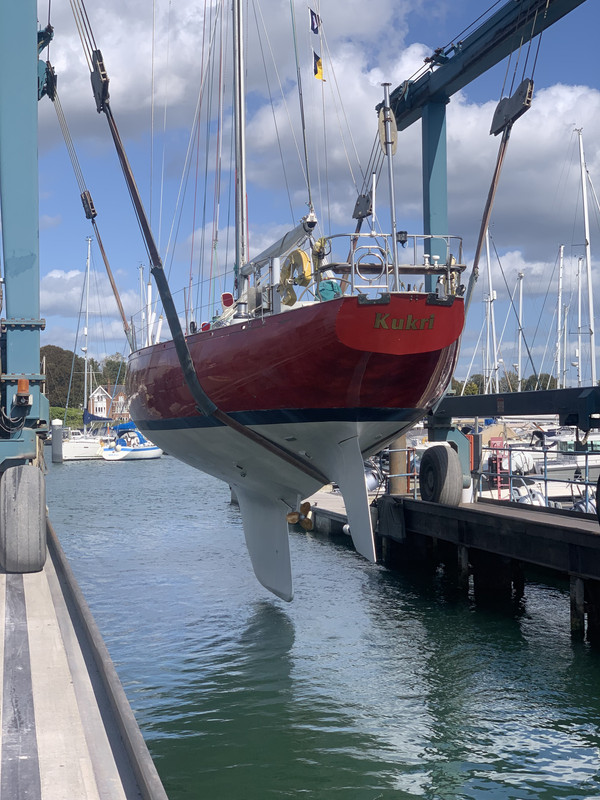
Would the S26/29 be the same? Would you consider any of the Sadlers bluewater boats? I've been looking at the 26/29 and really like them.
As much as I love our Sadler 32 I wouldn't, despite our plans for the Azores, consider her or 29s or 26s ideal bluewater craft. The smaller the boat, the slower, more uncomfortable, difficulty in carrying water, fuel, gear etc. and, ultimately the greater danger of being rolled if caught sideways to a breaking sea. That said, smaller craft do manage and, speaking personally, the S32 is the only boat I will own and so we either go or don't in her - there are no other choices.
All that said you might be interested in this view on the Sadler 29 ... http://theguerns.blogspot.com/2010/11/sadler-29-world-cruiser.html

We're thinking of a trip to the Azores in our 32 foot Sadler. The three things I want are a wind vane, a boat that can heave-to, and a Jordan Series Drogue.

................. I won’t be getting a windvane - it’s in the wrong place 99 percent of the time for a boat where you get off at the stern either at anchor or or tied up. Electronic pilot will do the job and just in case on our Atlantic crossing we will take two friends as manual steering backup. ...........................
We’ve just done a trip this year from Gib to the Canaries - difficult and uncomfortable beat out towards Madeira for a couple days before a unidentifiable leak (at the time) sent us downwind instead.
But we have none of your 3 requirements - an EPIRB was the only extra for the passage. I won’t be getting a windvane - it’s in the wrong place 99 percent of the time for a boat where you get off at the stern either at anchor or or tied up. Electronic pilot will do the job and just in case on our Atlantic crossing we will take two friends as manual steering backup. It won’t heave go in big seas and that’s a small pity but I expect to be beating slowly or going downwind in a very big blow. The drogue makes possible sense in those conditions though, so I have a simple parachute drogue as it’s far lighter and easier to pack and I can use an existing anchor warp set up for the job before leaving.
But in answer to the OP you either enjoy roughish conditions or you don’t - and the ability to get warm and get your head down is crucial so practicing lots of overnighters around the channel and Brittany is ideal and eats up the miles.
Apparently, the only Wind Vane that can be installed off-set so it doesn't obstruct stern access is Hydrovane. One of the main reasons why so many modern yachts use Hydrovane.
May I politely query you phrase 'parachute drogue', as my reading around this subject ( I myself never having used the devices in a storm ) has led me to believe that they are completely different things: a sea anchor is streamed from the bows, like an anchor almost stopping your sternway with huge snatching potential, but the JSD is streamed from the stern, allowing you to make way slowly forwards downwind. The latter now being regarded as a better tactic. Or have I misunderstood your post?
I am learning about this kind of thing before doing some ocean sailing ( my first as skipper not crew) next winter.
Aha I see, thanks for explaining.You are right about the difference between a sea anchor and a drogue and I’m not at all convinced by the safety of a sea anchor on a hung rudder. So I went for the drogue option (so trailed from the stern) but as a single large drogue rather than a series of very small drogues attached along the warp. The JSD really appealed to me but cost and particularly storage space did not.
Worth a few quid on a kindle, imho...I am learning about this kind of thing before doing some ocean sailing ( my first as skipper not crew) next winter.
Many thanks, great minds think alike, I already have it :encouragement:Worth a few quid on a kindle, imho...
https://www.amazon.co.uk/gp/product/B01G9Y2O2M/ref=dbs_a_def_awm_bibl_vppi_i3