
Saildrive plug

In case the warnings above were not clear enough regarding tube down the dipstick hole.
Inside the gear lives a tiny gnome that is a master in knots and bends.
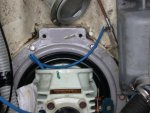
View attachment 81625

Ah ha, so we have some saying pela down the dip stick is a thing and will work, some that say the tiny gnome will vex the process? Did you win Eilerts? Or go back to the plug?
 
Ah ha, so we have some saying pela down the dip stick is a thing and will work, some that say the tiny gnome will vex the process? Did you win Eilerts? Or go back to the plug?

Depends entirely on which Saildrive you’ve got fitted, as the gnomes only live in some of the types of Saildrive, they’re not fond of the other types.

As I said earlier I’ve got a 120 S-E which has a separate dipstick, which offers a reasonably clear path down to the bottom of the leg: it also uses a fairly thick gear oil as opposed to the engine oil used in other models. Other models don’t have that pathway so you can’t suck the oil out. Look at the label on the Saildrive to find out which one you’ve got fitted....
 
Last edited:
Ah ha, so we have some saying pela down the dip stick is a thing and will work, some that say the tiny gnome will vex the process? Did you win Eilerts? Or go back to the plug?
I looked at a drawing and got idea that there was a way. I tried to find it with a tube. After some trial the tube suddenly went smoothly down. Actually, it just curled up in the nicely rounded gear house. When I tried to retract it, the gnome was there and made a knot. The boat was on the water so I could not move it to a place to get it lifted, so I had open the back lid and deal with the mess.

Depends entirely on which Saildrive you’ve got fitted, as the gnomes only live in some of the types of Saildrive, they’re not fond of the other types.
I believe this is correct. Mine is a 120S, don't know the addition letter, but it is from 1982.

A couple of weeks ago I discovered water in the gear oil, so I'm waiting for a lift-out. It has been a recurring problem. Very annoying, but I have never seen any corrosion on the internal metal surfaces. Apparently the oil protects well
 
I have a 120SD from 1996.

I cannot remove the drain plug even with an impact driver (haven’t hit it with a sledge hammer which might do the trick but might crack the casing!)

I use an electric pump with thin tube down the dipstick hole and get the good majority of the oil out, which I change every 2 years.

It is best to do this immediately after arriving in the marina and shutting the engine down so that any water hasn’t settled.
 
Last edited:
I have a 120SD from 1996.

I cannot remove the drain plug even with an impact driver (haven’t hit it with a sledge hammer which might do the trick but might crack the casing!)

I use an electric pump with thin tube down the dipstick hole and get the good majority of the oil out, which I change every 2 years.

It is best to do this immediately after arriving in the marina and shutting the engine down so that any water hasn’t settled.

Yes. Or at least as soon as reasonably practicable.You don't want to leave any water in there.

Collect the oil you pump out in a clean container and examine a sample. It should be " clear and bright " although perhaps a little darker in colour than when new. Cloudiness indicates water and time to renew the seals
 
Last edited:
Big heavy thick flat head screwdriver with pressure on it, whilst gripping and turning with a good quality shifting spanner like a bacho will do it.

As for the chap that’s advised not to change the oil every year....my goodness, hopefully you haven’t taken that advice with any sincerity!
 
Big heavy thick flat head screwdriver with pressure on it, whilst gripping and turning with a good quality shifting spanner like a bacho will do it.

As for the chap that’s advised not to change the oil every year....my goodness, hopefully you haven’t taken that advice with any sincerity!

If you change the oil in any gearbox or differential, boat or car, every year if you are using good quality oil and there is no visible degradation or contamination of that oil, then you are simply wasting your time and money.

However, it's a free country so one can, of course, do what whatever one feels comfortable with, commensurate with one's engineering experience. ;)

Richard
 
Originally ATF was specified but that was changed in a service bulletin issued IIRC in 2010 to engine oil

I found a link to the service bulletin a few days ago. Cant find it again of course

The exception is the 120S-E ( fitted to some more powerful engines ) which uses a gear oil

So I've managed to get a pela a little way in - the oil fill hole is the same as the dip stick hole in my 120S-D, as the Pela was doing its think I found a locker on Mirage with engine spares! Useful! However, in there is Volvo Penta ATF fluid, so I'm guess that is what is in the sail drive.

Bearing in mind with the pela I might get out 80% of the oil, does ATF and oil mix or is that a recipe for disaster? How do I tell if what's been extracted is ATF and not oil?
 
Last edited:
If it's red/pink then it will be ATF. If it's the yellow/brown colour of normal oil then it's not going to be easy to tell the difference. AFT and thin engine oil do usually smell slightly different but that's going to be a rather subjective test.

They will mix OK but I would definitely suck out as much as you can before mixing.

Richard
 
So I've managed to get a pela a little way in - the oil fill hole is the same as the dip stick hole in my 120S-D, as the Pela was doing its think I found a locker on Mirage with engine spares! Useful! However, in there is Volvo Penta ATF fluid, so I'm guess that is what is in the sail drive.

Bearing in mind with the pela I might get out 80% of the oil, does ATF and oil mix or is that a recipe for disaster? How do I tell if what's been extracted is ATF and not oil?

It does not matter if you don't get all the ATF out. VP said this when the instruction to change from ATF to engine oil was first issued.
IIRC they suggested that if the boat could not be taken out out of the water to drain the saildrive completely it was OK to simply suck out the oil from the upper gear box and refill with engine oil.
 
Possible your oil screw has been fitted with the incorrect seal so is jammed in. Even possible the seal had faded or was never there!

Use a very large flat bladed screwdriver, one with a squared flat faced shaft. Apply a spanner to the shaft and arrange for max upward pressure on the screwdriver. Apply turning pressure - always works for me, but I have seen yards use impact tools as described in this thread.

Always check the colour of the oil when released into the waiting bucket - any signs of discolouration and you should suspect the shaft seals - immediate replacement indicated; less than £50 from Keypart. Ensure the shaft is not scored or the new seals will fail; a collar can be floated onto the shaft to remedy the scoring - not a difficult job but benefits from some expertise. Buying a new shaft costs lots.

Best,

PWG

PWG
 
A few years ago while the boat was ashore for the Winter I decided to change the gear box/saildrive leg oil, not because the oil was cloudy , but as a routine maintenance item.
I found the bottom plug was effectively sealed in with a lot of anti-fouling which I cleared. The plug then came out albeit with some difficulty. The oil was 'as new' in appearance but no matter. I bought a new plug seal which is an 'o' ring and re-fitted the plug with the correct torque - 10 Nm.

M.
 
If you change the oil in any gearbox or differential, boat or car, every year if you are using good quality oil and there is no visible degradation or contamination of that oil, then you are simply wasting your time and money.

However, it's a free country so one can, of course, do what whatever one feels comfortable with, commensurate with one's engineering experience. ;)

Richard

Hi Richard

As you say, each to their own...but I might add that comparing all marine gearbox or drive train to a car gearbox is an apples and oranges comparison.

I might also add that some marine gearbox are straight cut dog clutch design. They by their very nature mechanically wear in operation. Leaving a small bit of metal swarf in the oil each year...hence the magnetic drain screw. It’s essential to change the oil every year...

But perhaps to summarise and surpass all that...it’s in the bloody manual. Who in their right mind would advise against that ?
As a former mca coded class 2 marine engineer, I can’t let this one go really.

All the best.
 
Hi Richard

As you say, each to their own...but I might add that comparing all marine gearbox or drive train to a car gearbox is an apples and oranges comparison.

I might also add that some marine gearbox are straight cut dog clutch design. They by their very nature mechanically wear in operation. Leaving a small bit of metal swarf in the oil each year...hence the magnetic drain screw. It’s essential to change the oil every year...

But perhaps to summarise and surpass all that...it’s in the bloody manual. Who in their right mind would advise against that ?
As a former mca coded class 2 marine engineer, I can’t let this one go really.

All the best.

I stripped down and rebuilt my first gearbox in 1970. :)

Of course, I didn't suck out the old oil with a Pela which everyone does now .... which kinda puts your magnetic swarf into context.

Richard
 
Last edited:
Does not mean you did it right, or that you can still do it right.
Just means that you are probably older than 59 years.
So not that far short of " doddery old fart" age :ambivalence:

I did my first gearbox overhaul in the early 1970s but my first complete engine overhaul in 1969

I am well past "doddery old fart". More like "One foot in the grave"
 
Top