jakew009
Well-Known Member
Today was.. eventful 
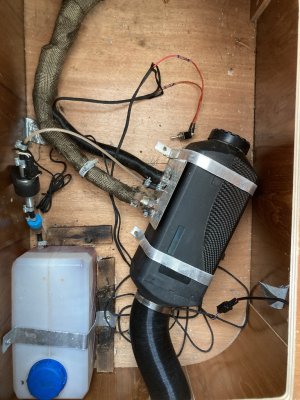
New boat to me, planning on doing a big refit this winter. I went over it before I first launched it and decided that whilst lots of things had been bodged by previous owners, nothing was dangerous (apart from the chinaspacher heater which I disconnected).
One thing I did do was buy a Lewmar Epsilon (Rocna clone) anchor to replace the silly bruce thing on it. Very glad I did that..
So having been out on it numerous over the past few weeks, decided on a solo trip to Clovelly (about 10nm) to lounge around in the sun for the day as my partner was off doing horsey things.
I've taken a few cans of diesel out to it, but the seller told me it had a full tank of diesel in it on the sea trial, whilst tapping on the 'fuel' gauge. So on the basis I hadn't been very far and the gauge still showed plenty in the tank, I wasn't too worried.
The 'fuel' gauge on the left, and what the seller told me was the water tank gauge on the right.
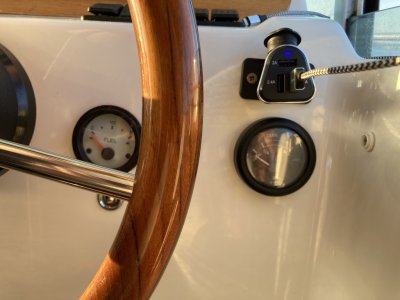
You can already guess what happened, turns out the one helpfully labelled 'FUEL' is actually the water tank gauge. And I've perhaps used it more than I thought...
I started getting a bit concerned on the way back after a lovely day when I thought I heard the engine momentarily stutter a few times, and in my head the cogs started to turn and I realised the diesel tank was in fact nearly empty.
Decided to keep going fast for as long as possible on the basis that the pickup is near the back of the tank and a bow up attitude would probably help. Made it to within 30 metres of my mooring buoy and then the engine cut out
Now I was panicking because the tide was ripping through at 4 knots or so, and I was 60m or so away from crashing into numerous other moored boats. Thought about dropping the anchor immediately but I realised I still had some steering so thought I would try and glide onto my mooring. I did that quite successfully but failed to get hold of mooring line (couldn't hold on with tide to slow the boat down). Managed to drop my boat hook in the process (more on that later).
Now realise I need to dump the anchor pronto. In the rush to switch the windlass breaker on somehow break my little toe. Ignore the pain. Anchor bites immediately and the jolt nearly throws me overboard. I stop about 10 foot in front of another boat and neatly in the middle between two others. Ok now I can breathe a bit. Couldn't let out very much chain or I'd have hit the boat behind.
By some miracle see my boat hook about to come floating past. Run to front of boat and dangle off the bow and manage to grab it. Ok things are now looking up.
Wave at some jet skiers for help. Curse the fact the horn is broken. Manage to get their attention and they very expertly pull me the 50 foot back to my mooring buoy. Phew. Take the dinghy back in extreme pain trying not to be swept out to sea whilst cursing at the previous owners of my boat.
Lessons learnt:
1) never rely on a gauge that you haven't checked it's function
2) always have a decent anchor ready to deploy at a moments notice
3) a little auxiliary outboard would have been useless given how fast the tide was ripping through and how quickly things happened
4) Always have a spare boathook on board
5) Always wear your lifejacket when doing any manoeuvring - I was very glad I had it on as nearly fell in multiple times.
6) Small 'bodges' that you think are harmless (like using a wrongly labelled gauge for a water tank) can have serious connotations.
Main take away is that your anchor is almost certainly the most important thing you have on board.
I can't wait to completely rewire the boat this winter. I will feel so much more confident knowing all the bodgery is gone.
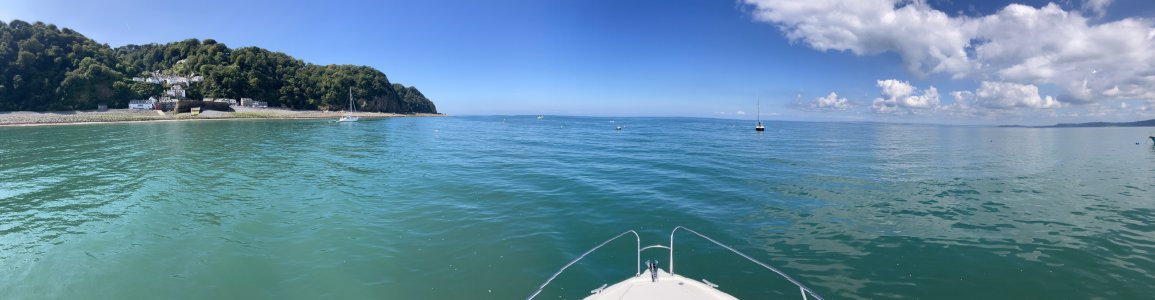
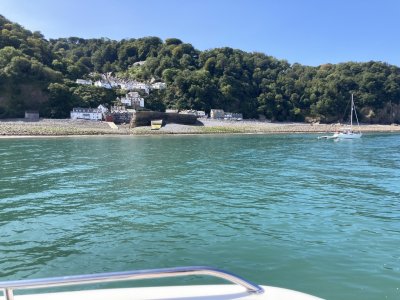
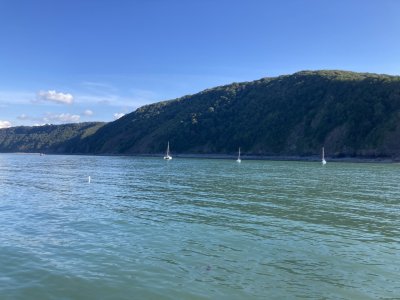
In better news it was a glorious day to be at anchor.
p.s. the above was actually the second fuel incident I had today. The first was when I tried to start the dinghy outboard in the morning and after 10 minutes realised I must have forgotten to close the vent cap and the fuel drained out when it was laid down. Had to drive to petrol station to get some and then it started first pull.
New boat to me, planning on doing a big refit this winter. I went over it before I first launched it and decided that whilst lots of things had been bodged by previous owners, nothing was dangerous (apart from the chinaspacher heater which I disconnected).
One thing I did do was buy a Lewmar Epsilon (Rocna clone) anchor to replace the silly bruce thing on it. Very glad I did that..
So having been out on it numerous over the past few weeks, decided on a solo trip to Clovelly (about 10nm) to lounge around in the sun for the day as my partner was off doing horsey things.
I've taken a few cans of diesel out to it, but the seller told me it had a full tank of diesel in it on the sea trial, whilst tapping on the 'fuel' gauge. So on the basis I hadn't been very far and the gauge still showed plenty in the tank, I wasn't too worried.
The 'fuel' gauge on the left, and what the seller told me was the water tank gauge on the right.
You can already guess what happened, turns out the one helpfully labelled 'FUEL' is actually the water tank gauge. And I've perhaps used it more than I thought...
I started getting a bit concerned on the way back after a lovely day when I thought I heard the engine momentarily stutter a few times, and in my head the cogs started to turn and I realised the diesel tank was in fact nearly empty.
Decided to keep going fast for as long as possible on the basis that the pickup is near the back of the tank and a bow up attitude would probably help. Made it to within 30 metres of my mooring buoy and then the engine cut out
Now I was panicking because the tide was ripping through at 4 knots or so, and I was 60m or so away from crashing into numerous other moored boats. Thought about dropping the anchor immediately but I realised I still had some steering so thought I would try and glide onto my mooring. I did that quite successfully but failed to get hold of mooring line (couldn't hold on with tide to slow the boat down). Managed to drop my boat hook in the process (more on that later).
Now realise I need to dump the anchor pronto. In the rush to switch the windlass breaker on somehow break my little toe. Ignore the pain. Anchor bites immediately and the jolt nearly throws me overboard. I stop about 10 foot in front of another boat and neatly in the middle between two others. Ok now I can breathe a bit. Couldn't let out very much chain or I'd have hit the boat behind.
By some miracle see my boat hook about to come floating past. Run to front of boat and dangle off the bow and manage to grab it. Ok things are now looking up.
Wave at some jet skiers for help. Curse the fact the horn is broken. Manage to get their attention and they very expertly pull me the 50 foot back to my mooring buoy. Phew. Take the dinghy back in extreme pain trying not to be swept out to sea whilst cursing at the previous owners of my boat.
Lessons learnt:
1) never rely on a gauge that you haven't checked it's function
2) always have a decent anchor ready to deploy at a moments notice
3) a little auxiliary outboard would have been useless given how fast the tide was ripping through and how quickly things happened
4) Always have a spare boathook on board
5) Always wear your lifejacket when doing any manoeuvring - I was very glad I had it on as nearly fell in multiple times.
6) Small 'bodges' that you think are harmless (like using a wrongly labelled gauge for a water tank) can have serious connotations.
Main take away is that your anchor is almost certainly the most important thing you have on board.
I can't wait to completely rewire the boat this winter. I will feel so much more confident knowing all the bodgery is gone.
In better news it was a glorious day to be at anchor.
p.s. the above was actually the second fuel incident I had today. The first was when I tried to start the dinghy outboard in the morning and after 10 minutes realised I must have forgotten to close the vent cap and the fuel drained out when it was laid down. Had to drive to petrol station to get some and then it started first pull.
Last edited: