Running engine with shore power connected

So the power the charger is physically capable of producing isn't a factor then? ............

Well it is because if you try to draw more current than the device is capable of wll cause the effect of increasing the internal resistance or will simply damage the internal structure.

This is why most battery charges have some over current protection by current foldback circuit or a fuse/circuit breaker.
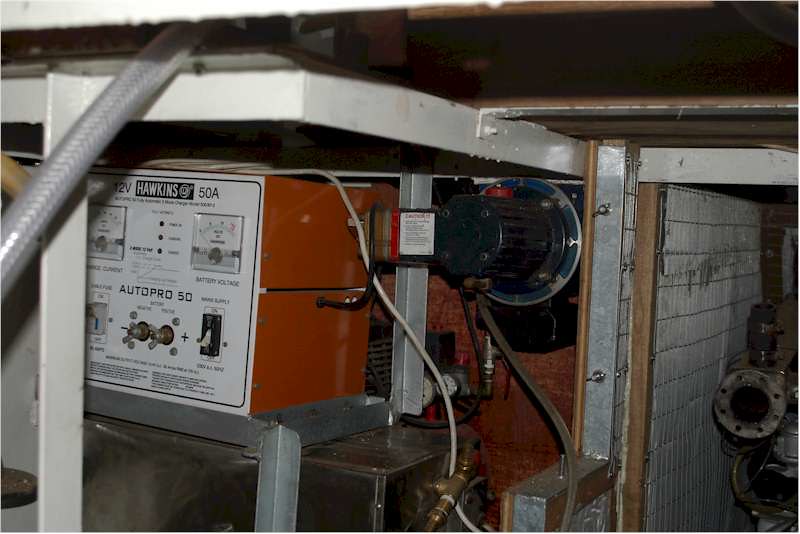
 
It would never occur to me to turn off a shorepower charger before starting an engine. After two months untouched went to the boat on Tuesday this week and started the engine, shorepower on. As usual the Yanmar fired after about a second without even using preheat. Ran it for 20 minutes in gear against pontoon.

Biggest danger in normal use is forgetting to undo the orange line after starting engine and letting go warps, before departing a pontoon.
 
Well it is because if you try to draw more current than the device is capable of wll cause the effect of increasing the internal resistance or will simply damage the internal structure.

This is why most battery charges have some over current protection by current foldback circuit or a fuse/circuit breaker.
How come they don't blow when connected to to a discharged battery capable of accepting current orders of magnitude beyond what they can produce? What's so different about a charger bringing the voltage down instead of just a depleted battery? That's the confusing part which no one has addressed yet. There are enough reports to suggest that *something* is going on, the internal resistance of a lead acid battery is in the mOhm, so doesn't seem too likely that a starter motor will provide a path much lower than that even at startup in parallel. So if a start pulls the battery down to say 11v, how does the charger know that it's not just a heavily discharged battery?
 
How come they don't blow when connected to to a discharged battery capable of accepting current orders of magnitude beyond what they can produce?

Generally it due to the internal resistance of the charger or th current limiting circuits built into the output of smart chargers that limits the current flow. Chargers should have a short circuit protection. This could be just a fuse or circuit breaker.

If I short the output clips on my chargers it just shuts down until the short is removed.

I personally never had a battery charger damaged when starting an engine and I have done it lots with my classic cars.

My chargers are 6 Amp smart so will not start to charge a battery with a voltage below about 8 -9 volts.

On my boat I very really use a mains battery charger as I have lots of solar keeping my batteries charged all the time.

This is my boat battery charger. You can see the output circuit breaker. There is also a selector switch to direct the output to one of my 3 battery banks and off.

36086055315_9d780364d9_c.jpg
 
Last edited by a moderator:
How would it know the difference between a low voltage from a starter motor and a low voltage from a flat battery? If the voltage is below the regulator set point it will give all it's got if there's something there there to take it.

I have a couple of modern so-called smart chargers ..... they default out if voltage drops too low ... or if battery is low voltage - refuse to start charging. But they never go above max charge rate regardless of what load is on batterys.

Its why I have an old style 4A max constant voltage charger which basically doesn't care in the boat.

If the battery is dud - needle goes to max stop and then click - charger cuts off. With good battery - If I press start switch for my engine ... the needle flicks up charger cuts out ... but once engine is charging the battery - the charger sees a high voltage and is at idle charge rate till engine stops then needle creeps up a touch to actual charge depending on how long engine has charged the battery.
 
Sorry Paul, have to disagree on that. I have known Battery chargers, simple type, not smart, blow the rectifiers when left connected to a start battery. The start current passes through the whole circuit, including the charger and pops the rectifier or fuse if fitted.

How ?

Current takes path of least resistance ........... second - the charger is not connected in the starter circuit to have full current through it ... its effectively parallel circuit to the battery so should never see start load.

If the charger blows rectifier in it - it must be a very old type that just blows because of the high charge rate asked for ... TBH - I didn't know they made chargers so unsafe !! Even my old dads ones I had from when I was a child had a fuse in ...
 
It would never occur to me to turn off a shorepower charger before starting an engine. After two months untouched went to the boat on Tuesday this week and started the engine, shorepower on. As usual the Yanmar fired after about a second without even using preheat. Ran it for 20 minutes in gear against pontoon.

Biggest danger in normal use is forgetting to undo the orange line after starting engine and letting go warps, before departing a pontoon.

I was sitting having a quiet relax in the boat ... day was glorious .... decided to go for an hour on the river .... let go lines ... engine ahead ... got halfway along my channel and came to a stop .... forgot to disconnect cable ... pulled pontoon of its supports and then cable at extreme ... OOP'S !!
 
Believe it or not, i was just talking to someone here at the marina, he is one of those who has to run his engine every few days, i mentioned that my engine had not been started for months and he looked shocked. I assured him it would start first time and though, why not give a demo, as he didn't seem convinced. Sure enough, 10 seconds of heat and started first time. Did i remember to disconnect the charger ? Did my solar controller and solar panels survive ?

The other guy starts his every few days, he never turns the charger off and it's never come to any harm.

I spent decades in the motor trade, where it was normal practice to leave charger on when trying to start something that had a flat battery. It was also common practive to leave the charger on when working on something that was difficult to start, maybe due to fuel problems, such as something that was reluctant to bleed. I have never, ever, had a charger blow internal fuses or fail because of this. Those old 60's chargers were certainly nothing special in terms of "smartness" and i have never, ever, had a modern smart charger on a boat blow a fuse
 
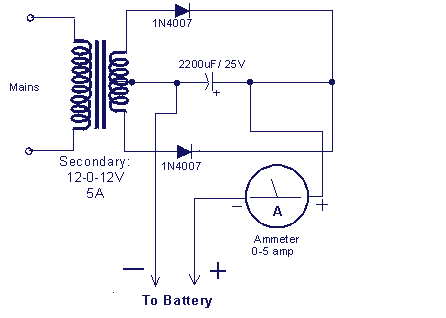
This is the circuit diagram of a very simple 12 Vdc battery charger. This one would cook a battery but will charge a dead battery

car-battery-charger.gif


Most moden battery charger are a bit more sparter that this which include overvoltage protection and overcurrent protection

Circuit-Diagram-of-Automatic-Battery-Charger.jpg
 
Top