Rudder-lift lines drag in the water...any ingenious alternative?

Greenheart

Well-Known Member
Joined
29 Dec 2010
Messages
10,388
Visit site
I don't know how my dinghy's previous owner got the rudder up before the tip hit the ground when coming ashore, and kept it out of harm's way while hauling out...

...but I've fitted an 18" stick of iroko into the hollow tubing of the tiller, so the end of the stick easily overhangs the rudder's trailing edge. I put a tackle on the end of the stick and led it forward to a cleat, so at any time I can bring the whole (very large) rudder blade out of the water, and keep it at whatever angle is convenient.

(There ought to be a photo here of my neat little raising/lowering system. When I find it, I'll add it.)

It really does work nicely...except, the tackle's attachment to the blade is quite a few inches below the waterline. Located higher, the leverage is considerably reduced and enormous strain is required on the tackle and its attachments, just to raise the pivoting blade...

...so, I must drag two short lines through the water, just abaft the rudder's trailing edge. The resistance they represent hadn't occurred to me at all, until I realised that the lines 'thrum' noisily at certain speeds - over about three knots and less than five. Faster than that, they go quiet.

I think the line I use is 2mm burgee halyard, so it's not like towing a bucket, though racers might disagree. But considering my modification wasn't used previously, nor (I suppose) was it felt to be needed, how else might a swinging rudder blade be raised remotely, from the cockpit?
 
If you are referring to an Osprey the rudder has lift & lowering lines which go around the leading edge of the rudder in a groove then up through the stock & along the tiller
The whole lot starts & ends within the circle around the top of the rudder. One line going anti clockwise & the other going clockwise. each end of the lines being led through a hole ( 2 holes) in the rudder & knotted to stop it pulling out
this is common on lots of dinghies so just walk around a dinghy park & you will see how it is done
the whole thing should operate smoothly. If not then reconsider how the blade fits in the stock. Is it layered in loads of paint etc.
Is the stock aluminium or 2 pieces of ply?
The bolt through the pivot needs to be carefully adjusted to stop rudder judder but allow smooth lift & drop operation
 
DB, you sound very familiar with my rudder and stock, so I can't doubt what you say about the line which pulls the blade into position. In fact I already use that line to hold the blade down, but the blade's considerable length and weight defy the short radius between the pivot-point and top of the rudder, to generate enough turning force to elevate it.

Actually I think my rudder lacks the 'second hole' which might have allowed a line to draw the top of the blade forward and down - assuming the application of fairly dreadful amounts of pressure on the bolts connecting the stock's sides.

Hence I added the chunk of wood and a block, so the blade can be lifted from astern and above. The only photo I've found is of an early first attempt, from midsummer last year...

Rudder-lifthomemadebutitworks_zps7b49cd93.jpg


...now, withhold your laughter please, because this crude prototype was the parent of my present very effective system, and as far as I can tell, far better than the original set-up.

The only downside being the necessary attachment of a slender shackle and tiny block on the trailing edge below the water, and the line to lift it. I'll photograph it & post it here.
 
DB, you sound very familiar with my rudder and stock, so I can't doubt what you say about the line which pulls the blade into position. In fact I already use that line to hold the blade down, but the blade's considerable length and weight defy the short radius between the pivot-point and top of the rudder, to generate enough turning force to elevate it.

Actually I think my rudder lacks the 'second hole' which might have allowed a line to draw the top of the blade forward and down - assuming the application of fairly dreadful amounts of pressure on the bolts connecting the stock's sides.

Hence I added the chunk of wood and a block, so the blade can be lifted from astern and above. The only photo I've found is of an early first attempt, from midsummer last year...

Rudder-lifthomemadebutitworks_zps7b49cd93.jpg


...now, withhold your laughter please, because this crude prototype was the parent of my present very effective system, and as far as I can tell, far better than the original set-up.

The only downside being the necessary attachment of a slender shackle and tiny block on the trailing edge below the water, and the line to lift it. I'll photograph it & post it here.

On my Phantom the rudder floats up so when I come in to shore I just release it & then waggle the tiller a little to ease the side forces & up it comes. I can then lift the rudder to the vertical position once I am out o the boat. Some of the top Phantoms use fixed rudders & just remove it a few yards from the shore before grounding
 
Good grief Dan...what is that??

I hate to say it but it looks to me that the wrong stock has been used (perhaps off a Europe) and extended with some crude welding to allow your tiller to clear the transom. So it looks like you don't have nearly enough rudder actually in the stock. The rudder should be going up inside the stock pretty much all the way to tiller height. Very high chance of bending the stock or breaking the blade without that.

Once that is sorted, you won't need such a Heath Robinson approach to keeping the rudder down. Seriously, the forces on big dinghy rudders are immense...you really do need to look at this.

Have you got a better picture of the whole stock?
 
I tend to agree with the last remark. The top of the blade would normally be a complete semi circle thus when the control lines run round the edge there is a greater radius to pull on
This would also mean more blade is held between the cheeks of the stock to provide support to the blade
The pivot bolt looks small & one would expect it to be sheathed where it passes through the blade
the inside of the stock may well be a bit corroded as the anodising fails & that also causes friction
It might be possible to insert some formica either side of the blade to help reduce friction but really only a temporary fix
Bite the bullet & get a new stock & blade when finances allow
making ones own blade can be interesting but rarely as good as a professionally made blade which should be lighter & have good aerofoil shape
 
Last edited:
Not going to argue with the above, keep an eye out in boat jumbles/ ebay if there is a Osprey Association ask them some one might have a better one spare.

Also you could consider re drilling the hole in the rudder to allow more surface area in the rudder stock. On the dinghy's I have had the red line was much higher up so dragged less and only required to hold rudder up when out of the water. It shoulod not need the mini bumpkin at the back of the rudder.

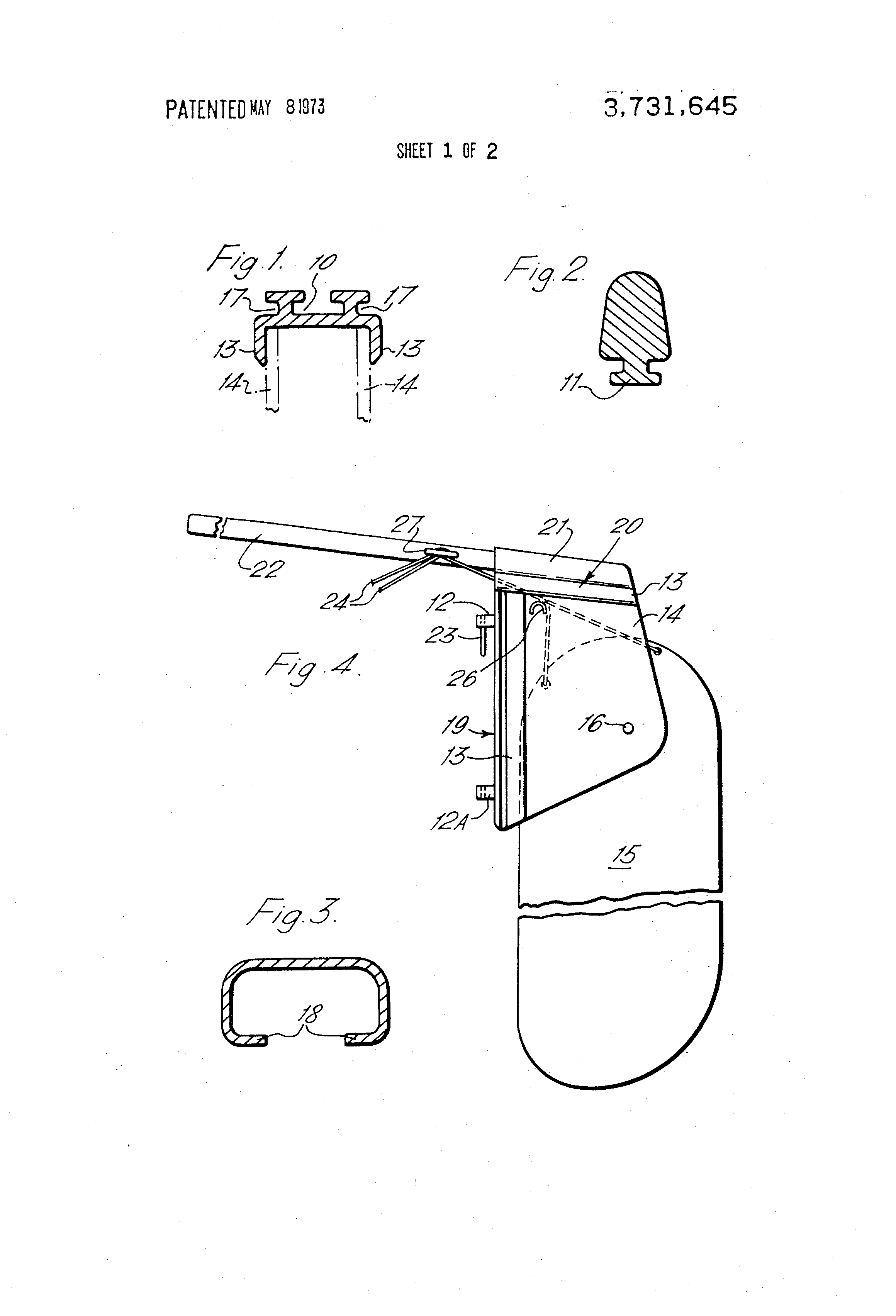
Some ideas below...

rudder1.gif


scow-rudder.jpg


US3731645-1.png
 
On a performance boat like an Osprey, there is no way that a counterweight and a screw up pivot will hold the rudder down. You need something mechanical, rather than friction based.

The GRP Winder rudder stock uses a clever rope and cleat system, however the pivot bolt is at the very back of the rudder blade and the blade and stock fit very closely together. The CeeVee system uses a plunger in a rebate on the top of the stock. There's nothing wrong with using a plastic pin or knitting needle. However it's vital that your system has a "fuse" in case you ground the blade at speed. I've heard of Fireballs having their entire transoms ripped off after getting that wrong. If you are using rope, make sure the cleat is a CL257 which releases under shock load. If using a pin, the plastic ones are designed to shear.

I've never, ever sailed a dinghy with an uphaul...no point...pull your release and it's likely to float/drag up anyway, and if not just lean over the back, get your hand on the leading edge and help it. But before you drill any holes or set your "down" position, make sure the rudder is exactly vertical, or even 2 degrees forward, otherwise it will be very heavy.
 
Thank you gentlemen. Iain, I agree that it appears there's too little of the rudder in the stock. I realise mine looks shocking; or I did when I first bought the boat...amazing how one can eventually overlook countless rough edges. Being the only Osprey at the club (and the only one I've ever seen up close), I don't have a mint example to compare her with...

...although on this Mk2 Osprey (pic from eBay), the blade seems to sit low in the stock, just as mine does. That said, there's a freaking outboard bracket on this example, so it may not be any more original than mine. But it seems odd that the same error would have been made for no reason, by different owners. So maybe it should be this low?

OldOspreytiedup_zpse82538a2.jpg


My stock has certainly been lashed-up, not very subtly, but it does feel extremely robust. As to corrosion, I'm pretty sure it's aluminium, not galvanised steel. I think the smallness of the area of rudder in the stock (well-observed, it hadn't occurred to me!), is more likely to stress the blade than the stock - the blade seems very brittle and chips easily.

The rudder blade itself is in poor condition...your heads will again sink into your hands when I say that I screwed/epoxied a length of unused 3/8" keel-band to the bottom 8", to prevent the centreline crack from spreading on impact with the beach. Not pretty, but tough & serviceable. A new blade was already on the list of necessities, when funds permit.

But I also need two new self-bailers (£150) and other bits and pieces, so paying more than the whole boat cost me, just for a new rudder blade, isn't a sensible option yet.

I've never sailed a dinghy with an uphaul...no point...pull your release and it's likely to float/drag up anyway, if not, lean over the back, get your hand on the leading edge and help it.

That's the approved official line, I'm sure...but if you were single-handing an Osprey arriving at a steep beach with an onshore breeze, the need to rapidly raise and secure the rudder clear of the water, while you (on your own) take care of other matters, makes a decent uphaul much more attractive. Just like lazyjacks, it really works for my particular use. Plus, my rear deck is a full 36 inches in length, so scrambling over it to reach for the rudder is a bit gymnastic for me. I split the deck when I had to do just that, last year. :rolleyes:
 
Last edited:
Hmm, that's the approved official line, I'm sure...but if you were single-handing an Osprey arriving on a steep beach with an onshore breeze, the need to rapidly raise and secure the rudder clear of the water while you (on your own) take care of other matters, makes a decent uphaul much more attractive. Just like lazyjacks, it really works for my particular use.

I've sailed with both the uphaul and without. For me, approaching a beach without the uphaul is just a matter of uncleating the rudder downhaul - there's just enough friction in the stock to hold the rudder down, it kicks up as soon as it touches the bottom - so I can basically ignore it until I step out. Faffing about with an uphaul as you're approaching a beach is just complicating the issue.

Downhaul is important - I knew of those who used chopsticks to act as the pin to hold the blade down - cheap to replace as with sailing in the harbour, touches on the bottom are a common occurrence.
 
I like the chopstick/shear pin idea, but I bought two quick-release cleats last year, one for the centreboard downhaul, the other for the rudder. It works nicely & doesn't need replacing.

I love the idea that my GRP rudder will obligingly float up, high in the water on the slipway, not damaging itself nor dragging in the water making the hull hard to angle onto the trolley...but in practice, until I fitted the uphaul, it used to grind and bash until I was free to go round and unclip it. Removing the rudder is easy to take for granted if someone else is holding the boat meanwhile, but singlehanded in choppy breakers, the uphaul buys time to do other things. It's not nearly as much of a faff as I may have made it sound. :)
 
Dan That is 2 different stocks shown in your photos

Hmm, I believe I mentioned that the blue-decked boat is just a photo I found on eBay.

I'm tempted to drive down to my boat, to photograph the arrangement I use now...

...if only to show that it's not half as bad as I seem to have made it sound! :D
 
So...two photos, neither of which do my rather humble system due credit. The first shows the line, shackle and block which were my reason for this thread, being underwater in use.

Sharp eyes may pick out the little block just under the aluminium tiller-bar, which leads the downhaul forwards, though it takes quite a tug to operate it. The radius of the curve between the top of the blade and the pivot, doesn't make the same principle operable for lifting the rudder's considerable weight - I'd estimate it's well over 2kg or 5lbs.

20140926_141939_zpsd193cff2.jpg


The raised pic is oddly out of realistic perspective; the tiller & 'boomkin' are absolutely horizontal & level in use. The boat is propped up by the bow, but not as much as this suggests:

20140926_141734_zps8f2af439.jpg
 
Dan
You have a block on the side of the tiller which should give ample power for lifting the blade.
Why not eliminate the block at the blade edge & replace it with a single 3mm dynema line which would give much less drag
i still find it odd that you need all this (Your current solution is a 4:1 reduction) and you should be able to hoist the blade with a line starting at the "kink" point of the blade. Especially as you have the pulley on the tiller as well
I think the whole thing needs stripping down & surfaces cleaned & properly aligned with the correct tension on the butterfly on the pivot pin Plus a tube fitted over the pivot pin, if you do not have one, to prevent wear on the blade. This tube would be 0.5mm (or sim) longer than the blade is thick. This would allow you to tighten the butterfly so it did not keep coming loose
As I said earlier, the stock is corroded & should be absolutely smooth on the inside faces.
 
Last edited:
I'm surprised no-one has mentioned a length of shock-cord. (Unless I missed it)

Once you have sorted the rudder, you need to think about moving the spinnaker chute so that it is central and making the actual chute wider - the friction of a wet spinnaker in there will make it almost impossible to hoist.
 
Top