

You are using an out of date browser. It may not display this or other websites correctly.
You should upgrade or use an alternative browser.
You should upgrade or use an alternative browser.
Rocna's bad press by video - anchor thread don't read if you don't like anchor threads!
- Thread starter Neeves
- Start date

john_morris_uk
Well-Known Member
In one post you sneer at ‘tests’ and then you start quoting them. Please make your mind up.Previous tests had shown the classic Danforth set faster and did better in the 180 degree veer tests in mud or sand. That's why it is one of the most common and most copied anchors around. If it was not for the fact it can get bent it would almost certainly dominate the anchor market. If you look at ships anchors, they are in effect fat unbreakable or unbendable Danforth type designs.
The RNLI did not use the original CQR in recent years because it was out of production, so they decided to use the Lewmar Delta and the UK spade. I susapect the paint and rust issues will result in the standardising on the Lewmar Delta or the new Lewmar CQR. All of the RIBS use the Delta. I thought all of the offshore boats use the UK spade, but some of them also use the Delta. They do test anchors during training and read other anchor test reports, so I would not be surprised if the change to fitting the CQR to all new boats.
The 2 tests I would like to see done is an Admiralty pattern fishermans vs a normal fishermans and a grapnel, then a genuine vs a new Lewmar CQR and their new Epsilon.
On the lighter side I had to laugh about one article on modern anchors that said they liked the ones that come in a kit form and bolt together, because it's cheaper to post back the bent parts for a warranty claim like Fortress have.
Big Ships don’t use Danforth Anchors they use ‘Stockless anchors”
May I respectfully suggest you learn something about big ship anchoring? It’s a bit different to anchoring a small boat.
I remember having this exact same discussion with my commanding officer on HMS ENDURANCE when we were anchored off the Antarctic peninsula so please don’t suggest I know nothing about the subject. It was he who explained that it’s the chain that fixes the ship. I was sceptical at the time but that’s how it is.
Your fixation on CQR anchors is interesting. Do you have shares in Lewmar’s CQR production facility?
As others have said, there’s no such thing as an English Spade Anchor.

TNLI
Well-Known Member
In one post you sneer at ‘tests’ and then you start quoting them. Please make your mind up.
Big Ships don’t use Danforth Anchors they use ‘Stockless anchors”
May I respectfully suggest you learn something about big ship anchoring? It’s a bit different to anchoring a small boat.
I remember having this exact same discussion with my commanding officer on HMS ENDURANCE when we were anchored off the Antarctic peninsula so please don’t suggest I know nothing about the subject. It was he who explained that it’s the chain that fixes the ship. I was sceptical at the time but that’s how it is.
Your fixation on CQR anchors is interesting. Do you have shares in Lewmar’s CQR production facility?
As others have said, there’s no such thing as an English Spade Anchor.
The tests I like are the 180 degree veer and break or bend ones, although ABS test results are in the public domain, as are some of the USCG ones. I can look up some of the data from Lewmar and the RNLI tests when I'm there, which is not too often at present.
I did not say big ships use Danforths, they use a fat heavy version of a Danforth called a stockless, but I did not use that term as most boaters don't know what a stockless anchor is.
I wish I was a part owner of Lewmar, but I'm not, and if you read my posts I have pointed out why I write UK Spade. One point I was wrong on is I thought the RNLI had to use Lloyds approved anchors, but the UK Spade is not Lloyds approved, it just has a so called equivalent certification, and none of those, the Italian version in particular, are to be trusted. Lewmars are all Lloyds or ABS certified, (The FX Danforths and Claw/Bruce copy are ABS).
For any nit pickers or spade fans here is the link to UK Spade Ltd:
Spade Anchor UK (spade-anchor.co.uk)
The alloy version can be bent, not read any test reports on the SS version, but if someone would like to send me one, I would be very glad to test it!
US supplier:
Spade Anchor USA - High Performance Boat Anchors - What's On Your Bow?
Last edited:
john_morris_uk
Well-Known Member
You used ships and quoted them as Danforth to support a spurious argument. You are now admitting that you appreciate that ships don't use Danforth anchors. huh? Saying that most boaters don't know what a stockless anchor is might be considered to be a bit rude by some. eg stockless anchors are mentioned in most books on anchoring that I've seen and read.The tests I like are the 180 degree veer and break or bend ones, although ABS test results are in the public domain, as are some of the USCG ones. I can look up some of the data from Lewmar and the RNLI tests when I'm there, which is not too often at present.
I did not say big ships use Danforths, they use a fat heavy version of a Danforth called a stockless, but I did not use that term as most boaters don't know what a stockless anchor is.
I wish I was a part owner of Lewmar, but I'm not, and if you read my posts I have pointed out why I write UK Spade. One point I was wrong on is I thought the RNLI had to use Lloyds approved anchors, but the UK Spade is not Lloyds approved, it just has a so called equivalent certification, and none of those, the Italian version in particular, are to be trusted. Lewmars are all Lloyds or ABS certified, (The FX Danforths and Claw/Bruce copy are ABS).
For any nit pickers or spade fans here is the link to UK Spade Ltd:
Spade Anchor UK (spade-anchor.co.uk)
The alloy version can be bent, not read any test reports on the SS version, but if someone would like to send me one, I would be very glad to test it!
The tests I like to read are the ones that test anchors in ways that I am going to use them. Any shank can be bent or broken.
I used to love my CQR anchor. It was large and heavy and was a genuine one forged in Scotland. I had to be careful when setting it as it didn't always set very well first time to the point that Mrs M got thoroughly cheesed off with it. I changed to a Spade and we have never looked back. It sets and sticks like glue and the only time it dragged a few metres was when it was in thick weed that I defy any anchor to have penetrated and held in.
Your continued harping on about CQR anchors which in most every recent tests perform poorly is concerning. Lots of people read these forums and debate is encouraged but disinformation and blind false claims.
What are people to make of your assertion that 'in your opinion the RNLI will change over to genuine CQR's soon'. It's pure speculation with not an ounce of truth behind it. You might have read in a previous post of mine that it was the then chief exec of the RNLI that persuaded me to try a Spade anchor. They were fairly new on the scene in those days and it was well before the RNLI adopted them. I was fortunate enough to pick up a nearly new one second hand. It does exactly what he told me it would do. "It sticks like glue".
I don't know why you've put a link in to the UK distributor of Spade anchors. Their website clearly explains how they are the distributors and have a close relationship with the original designer and now his daughter. There is NO UK SPADE ANCHOR.
Spade also specifically say that their alloy anchor should NOT be used as a main anchor.
PS We anchor fairly frequently and we don't have a problem with the galvanising.
I don't fly the flag for any particular make or model of anchor, but I don't like to see this reputable forum being the platform for erroneous and misleading claims.
NormanS
Well-Known Member
I haven't seen anyone but yourself referring to "an English Spade Anchor".In one post you sneer at ‘tests’ and then you start quoting them. Please make your mind up.
Big Ships don’t use Danforth Anchors they use ‘Stockless anchors”
May I respectfully suggest you learn something about big ship anchoring? It’s a bit different to anchoring a small boat.
I remember having this exact same discussion with my commanding officer on HMS ENDURANCE when we were anchored off the Antarctic peninsula so please don’t suggest I know nothing about the subject. It was he who explained that it’s the chain that fixes the ship. I was sceptical at the time but that’s how it is.
Your fixation on CQR anchors is interesting. Do you have shares in Lewmar’s CQR production facility?
As others have said, there’s no such thing as an English Spade Anchor.
Arcady
Well-Known Member
The alloy version can be bent, not read any test reports on the SS version, but if someone would like to send me one, I would be very glad to test it!
But you yourself provided this link: Anchor Tests: Bending More Shanks - Practical Sailor (practical-sailor.com).
Maybe you should read that test report again - it was the stainless steel version of the Spade anchor that bent. The author goes on to say "We would not have expected to see the same degree of a failure in the much stronger galvanized or even the aluminum version of the Spade, which has a beefed-up shank to account for the difference in tensile strength"

Kukri
Well-Known Member
I subscribe to MC and I have followed Panope for a long time. Have a 75lbs CQR and a 45kg Delta. I think looking round a marina might not be the best way to evaluate what works!
Nobody picked up on this!
The commonest anchor in my marina is the Lewmar Delta. Fine anchor, but the reason it’s the commonest is that it was original equipment on most boats because Lewmar very wisely discounted it to manufacturers as part of an equipment package along with winches etc.
The reason I have a 45kg Delta is that Princess Yachts were flogging a stock of them cheap! The 75lb CQR came unused from a lovely and expert couple who had built a steel boat and had decided that it was too small. The OE anchor was a 65lbs CQR.
I honestly doubt if most people select their anchor on the basis of tests and what they read here.
john_morris_uk
Well-Known Member
My mistake. TNLI keeps referring to the UK Spade anchor.I haven't seen anyone but yourself referring to "an English Spade Anchor".
edit: I should have made it clear that I was saying TNLI keeps mistakingly referring to the UK Spade anchor.
Last edited:
Neeves
Well-Known Member
TNLI
You undermine your own credibility by continuing to call an ill defined group of anchors as 'spade'. No-one has a clue what you are talking about as there is only one design called Spade and we all know exactly what it is and what it looks like.
You then, despite repeated assurance that UK spades are better than other spades. Spade, or the brand name and the only anchor anyone here called a Spade is exclusively made in Tunisia - and no where else. Other anchors are made in other locations none of them are described as 'spades' though they may have borrowed some design aspects.
You also insult the intelligence of the members here by suggesting they don't know what a stockless anchor is!
This latter from someone who cannot understand Spades are made in Tunisia (only) and that only one design of anchor is called a Spade.
Finally you suggest that only one Classification Society merits your approval - arrogance at its best - what do you have against, for example Norsk Veritas, DNV and what do you know about Chinese Classification Societies?
You are wasting your time.
Jonathan
You undermine your own credibility by continuing to call an ill defined group of anchors as 'spade'. No-one has a clue what you are talking about as there is only one design called Spade and we all know exactly what it is and what it looks like.
You then, despite repeated assurance that UK spades are better than other spades. Spade, or the brand name and the only anchor anyone here called a Spade is exclusively made in Tunisia - and no where else. Other anchors are made in other locations none of them are described as 'spades' though they may have borrowed some design aspects.
You also insult the intelligence of the members here by suggesting they don't know what a stockless anchor is!
This latter from someone who cannot understand Spades are made in Tunisia (only) and that only one design of anchor is called a Spade.
Finally you suggest that only one Classification Society merits your approval - arrogance at its best - what do you have against, for example Norsk Veritas, DNV and what do you know about Chinese Classification Societies?
You are wasting your time.
Jonathan
Kukri
Well-Known Member
This is just to acknowledge the excellent advice that Johnathan (Neeves) has given me over the past several years. He is a fount of knowledge and experience.
TNLI
Well-Known Member
Strewth th
The UK Spades, (Incoming!!), were made in Tunisia, BUT just to confuse the issue if you read the US press they are now made in Mexico, but only the ones sold through the US dealer.
The only approvals worth considering are those that can be understood and are published in English or American. Obviously a nit picker will want to consider any class of apprval that allows them to justify buying their Rocna, or other anchor shown in the bent anchors picture.
The nit pickers are really out today. I'm sure the majority of boaters know what a spade anchor is, but at the same time the majority would not know what a stockless anchor is. So I suppose to keep the nit pickers happy I should post a picture and several links to make sure which one it is.TNLI
You undermine your own credibility by continuing to call an ill defined group of anchors as 'spade'. No-one has a clue what you are talking about as there is only one design called Spade and we all know exactly what it is and what it looks like.
You then, despite repeated assurance that UK spades are better than other spades. Spade, or the brand name and the only anchor anyone here called a Spade is exclusively made in Tunisia - and no where else. Other anchors are made in other locations none of them are described as 'spades' though they may have borrowed some design aspects.
You also insult the intelligence of the members here by suggesting they don't know what a stockless anchor is!
This latter from someone who cannot understand Spades are made in Tunisia (only) and that only one design of anchor is called a Spade.
Finally you suggest that only one Classification Society merits your approval - arrogance at its best - what do you have against, for example Norsk Veritas, DNV and what do you know about Chinese Classification Societies?
You are wasting your time.
Jonathan
The UK Spades, (Incoming!!), were made in Tunisia, BUT just to confuse the issue if you read the US press they are now made in Mexico, but only the ones sold through the US dealer.
The only approvals worth considering are those that can be understood and are published in English or American. Obviously a nit picker will want to consider any class of apprval that allows them to justify buying their Rocna, or other anchor shown in the bent anchors picture.
Attachments


srm
Well-Known Member
Just to put this thread in to perspective, does anyone remember Yachting Monthly's promotion of the water ballasted anchor?
john_morris_uk
Well-Known Member
I think you ought to stop digging.The only approvals worth considering are those that can be understood and are published in English or American. Obviously a nit picker will want to consider any class of apprval that allows them to justify buying their Rocna, or other anchor shown in the bent anchors picture.
Suggesting that the only research and approvals are those published in English (or American?) is bigoted nonsense.
As you seem to be extremely selective in the reports you quote, accusing others of being selective is just silly.
Remind us what point are you trying to make?

vyv_cox
Well-Known Member
He is saying that the CQR is the only good anchor because they do not bend. Or break. ( none are my photos, copied from this and other forums)Remind us what point are you trying to make?
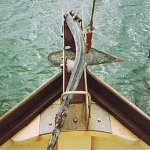
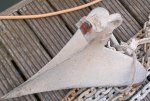
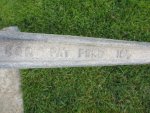
TNLI
Well-Known Member
Ummm, n
Umm, no. Do you mean sea anchors ??
We test a drogue and a sea anchor – Yachting World
Nah, discussion here: New Gen water ballasted anchor | SailNet Community
Just to put this thread in to perspective, does anyone remember Yachting Monthly's promotion of the water ballasted anchor?
Umm, no. Do you mean sea anchors ??
We test a drogue and a sea anchor – Yachting World
Nah, discussion here: New Gen water ballasted anchor | SailNet Community
TNLI
Well-Known Member
He is saying that the CQR is the only good anchor because they do not bend. Or break. ( none are my photos, copied from this and other forums)
View attachment 139457 View attachment 139458 View attachment 139459
Yes, good post as that shows what happens when you use a copy of a CQR. The only CQR that I found bent was under a steel trawler that ran onto the rocks. They lost power at night but left it far too late to drop their main anchor, it was also the wrong type to drop in a rocky bottom, They survived but did bend the shank whilst pounding on the rocks. That picture was used to promote Danforths down under, but I can't find it at present.
CQR copies are not made of the correct steel or drop forged . They might not have a ballasted tip or be hot dipped galvanised.
I wonder why this copied CQR was cut apart, I presume that was done to allow other modern anchor sales teams to say it had fatigue cracked. The stainless swivel would have broken well before the chain or hinge could fail.
A copy of a CQR is not worth much second hand, so I suppose that explains why it was cut up, as a good hydraulic press in a machiner shop could straighten the shank,
IF YOU LOOK AT THE LAST PICTURE OF THE SHANK IT SHOULD BE MARKED XXlb PAT No 1316846 on one side and made in Scotland on the other. It's a fairly common copy that I've seen before, although why the folks copying it can't stamp the shank with the correct markings I don't know,
Last edited:
vyv_cox
Well-Known Member
The bent CQR is a genuine drop-forged one. It was trapped in rocks and suffered a lateral force during recovery sufficiently strong to bend it.Yes, good post as that shows what happens when you use a copy of a CQR. The only CQR that I found bent was under a steel trawler that ran onto the rocks. They lost power at night but left it far too late to drop their main anchor, it was also the wrong type to drop in a rocky bottom, They survived but did bend the shank whilst pounding on the rocks. That picture was used to promote Danforths down under, but I can't find it at present.
CQR copies are not made of the correct steel or drop forged . They might not have a ballasted tip or be hot dipped galvanised.
I wonder why this copied CQR was cut apart, I presume that was done to allow other modern anchor sales teams to say it had fatigue cracked. The stainless swivel would have broken well before the chain or hinge could fail.
A copy of a CQR is not worth much second hand, so I suppose that explains why it was cut up, as a good hydraulic press in a machiner shop could straighten the shank,
The fractured CQR is a genuine one, as shown in the shank photo. Its weight is marked in 1/2 lbs, showing it to be the cast iron version. It fractured when the boat carrying it smacked into the pontoon.
Only to show that absolutely any anchor will bend or break if circumstances determine.
TNLI
Well-Known Member
The bent CQR is a genuine drop-forged one. It was trapped in rocks and suffered a lateral force during recovery sufficiently strong to bend it.
The fractured CQR is a genuine one, as shown in the shank photo. Its weight is marked in 1/2 lbs, showing it to be the cast iron version. It fractured when the boat carrying it smacked into the pontoon.
Only to show that absolutely any anchor will bend or break if circumstances determine.
You obviously didn't read my reply, as the shank picture proves its a copy. Cast Iron, mine Gott, I must send that info straight to the Lewmar sales team who purchased the design and trade name rights to the genuine CQR. The copies are all cast steel, but a few real bad ones could be cast Iron.
Kukri
Well-Known Member
The bent CQR is a genuine drop-forged one. It was trapped in rocks and suffered a lateral force during recovery sufficiently strong to bend it.
The fractured CQR is a genuine one, as shown in the shank photo. Its weight is marked in 1/2 lbs, showing it to be the cast iron version. It fractured when the boat carrying it smacked into the pontoon.
Only to show that absolutely any anchor will bend or break if circumstances determine.
CQRs were marked « PAT PEND » for quite a few years. Simpson Lawrence did make a cast iron version which they sold as a CQR « B » and they were very clear in their Catalogue that this was NOT for seagoing use but was for fresh water.
srm
Well-Known Member
No, try again, definitely Yachting Monthly.Umm, no. Do you mean sea anchors ??
Drogues and sea anchors are totally different beasts with different useages to that in this thread.

