Restricted raw water flow Yanmar 8LV320

Irish Rover

Well-Known Member
Joined
5 Feb 2017
Messages
8,214
Location
Türkiye
Visit site
I rarely run the engines above 1,400 rpm and I generally rev them hard a couple of times before I turn them off to expel any accumulated soot. A few days ago I did this and I heard a different sound from one of the engines - somewhat like the sound you might expect from one of those manual trump fog horns. I immediately noticed there was little or no water outflow from the exhaust. I switched it off and checked the engine temperature which was normal. I closed the seacock and took the top off the raw water filter to see if there was anything obvious there. As soon as I loosened the cap all the water was sucked out of the filter. I left the filter cap open and opened the seacock. I was expecting it to fill up and overflow but nothing happened. I started the engine again and this time there was water coming out of the exhaust but not as strong a flow as usual.
There's construction going on at the marina and I often see bits of plastic wrapping in the water. I'm thinking I may have picked up something like that and it got sucked into the raw water intake when I revved the engine. The marina water is just too dirty to get into, so I'm planning to take the boat to a local bay where I can anchor in shallow water and get under for a look. I won't be able to do it until later in the week unfortunately so in the meantime if anyone has words of wisdom to share I'd be grateful to hear.
PS - I've put up around 100 hours since the last service and while we didn't change the impeller the mechanic checked it and said it was pristine.
 
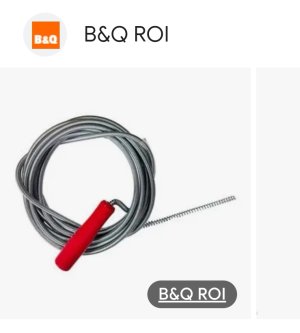
Can you poke a stick, bit of coat hanger wire or whatever, through the seacock and skin fitting from inside? You might well not need to get in the water yourself.

Remove hose from inlet to water pump and blow through backwards with a dinghy inflator pump?

Blocked intake filter?

Leak above waterline from pipework joints or filter allowing the seawater pump to draw in air?
 
Can you poke a stick, bit of coat hanger wire or whatever, through the seacock and skin fitting from inside? You might well not need to get in the water yourself.

Remove hose from inlet to water pump and blow through backwards with a dinghy inflator pump?

Blocked intake filter?

Leak above waterline from pipework joints or filter allowing the seawater pump to draw in air?
I'm a coward at heart. I'm afraid to take the hose off the seacock in case I flood the engine compartment before I can get it back on.
 
I'm a coward at heart. I'm afraid to take the hose off the seacock in case I flood the engine compartment before I can get it back on.

It would take a long time to flood the engine compartment! It's no great danger to open the seacock briefly..

Take the hose off the seacock with the seacock closed. You wil get just a little bit of water falling out of the hose.

Then get ready with your stick/wire or whatever, then open the seacock and prod through. It will only take a few seconds. You will get a lot of splashing but probably much less water aboard than you were expecting (depending on how deep underwater the opening and how big the internal diameter of the fitting). Shut seacock. Mop up the water with a sponge and bucket, and/or your bilge pump.. Refit hose to engine. Bob's your uncle.

(You could get a more relaxed version of the above by having a spare bit of hose of the appropriate diameter and a longer prodder (but probably not worth the extra hassle). Close seacock. Remove existing hose from seacock . Fit short length of temporary hose straight in-line with the seacock - ideally reaching above waterline level if your prodder is long enough and you can get to that level in line with the seacock, but any height above existing will reduce the inflow. Then, with prodder ready in your hand, open the seacock and proceed as above., prod
 
It would take a long time to flood the engine compartment! It's no great danger to open the seacock briefly..

Take the hose off the seacock with the seacock closed. You wil get just a little bit of water falling out of the hose.

Then get ready with your stick/wire or whatever, then open the seacock and prod through. It will only take a few seconds. You will get a lot of splashing but probably much less water aboard than you were expecting (depending on how deep underwater the opening and how big the internal diameter of the fitting). Shut seacock. Mop up the water with a sponge and bucket, and/or your bilge pump.. Refit hose to engine. Bob's your uncle.

(You could get a more relaxed version of the above by having a spare bit of hose of the appropriate diameter and a longer prodder (but probably not worth the extra hassle). Close seacock. Remove existing hose from seacock . Fit short length of temporary hose straight in-line with the seacock - ideally reaching above waterline level if your prodder is long enough and you can get to that level in line with the seacock, but any height above existing will reduce the inflow. Then, with prodder ready in your hand, open the seacock and proceed as above., prod
Thanks. I appreciate your encouragement, but . The engine is located under the bunk in the cabin and access to the front of the engine is via a removable hatch at the end of the bunk. I have to lie prone on the cabin floor to reach the seacock which is the length of my arm below my level lying flat. It's next to impossible to work with both hands at the same time. I think I prefer to try from outside first.
 
Thanks. I appreciate your encouragement, but . The engine is located under the bunk in the cabin and access to the front of the engine is via a removable hatch at the end of the bunk. I have to lie prone on the cabin floor to reach the seacock which is the length of my arm below my level lying flat. It's next to impossible to work with both hands at the same time. I think I prefer to try from outside first.
 
What about modifying access, perhaps with a removanle panel in the bunk above the seacock?

We should have a competition with a prize for the most ridiculosuky designed inaccessible essential engine access
🤣
 
I think I've sorted this 🤞. I got a half inch water hose down through the intake hose to the strainer as far as the seacock. I sealed the top as best I could and opened the tap. The water flowed freely out through the seacock - there may have been some initial pressure but I'm not sure as I was running between the quayside tap and the engine compartment. I closed the seacock and filled the system with water before closing up the strainer cap. I opened up the seacock and started up. Good strong outflow from the exhaust.
 
Last edited:
We should have a competition with a prize for the most ridiculosuky designed inaccessible essential engine access
I think I'm a contender 😒
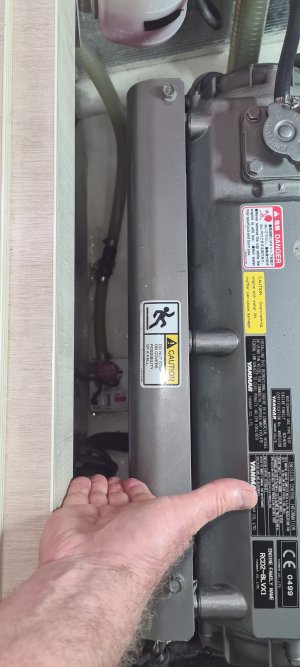
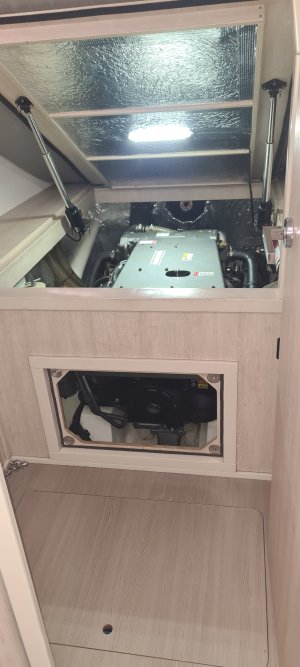
Below is my engine under the bunk and the removable access hatch. The other pic shows how much space there isn't between the engine and the hatch bulkhead.20250429_095405.jpg20250429_095221.jpg
 
I think I've sorted this 🤞. I got a half inch water hose down through the intake hose to the strainer as far as the seacock. I sealed the top as best I could and opened the tap. The water flowed freely out through the seacock - there may have been some initial pressure but I'm not sure as I was running between the quayside tap and the engine compartment. I closed the seacock and filled the system with water before closing up the strainer cap. I opened up the seacock and started up. Good strong outflow from the exhaust.
Carry a spare length of inlet hose long enough to rise above the water line.
Turn off inlet valve and swap hose for spare, open valve and rod through. Will work for both sides....
 
Carry a spare length of inlet hose long enough to rise above the water line.
Turn off inlet valve and swap hose for spare, open valve and rod through. Will work for both sides....

Do you ever get that feeling of deja vu? 😁

. . .
(You could get a more relaxed version of the above by having a spare bit of hose of the appropriate diameter and a longer prodder (but probably not worth the extra hassle). Close seacock. Remove existing hose from seacock . Fit short length of temporary hose straight in-line with the seacock - ideally reaching above waterline level if your prodder is long enough and you can get to that level in line with the seacock, but any height above existing will reduce the inflow. Then, with prodder ready in your hand, open the seacock and proceed as above.
 
When transiting the Canal du Midi in early spring our engine coolant inlet blocked dozens of times by leaves stirred up from the bottom. I had a 1/8 inch brazing rod and used it effectively to clear them. Hose taken off the seacock with it closed, open quickly, rod through, withdraw and close seacock. Only a sponge-full of water entered the boat. We have carried that brazing rod for years, finding it useful for many purposes
 
Top