Replacing mast step in a Prout 35

StefanSG

Well-Known Member
Joined
10 Feb 2021
Messages
271
Location
Gosport
Visit site
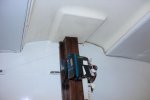
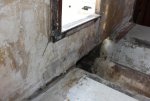
Hi second post here, the first didn't go down so well ! I've taken on a project, one of the first jobs to do is replace the mast step, the new Iroko step is ready to go in , I just wanted some pointers as to the best way to achieve a good solid repair that will spread the load well on the central nacelle. The step will sit in the V, I was considering epoxying in two v shapes of marine ply fore and aft of the step, and drilling a hole through all 3 and put a large stainless bolt through. This will all get hidden under the floor, so hopefully its a one time thing ! I'm going to get the help of someone who knows what they are doing with epoxy and fibreglass, but wanted to have a plan and everything ready.
cabin bulkead2.jpg
 
Welcome to the Forum Stefan.

In your previous post (replying to another thread with your question), you had quoted Boatmike who said :
-------------------------
As an ex snowgoose owner who built his own, I would say the build quality varies considerably. The mast compression should be supported by a substantial hardwood gallows transferring force down to the hull. I have seen these home built in softwood. Also the frame structure at the base being inadequate. Not easy to rectify without major work. Many of these excellent seaboats have done lots of miles in hot climates which often explains deck delamination and osmosis. Look for a well built one that has been used in home waters and hopefully epoxy coated below from new. They are about.
----------------------------

Re the 'substantial hardwood gallows' mentioned above, I think that this is probably a beam under the roof, with the ends of the beam 'tied in' to framing, in order to transfer the loads.

Are you planning on fitting a timber pillar underneath the mast, to transfer the mast compression loading down to the hull nacelle structure?
If this is the case, then what you are proposing sounds reasonable (if I understand you correctly) - are you proposing that the pillar will land on a timber 'step' that is supported by the two plywood vee shapes that will be laminated into the nacelle?
 
Last edited:
I wouldn’t use timber at the base of any mast compression post if you can possibly avoid it. I say that as the owner of a Jeanneau (monohull) afflicted by a common problem whereby the glassed-in plywood cored base for the compression post eventually gets wet, rots, and the whole lot (inc surrounding structural floors) sags 10-15mm.

Instead, I’d consider whether you can build up a plinth from GRP only. Epoxy and chopped strand should do, slowly building it up, perhaps within a plywood formwork that’s either temporary (with peel ply) or sacrificial later on.

I’ve also considered the use of epoxy ‘casting resin’ that cures slowly and therefore doesn’t go exothermic, if pouring larger volumes. You could mix in chopped strands for strength. I’ve used this to fill rotten plywood cores in GRP engine bearers to good effect:
GlassCast 50 Clear Epoxy Resin for Deep Castings - GlassCast
 
I wouldn’t use timber at the base of any mast compression post if you can possibly avoid it. I say that as the owner of a Jeanneau (monohull) afflicted by a common problem whereby the glassed-in plywood cored base for the compression post eventually gets wet, rots, and the whole lot (inc surrounding structural floors) sags 10-15mm.
Nothing wrong with iroko for a mast step - very different from ply. It is a dense stable durable hardwood. Glassed in with epoxy will be fine. In that location it will not get wet and is there to provide a base for a compression post - the mast is deck stepped.
 
Thanks for the replies. Yes, the Prout’s are deck stepped, and the later versions (Elite etc) do have a mini gallows inside the cabin roof underneath the step, thanks Bajansailor for making it clear. Makes sense now. And also yes it’s a compression post not a mast step, apologies ! All comments taken on board.
 
Nothing wrong with iroko for a mast step - very different from ply. It is a dense stable durable hardwood. Glassed in with epoxy will be fine. In that location it will not get wet and is there to provide a base for a compression post - the mast is deck stepped.
True, Iroko would fair much better than ply. Not the easiest job to shape it to fit the ‘v’ though, depending on one’s woodworking skills, compared to resin/glass.
 
The big picture of what you need to do is provide a path for all the forces from the mast back to the shrouds etc.
It's sometimes more useful to think about the whole assembly before getting too involved in one component of it.
We can't see the whole picture on here.
Our boat for instance, the mast sits on the keel, and the bulkhead and hull take the loads out to the shrouds.
The mast and shroud loads have to be 'spread' into the bulkhead.
Obviously with a cat, you don't have the keel, but you have to think about where the forces are going when the rig is putting all the weight on one hull and lifting the other. It might help to think of the structure from side to side as a beam, with the mast 'point loading' it.

On a lot of boats that 'beam' is a T section formed by the bulkhead and the hull.
Forget all this 'pouring resin' stuff, the strength needs to come from glass (or other fibre perhaps).
I hope that helps.
 
The big picture of what you need to do is provide a path for all the forces from the mast back to the shrouds etc.
It's sometimes more useful to think about the whole assembly before getting too involved in one component of it.
We can't see the whole picture on here.
Our boat for instance, the mast sits on the keel, and the bulkhead and hull take the loads out to the shrouds.
The mast and shroud loads have to be 'spread' into the bulkhead.
Obviously with a cat, you don't have the keel, but you have to think about where the forces are going when the rig is putting all the weight on one hull and lifting the other. It might help to think of the structure from side to side as a beam, with the mast 'point loading' it.

On a lot of boats that 'beam' is a T section formed by the bulkhead and the hull.
Forget all this 'pouring resin' stuff, the strength needs to come from glass (or other fibre perhaps).
I hope that helps.
I never suggested just pouring resin in, of course. I suggested CSM - really should’ve said ‘must’, but it was an experimental solution so who am I to say?

I wouldn’t dismiss these pourable epoxies out of hand, at least until someone’s tested them under load, impact, heat etc. (and I have some left over, so once I can get back to the boat I’ll give it a go).

The advantage in being able to layup 50mm at a time is obvious. Yes, it’s not a laminating resin, but you wouldn’t be using many of the desired properties of a laminating resin here - it only really needs to be compressible, or strong in that one axis, in this application surely?

But this is all sheer hypothesising (based on what I might consider myself if faced with an awkward shape like that potentially needing a large GRP pad/plinth). I may well be completely wrong!
 
Last edited:
There is a very useful Prout owners group on Facebook where you might find several people who have already done this
...and @TernVI is right to draw attention to that bulkhead. It’ll need to extend down into the bilge area presumably and be strong (well-tabbed to the hull and to the original bulkhead, assuming that is sound), otherwise the compression post loads will have nowhere to go apart from down. Do suspect others will have tackled this and solved the problem. ??
 
Our Prout Snowgoose 37( pre Elite Model) had a plywood box section mast post that took the load from under the deck where the mast sat. The box section was glassed to the inside of a structural bulkhead. There was no reinforcement where the bulkhead was glassed to the nacelle. The bullhead just spread the load in to the nacelle.
The only problem we had was the plywood pad that was glassed in to the deck under the mast rotted away. Our Prout had had the mast changed for a an 8ft taller mast by the previous owner. When they did this the new fabricated mast bases was different to the old one. They never glassed up the old holes properly where the previous plate was fitted. We realised there was a problem when the rig went slack. The mast had compressed the glass in the deck. We removed the mast and cut out the grp to expose the ply. You could scoop the ply out with a spoon. It was like wet cardboard! We replaced the 1” ply with multiple layers of heavy glass cloth until it was 1” thick then replaced the original gel-coated grp section. It was far stronger and rot proof.
 
I always carry a spare pair of trousers for that sort of occasion !
Our Prout Snowgoose 37( pre Elite Model) had a plywood box section mast post that took the load from under the deck where the mast sat. The box section was glassed to the inside of a structural bulkhead. There was no reinforcement where the bulkhead was glassed to the nacelle. The bullhead just spread the load in to the nacelle.
The only problem we had was the plywood pad that was glassed in to the deck under the mast rotted away. Our Prout had had the mast changed for a an 8ft taller mast by the previous owner. When they did this the new fabricated mast bases was different to the old one. They never glassed up the old holes properly where the previous plate was fitted. We realised there was a problem when the rig went slack. The mast had compressed the glass in the deck. We removed the mast and cut out the grp to expose the ply. You could scoop the ply out with a spoon. It was like wet cardboard! We replaced the 1” ply with multiple layers of heavy glass cloth until it was 1” thick then replaced the original gel-coated grp section. It was far stronger and rot proof.
 
Hi Stefan - as you are new member, welcome - but being a new member you may not be aware but Geem renovated his Snowgoose extensively and will be a cornucopia of useful advice. He took his Snowgoose across the Atlantic and came back - so he does appear to have got it right!

Jonathan
 
Hi second post here, the first didn't go down so well ! I've taken on a project, one of the first jobs to do is replace the mast step, the new Iroko step is ready to go in , I just wanted some pointers as to the best way to achieve a good solid repair that will spread the load well on the central nacelle. The step will sit in the V, I was considering epoxying in two v shapes of marine ply fore and aft of the step, and drilling a hole through all 3 and put a large stainless bolt through. This will all get hidden under the floor, so hopefully its a one time thing ! I'm going to get the help of someone who knows what they are doing with epoxy and fibreglass, but wanted to have a plan and everything ready.

View attachment 109175
Hi Stefan,
Sorry only just saw your post. Mine was an elite but the principle is the same. Iroko is fine to use. The key thing is to spread the load over the floor. The elites gallows is over the central nacelle and normally the floor of the nacelle is reinforced with 2 ply bulkheads glassed in with a thick ply over the top to produce a box that the gallows sits on. Yours seems to be offset from there but it would not hurt to do the same although it looks as if you can glass in a cross beam to span the width of the central floor to tie them together, Again I would use Iroko say 4 ins square and sit the vertical member down on that. The vertical member should be seated on the outer bulkhead with crestomer paste or similar and provides an ideal post to bolt the halyard cleats to outside which makes a very stiff structure of it. The top of the post takes the top beam of the gallows which should also be seated hard to the top deck under the mast, The 45 degree gallows strut can then be rebated in to the top beam and upright to take the stress. make sure you cut the post and top beam deeply enough to fit the gallows strut in. DONT rely on just fasteners and make sure its a good fit and glassed in. The whole thing is behind the secondary bulkhead so not visible and the cross beam at the base will be under the step at the entrance. Hope this is clear. If not PM me. Happy to help. Mike
 
Hi Mike
thanks for the reply. I took a look at an unmolested Snowggose 35 over the weekend to see how the post goes in.. the post goes into a coach roof moulding so there is no room to put a gallows in without cutting into that structure which seems counterproductive to me. The inner post is central, and heads directly down into the V of the nacelle, so I am going to try and make the bottom structure as strong, rotproof and solid as possible and tabbed in strongly to the V and like you say use the floor as the top of a box section
thanks !

IMG_1153.jpg
Hi Stefan,
Sorry only just saw your post. Mine was an elite but the principle is the same. Iroko is fine to use. The key thing is to spread the load over the floor. The elites gallows is over the central nacelle and normally the floor of the nacelle is reinforced with 2 ply bulkheads glassed in with a thick ply over the top to produce a box that the gallows sits on. Yours seems to be offset from there but it would not hurt to do the same although it looks as if you can glass in a cross beam to span the width of the central floor to tie them together, Again I would use Iroko say 4 ins square and sit the vertical member down on that. The vertical member should be seated on the outer bulkhead with crestomer paste or similar and provides an ideal post to bolt the halyard cleats to outside which makes a very stiff structure of it. The top of the post takes the top beam of the gallows which should also be seated hard to the top deck under the mast, The 45 degree gallows strut can then be rebated in to the top beam and upright to take the stress. make sure you cut the post and top beam deeply enough to fit the gallows strut in. DONT rely on just fasteners and make sure its a good fit and glassed in. The whole thing is behind the secondary bulkhead so not visible and the cross beam at the base will be under the step at the entrance. Hope this is clear. If not PM me. Happy to help. Mike
 
Hi Mike
thanks for the reply. I took a look at an unmolested Snowggose 35 over the weekend to see how the post goes in.. the post goes into a coach roof moulding so there is no room to put a gallows in without cutting into that structure which seems counterproductive to me. The inner post is central, and heads directly down into the V of the nacelle, so I am going to try and make the bottom structure as strong, rotproof and solid as possible and tabbed in strongly to the V and like you say use the floor as the top of a box section
thanks !

View attachment 109334
Hi Stefan. You re on the right track but what you now show in your photo reminds me that the snowgoose evolution from the 35 to the elite corrected several errors. what your photo shows is the glassed in plate beneath the deck that forms the mast seat, If I remember right the mast it fitted forward of that post and the upper moulding suffered some compression and cracking because the load is not in line with the post. later models evolved the gallows to transfer the load directly down to the post. Frankly I would consider upgrading the structure to include a 45 degree strut as per the elites gallows. all you need is to glass in a short fore and aft beam to support that plate and scarfe in a 45 degree gallows bracket between the two. you can make a couple of ply plates either side to enclose it and make it pretty if you need. the Elite has a secondary bulkhead approx 18 ins forward of the moulding which hides it all. Dont miss the fact that bonding the upright to the glass bulkhead gives added strength. The deck width and rigging plan on a cat means the downward compression force on the mast is considerably higher than a monohull. Cats dont heel!!
 
The post looks like a hangover from monohull practice.
If there is no keel at the bottom of it, there is not much value in point loading the bottom of the nacelle?
Maybe the real compression member is the bulkhead?
The post maybe has a secondary function of keeping the bulkhead from buckling or going out of plane?
 
There is no hangover here from monohulls at all. The mast is not classically "keel mounted" as there is no keel on the bridgedeck.
The post is as you say partly to reinforce the bulkhead and that is why it should be bonded to it with crestomer paste or similar, but the floor and nacelle moulding is a very rigid structure in itself especially when reinforced with a substantial cross beam and forms a triangle of very high strength. The mistake people make when looking at catamaran structures is that they don't understand monocoque design. Strength does not come from thickness it comes from design and the whole strength comes from a balanced design transmitting the stresses to the whole structure not just one element of it. An eggshell is very thin but try compressing it end on and you will find it rather difficult.......
 
There is no hangover here from monohulls at all. The mast is not classically "keel mounted" as there is no keel on the bridgedeck.
The post is as you say partly to reinforce the bulkhead and that is why it should be bonded to it with crestomer paste or similar, but the floor and nacelle moulding is a very rigid structure in itself especially when reinforced with a substantial cross beam and forms a triangle of very high strength. The mistake people make when looking at catamaran structures is that they don't understand monocoque design. Strength does not come from thickness it comes from design and the whole strength comes from a balanced design transmitting the stresses to the whole structure not just one element of it. An eggshell is very thin but try compressing it end on and you will find it rather difficult.......
Well yes, that post doesn't look like a bit of a monocoque to me.
It's better to look at the structure as a whole.
 
In structural engineering terms this is a compound lattice structure. The whole skin is monococque reinforced by bulkheads and internal structure which even includes furniture etc. The mast applies a point load which is considerably higher than that applied by a monohulls mast by virtue of the fact that the vessel does not heel. The mast loading is spread to a certain degree by the plate it is mounted on but this plate and the bulkhead it is adjacent to are insufficient in themselves to take the load without additional reinforcement. Hence the mast post which on early models was not sufficient in itself because the mast is forward of the post. One could argue that the answer would be to move the post forward but then it would not give any additional strength to resist compression of that bulkhead. The compromise developed on later models was to bond the post to the bulkhead and reinforce it at floor level with a transverse beam. Then a gallows strut was added to reinforce the mast mounting plate forward to stop the stress cracking which was often found on early models around the extremities of the mounting plate. I hope this answers the OP in detail and removes any confusion regarding subsequent posts.
 
Top