re-packing a spinnaker

matelot

Well-Known Member
Joined
4 Sep 2008
Messages
2,061
Visit site
Any tips or recommendations? In particular:

1/ how do you get the thing dry in this weather? In the boat or do you take it home? If you take it home how do you stop it stinking?
2/ when its dry do you put rubber bands round it as suggested to me. If so, why? And how?
3/ Side launch bag - does it matter much how the sail goes in the bag provided you can get at the head / clews?
4/ If it does matter, how do you put it in the bag? Head first or clews first? Flake it? Twist?
 
1/ how do you get the thing dry in this weather? In the boat or do you take it home? If you take it home how do you stop it stinking?
Take it home, rince in the garden to take off the salt, lay it open in the garage for a few days untill dry, back in the bag, into the shed for the winter.

2/ when its dry do you put rubber bands round it as suggested to me. If so, why? And how?
No, rubber bands go off after a while. If necessary, use wool. These are easier to apply as well. But I learned to launch without bands or wool.
3/ Side launch bag - does it matter much how the sail goes in the bag provided you can get at the head / clews?
Once the spi is down, I put a snapshackle through head and both clews. Then basically stuff the sail in the bag, with the three corners sticking out. If the peel has been done right, the twists should be non-existing or come out.
4/ If it does matter, how do you put it in the bag? Head first or clews first? Flake it? Twist?
Nope, just stuff it in, with the three corners sticking out.

To peel the spi.
Hoist the genua to blank off the spi
Foredecker grabs hold of middle of underside of spi
Release sheet that runs through the pole (guy?). Spi is now attached by the top and the sheet, and is flopping harmlesly begin the genua. Pull in under genua or behind genua.

Regardless of the size of the boat, a spi will always be big enough to fill the cockpit/forecabin.
 
1. Don't drop it in the water....
Otherwise unpacking it and bundling it loosely in the saloon with a dehumidifier running seems to work. Although you should wash the salt out of it with fresh water if you've really trawled it. This will probably result in far too much water in the kite to tolerate it in the saloon, so either hoist it upside down for half an hour if it's not too windy or take it home. If you're racing every weekend though it won't come to too much harm being a bit wet between use as the best way of drying it is to fly it!
2. Rubber bands not necessary below 40 foot boats, and only really necessary quite a lot bigger than that, and even then I find wool works better. For the 30ish foot cruiser you've been talkiing about it really should not be necessary.
3. Not entirely sure what you're reffering to as a "side launch bag" assuming that's a regular kite bag as used by most sailmakers where the whole top opens and it basically rectangular in shape? If so it does matter a bit how you pack it.
4.The easiest way it to hang the head up on a hatch or something with the bag underneath it and run the tapes on both sides throwing the respective clews as far away as possible to stretch out the kite and make it obvious what you've got. Then run the bottom tape and put it on the near side of the bag. Then bundle as much as possible of the middle of the kite into the bag as possible leaving the cornersand the tapes out. Finally put the tapes into the respective sides of the bag and attach the corners to the bag with the straps.
 
[ QUOTE ]

1/ how do you get the thing dry in this weather? In the boat or do you take it home? If you take it home how do you stop it stinking?

[/ QUOTE ]If it's been raining - it goes in the bag and stays on the boat. If it's been in the water, it goes in the bag, goes home, stays forgotten in the garage until the next race and I hope I remember![ QUOTE ]

2/ when its dry do you put rubber bands round it as suggested to me. If so, why? And how?

[/ QUOTE ]No, but I have and it is very satisfying to have it up and then filling right at the weather mark. Cut the bottom off a bucket, put bands on bucket, pull spinnaker through bucket keeping luffs untwisted and slide the bands off bucket and onto sail. Can be done below on the beat.[ QUOTE ]

3/ Side launch bag - does it matter much how the sail goes in the bag provided you can get at the head / clews?

[/ QUOTE ]Yes. twists are not good![ QUOTE ]

4/ If it does matter, how do you put it in the bag? Head first or clews first? Flake it? Twist?

[/ QUOTE ]I flake the luffs and sometimes the foot and put the body of the sail in the bag first - doesn't always prevent twists
 
[ QUOTE ]
How big is it
no info in your Bio

[/ QUOTE ]

Meet Sailorman's request for more info, then I'll dig out some sail-trimming literature to forward that might be useful but no longer helps me control my 120HP Perkins!!
 
Just rinsed ours in the batch. Devil of a job getting it out without flooding the bathroom. Left it stretched out in the garden where it got rained on. Had to bring it in the house when it threatened to blow. Thereafter spread it out in the lounge and kitchen every night. After few goes it was dry. Pain bagging it every morning before SWMBO got up.

I bag it clew/tack first and make sure the luff/leach tapes go in after the body of the sail and before the head if that makes sense. Sometimes works...
 
Just copied these instructions from the web.....any good?

The spinnaker should be carefully packed into its bag, called the turtle. The sail must be packed so it will feed out cleanly without twists or wraps. First, gather up the foot of the sail (usually the edge with the white border) until you reach the two clews. Stuff the foot into the turtle, leaving the two clews outside the bag. Next gather up the two leeches (they usually have different colored borders) and stuff them into the turtle along with the middle of the sail. Be careful not to let the two leeches cross each other or the sail will come out twisted. When you reach the head of the sail (which may have a swivel fitting on it), cover the turtle with the lid, leaving all three corners of the sail outside. This allows you to attach the sheets and halyard to the sail without removing it from its bag.

Q2. A number of elastic bands are placed around a plastic pipe of 9 - 12 inch diameter - a plastic bucket with its bottom removed does excellently! The spinnaker is then fed through the pipe head first, taking care to keep the leech/luff untwisted. The rubber bands are slid off the pipe and over the sail at about three foot intervals, thus holding the sail together along its length. The sail is hoisted in this stopped state, allowing the wind to break the elastic bands when itsfoot is spread open by sheet and guy.
 
[ QUOTE ]
Just copied these instructions from the web.....any good?

The spinnaker should be carefully packed into its bag, called the turtle. The sail must be packed so it will feed out cleanly without twists or wraps. First, gather up the foot of the sail (usually the edge with the white border) until you reach the two clews. Stuff the foot into the turtle, leaving the two clews outside the bag. Next gather up the two leeches (they usually have different colored borders) and stuff them into the turtle along with the middle of the sail. Be careful not to let the two leeches cross each other or the sail will come out twisted. When you reach the head of the sail (which may have a swivel fitting on it), cover the turtle with the lid, leaving all three corners of the sail outside. This allows you to attach the sheets and halyard to the sail without removing it from its bag.


[/ QUOTE ]

Used to do it like that, but switched to putting the foot in last as we like to sneak the guy before reaching the weather mark, and having the foot at the bottom of the bag did make this difficult and on one memorable occasion result in emptying the kite bag over the side and left the bowman scrambling to prevent the whole thing going in the water.
 
Packing wise, I sit on the head with the green tape to my right, red tape to my left, the head going from my from to my back and the spinnaker in a bundle in front of me (And the bag within reach)

Then run my fingers down the green tape for one arms length, grab it, pull it towards me, hold the fold and do the same again, repeat until I get to the clew. Bundle it up, and sit on it all

Now do the same for the port tape, sit on that

You should end up with a bundle of green tape on your right and red tape on your left.....if you want to be ultra cautious you can pull the foot tape up.

Now take the bag and stuff all the sail infront of you into the bag while still sitting on the port and starboard tapes and the clews.

When all of it is in the bag with the exception of the bits your sitting on, keep sittting on the head, and put one side in, leaving the clew outside and making sure you don't twist the corner. do the same to the other side, still sitting on the head.

Get the strop of the bag/sail tie thread it through one clew, then the other, then the head, pack any bits left over into the spinnaker bag and tie up.

The last bit will depend on your bag, some have clew holes at each end others have a hoop in the top. It's best to pack it so you can get to the eyes without having to open the bag.

If you want to band the spinnaker it's up to you, you'll be the one clearing rubber bands off the deck /forums/images/graemlins/smile.gif...you could tie it up in wool every 4-6ft but make sure it's wool that snaps easily...this just makes it easier to hoist before it starts filling...if you do tie it, remember to leave enough of a "bag" in the bottom of the spinnaker to inflate and pop the wool this is usually only done on bigger boats.

Dry the kite in the garden, or take it out and fly it from two ends while anchored one afternoon, unless it's raining it will dry in no time /forums/images/graemlins/smile.gif

Hope that answers yer questions (the wrong way around /forums/images/graemlins/smile.gif )
 
My packing method is very much as Flaming has described. Hang up the head on a hatch handle, run the tapes to the corners hanging them up as well. Stuff the body of the kite into bag, fold in the corners keeping them ready for use by threading the velcro strap or tie of thee bag through the eye. Jobs a good 'un.

Worked well on a 37' even when tacking upwind with the skipper yelling "wheres the £$%^&* kite comeon!!!"

On the bigger boat (70') - head as far fwd as poss. Run the tapes to the back with one corner down each (port and stbd) companionway. Holding the tapes of the bundle together scrunch up the bundle and tie with wool. 2 or 3 teams work, head to middle and luffs to middle. Then stuff into bag etc.
 
[ QUOTE ]
How big is it
no info in your Bio

[/ QUOTE ]

The boats 34 ft but I havent a clue how big the spinny is. It looks big thats for sure.
 
Thanks everyone. I'll go and re-pack it now.

Incidentally what apparent wind angle do you find a spinnaker works well?
 
[ QUOTE ]


Incidentally what apparent wind angle do you find a spinnaker works well?

[/ QUOTE ]

That's a large question!

Do you mean what angles do you sail downwind, or what angle can you hold it when reaching?

If it's the later, then just push it up until you lose it, then back down a bit! In light winds you can get suprsingly high.

If it's the former, it's a whole science! Broadly speaking the windier it is the deeper you sail. But when it's really honking don't be tempted to sail exactly down wind, the danger of chinese gybing is one to be avoided.
In moderate winds apparent wind of about 160-170 would probably work for a heavy cruiser. In light winds we have a special VMG kite we fly, and in winds of less then about 8 knots the apparent wind is only just behind the beam and the pole is always on the forestay. This is on a 37 foot displacement cruiser racer.

Best thing to do is stick it up, sail a variety of angles and measure the VMG. Ideally with the VMG setting on your windex if it'll do that, which most integrated systems (raymarine, tactic etc)will, but a GPS based VMG can work, but be careful that the errors of a wind shift can creep in wihtout you noticing.
 
Why pack it at all? Here's what I do, two people on board. 34 ft boat, big masthead spinnaker.

Turtle is clipped to guard wires just ahead of the mainsail adjacent to shrouds. Bungees take the two inboard corners across to hand rails for dropping, opening it out to maximum size.

When dropping it, release halyard with one turn around winch, helm holds it. Release guy from self tailer, pole and spinnaker blow forwards. Walk forwards down leeward side, grabbing sheet when possible. Gather foot of sail into a bundle and begin to stuff into turtle as helm controls the drop. The sail is completely quiet behind the mainsail in this way. When the head of the sail is reached disconnect halyard, pull sheet and guy until the D-rings emerge, attach them to the velcro that is there for the purpose, unclip sheet and guy and close the lid of the turtle. Clip sheet and guy to guardwires. Disconnect turtle, carry it aft and drop it down the companionway. Lower pole uphaul (or helm does it if not too busy) stow pole.

The spinnaker remains like this throughout our long season. It is always ready for use, requires no further effort to repack and takes minimum time for a short handed crew. We reckon to fly our spinnaker at up to about 12 - 15 knots apparent, i.e. F5 unless waves begin to cause steering problems. This method is perfectly useable at these wind speeds.

Launching it is virtually a reverse of this, set the sheet at roughly the correct position on the winch, unfasten the turtle lid, release the clews from their velcro, haul the halyard straight out of the bag with the pole already set. The spinnaker is usually pretty tame until the guy is hauled in.
 
Flaming - I was wondering how far forward you could still fly the spinnaker and it be worthwile - wind on the beam or 80 deg apparent or 100 deg apparent? Its a traditional full spinnaker as opposed to anything at all asymetric.

But you raise an interesting point that I hadnt realised. I had assumed that you could fly the spinnaker certainly between (say) 120 apparent on the port side through dead astern to 120 apparent on the starboard. Is that not so or are you saying that with your boat you benefit from tacking downwind?

So far with the wind forward of 120 we have used white sails in winds above about 10kn apparent and the cruising chute below that speed. Abaft of 120 we have goose winged white sails above 10 kn apparent and used the spinnaker below but retaining the main even dead downwind
 
Thanks vyv - there's some food for thought there. I think we will dapt your method on our boat and give it a go.

Do you leave the turtle on the guard rails throughout the race ie when beating? Is it secure enough? Never gets filled with water?
 
[ QUOTE ]
[ QUOTE ]
How big is it
no info in your Bio

[/ QUOTE ]

The boats 34 ft but I havent a clue how big the spinny is. It looks big thats for sure.

[/ QUOTE ]

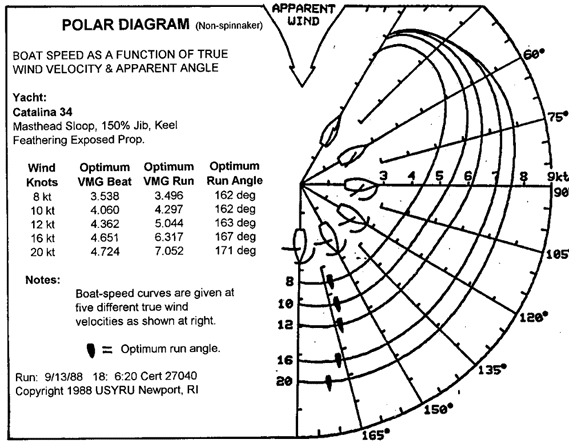
polarDiag.gif


http://www.c34.org/faq-pages/faq-polar-diagram.html
 
We had a beginner on our boat for a club race in May involving a few drops, re-packs, and re-hoists of the cruising chute (sorry asymmetric, we were racing). At the end of the race she volunteered to re-pack the kite "I'm sure I can do that, just tell me how" so I told her to gather all the tapes and corners together tie the corners and stuff the sail in the bag with the corners on top.
She was down below for ages and eventually appeared with a stupid grin on her face saying "Sorry, I spent ages looking for the fourth corner!" It hoisted Ok next time we used it though.
 
We're not racing, cruising only nowadays. The turtle can be left on the guard wires as we don't get a lot of water on deck. Turtle has a net bottom so any water should run out easily. In practice it's less complicated to take it off to avoid genoa sheet problems, although I sometimes bungee it to the coachroof if I expect to fly it again soon.
 
Top