Raising anchor if electric windlass fails

I have a very heavy boat and have found only a small benefit in comfort or reduced anchor load. I always use a snubber though as it does help and I size it so it protects the windlass from load. I don’t have a chain stopper, but ought to have one I think - very hard to fit. A claw would be good too. Currently am using a dyneema loop on a pelican hook instead. Not as tidy.

I was on a 180 ton boat yesterday. No snubber and they anchor out a lot.

I can guess as to why the need for a snubber is less on big boats as it may be down to the way load on the anchor arises. Load is caused by wind, by waves and and a change of direction from sailing at anchor. For a given wind speed the maximum wind load on an anchor will be proportional to the superstructure cross sectional area, which will increase with the square of boat length. The dynamic loads from waves and swing will be proportional to the displacement of the boat, which increases with the cube of length. So the bigger the boat, the less important dynamic load is. So a 2 ton catamaran jerks and swings like crazy in big winds and waves, but a supertanker hardly moves.
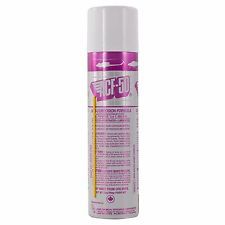
 
This is what you need - for all your tools

s-l960.jpg

Not cheap, but it does work, and keeps on working, unlike WD40
Sunflower oil and a rub with aluminium foil is very cheap
Otherwise ditto.
On a hacksaw blade I might run a candle over it first to stop the SFO clogging the teeth.
 
Last edited:
Naive question:

I dont have a winch, and will likely be alone. In blowy conditions manual recovery seems like it should be do-able but perhaps quite slow.

In the time between the anchor coming unstuck and it being recovered ondeck (washed or not, depending on urgency) one is apparently drifting out of control with an anchor dangling off the bows.

I'm wondering what can be done to limit the perils of that situation.

Only things I can think of are having the engine running, and possibly setting a drogue and/or a secondary smaller anchor that might be quicker to recover. I suppose if you found those to be necessary/useful you might have deployed them when initially anchoring, though there is an entanglement risk to be managed either way.
 
I hadn't realised how fortunate I am, both electric windlasses I've had were Lofrans Tigres, which have a perfectly usable manual option. In fact I have spent several months using the Tigres in manual mode when I had a problem with the motor brushes.
Yep, our Falkon also has a slow but very usable manual option. We use it to park the last few inches of the anchor on the roller each time. Better than ramming it in place with the motor
 
Naive question:

I dont have a winch, and will likely be alone. In blowy conditions manual recovery seems like it should be do-able but perhaps quite slow.

In the time between the anchor coming unstuck and it being recovered ondeck (washed or not, depending on urgency) one is apparently drifting out of control with an anchor dangling off the bows.

I'm wondering what can be done to limit the perils of that situation.

Only things I can think of are having the engine running, and possibly setting a drogue and/or a secondary smaller anchor that might be quicker to recover. I suppose if you found those to be necessary/useful you might have deployed them when initially anchoring, though there is an entanglement risk to be managed either way.
On our Snapdragon 24, we had the same issue. If I had Madame with me, no problem, she'd drive the boat and just get us going in a safe direction while I'm sorting things out on the foredeck, but solo could be "interesting" in a tight corner and a bit of breeze. I never came up with a real solution, but a line attached to the Samson post with a chain hook meant that I could fix the chain, and scoot back to the cockpit if necessary, even if the anchor and a few metres of chain were still dangling in the water. I could then sort things out at leisure once in clear water.
 
Naive question:

I dont have a winch, and will likely be alone. In blowy conditions manual recovery seems like it should be do-able but perhaps quite slow.

In the time between the anchor coming unstuck and it being recovered ondeck (washed or not, depending on urgency) one is apparently drifting out of control with an anchor dangling off the bows.

I'm wondering what can be done to limit the perils of that situation.
If there is some wind, as the chain is almost vertical and the anchor is about to come free I lock the chain, go back to the cockpit to put engine in rear gear at lowish rpm, the boat stops and becomes stable, plenty of time to go back to the bow, complete lifting the residual amount of chain and block the anchor. As my boat kicks to port in astern, I try and keep it with the wind on the port side to help it turn around on the right side when the anchor comes free. Significant advantage in busy anchorages, the boat will not begin speeding semi-out-of-control among other anchored boats around.
It can be (a lot) trickier with strong currents, if necessary I lock the chain and head to deeper waters, with about 1:1 scope the anchor should really hit a massive obstruction on the sea bottom to be of some concern.
FWIW, I have a windlass with remote control, never used the remote in such cases.
 
Naive question:

I dont have a winch, and will likely be alone. In blowy conditions manual recovery seems like it should be do-able but perhaps quite slow.

In the time between the anchor coming unstuck and it being recovered ondeck (washed or not, depending on urgency) one is apparently drifting out of control with an anchor dangling off the bows.

I'm wondering what can be done to limit the perils of that situation.

Only things I can think of are having the engine running, and possibly setting a drogue and/or a secondary smaller anchor that might be quicker to recover. I suppose if you found those to be necessary/useful you might have deployed them when initially anchoring, though there is an entanglement risk to be managed either way.
As long as you keep the speed low so the chain is not rubbing on the bow, there is no urgency in recovering the anchor, providing it is well clear of the seabed. There is no need for the yacht to be out of control; ideally, you would have an autopilot and an electric anchor windless with a wireless remote to help in these situations. If not, you need to alternate between the bow and helm to keep the vessel under control, especially in crowded anchorages.

I once sailed a yacht with 60m of chain and anchor dangling from the bow (long story), and much to my surprise, it handled OK even under sail.
 
My new to me boat 41 foot boat weights about 15 or 16 tons loaded. It is fitted with a nearly new Quick D3 1500w windlass, foot switches, remote chain counter and controls in cockpit, 33kg Rocna and 50m of 10mm chain. Works like a dream and has been used a lot this summer. What a pleasure.

I decided that I needed to practice raising it manually in case of a motor failure or power issue so dug out the user instructions. Turns out there is no manual option. I can drop it manually but not raise it. I contacted Quick and asked if there was anyway to address this, They said that the only option was to basically buy a new windlass top half and mate it to the existing motor - price of about £1200. That is nearly the price on a new complete unit and not something I want to do if I can avoid it.

Why on earth would a respected windlass manufacturer design a windlass designed for a biggish, heavy boat with no way of manual recovery except using a winch a metre at a time which is the only option I can see to get it in.

Has anyone got any other ideas, all my previous boats had had a manual option so not something I have experience of.
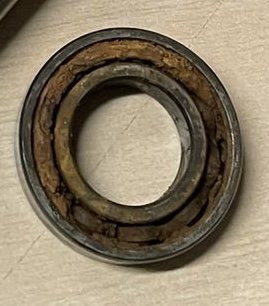
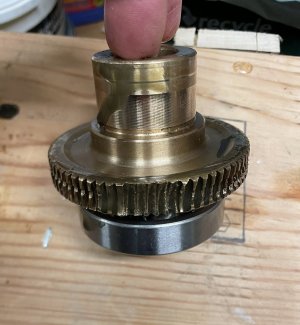
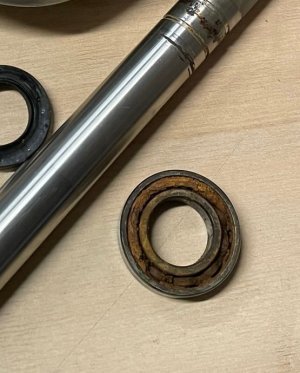
And they do fail. I’m currently repairing my Quick Aleph which has suffered gearbox failure. It’s failed because the spindle bearing had corroded badly and was practically seized. Hard to believe that Quick use ordinary steel bearings rather than stainless in such an exposed setting. They also used oil seals with a mild steel internal stiffener which had also corroded and allowed water to enter the bearing!eb469684-f046-4a2e-9389-fbc2414f27cc.jpegb7361180-3568-4305-b77d-088e91162231.jpeg
 

Attachments

  • IMG_1474.jpeg
    IMG_1474.jpeg
    1.9 MB · Views: 5
  • IMG_1470.jpeg
    IMG_1470.jpeg
    1.7 MB · Views: 5
  • eb469684-f046-4a2e-9389-fbc2414f27cc.jpeg
    eb469684-f046-4a2e-9389-fbc2414f27cc.jpeg
    133.5 KB · Views: 4
This just released video shows an Australian couple struggling (unfortunately unsuccessfully) with this problem:


We are currently in Prince William Sound and have had our windlass fail so can give some real life comment.
Anchored in 20 m on our 45 foot Ovni Fajo. Snowing in the morning as we went to pick up but could not engage the gypsy on our Lewmar V3 drum/gypsy vertical windlass. After some work we identified the issue as the lower cone of the clutch under the Gypsy, shattered.
As the chain is 10mm and the anchor 33 kg we had a bit of weight to lift with 80 m of chain out in 20 m of water.
We used a chain hook to hold the chain each time we lifted and then used a 10 mm line and a rolling hitch to winch up a couple of metres at a time. Took a while and got "fun" once the anchor was off the bottom with 20 m to go in a tight anchorage we could not leave until all chain aboard ( only a narrow shallow entrance).
Damn cold hands in the snow but I was roasting hot.
We then swapped to our secondary anchor a 20 kg Nigel with 10 m of 10 mm chain and a 100m braid. Much easier to handle via a winch as we wait to get the spare parts.
We do also carry a SL 33 SeaT Tiger which we could rig if we needed to for longer term use.
Overall the chain hook and rolling hitch worked fine but we had benign conditions. A length of line as a spare anchor rode with the main anchor would help most people manage ok once they have the chain aboard and sorted.
Looking forward to having the windlass fixed.
 
Top