
Protecting cast iron keel and grounding plate on a Southerly

richardsnowstar

Well-Known Member
Joined
21 Jun 2010
Messages
241
Location
Horley/Tignes/Portsmouth Harbour
www.snowstar.co.uk
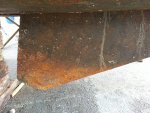
I am after some advice about coating my keel. It is cast iron and last year I had it shot blasted, epoxied and copper coated. I believed this would be sufficient to protect the cast iron but very quickly (6 months) it has rusted through. I have a couple of questions;

Should the epoxy coating be suitable to protect the cast iron if prepared and applied properly?

Is there a better option for protecting the keel?

Any advice would appreciated.
 
For epoxy coating to work you have to encapsulate, clean dry, pure metal and then make sure the coating isn't damaged by striking something.

So in your case:

You don't have pure metal - cast iron often has impurity inclusions so achieving the ideal SA2.5 standard of blast cleanliness is impossible. If you blast away one inclusion you reveal another, and so on.

With the grounding plate being 'in situ' on the boat, you can only blast up to the plate / hull junction and not the entire structure. Therefore you have an 'edge' to your epoxy which will never be truly sealed.

Keels and grounding shoes are very prone to mechanical damage.

So, epoxy treatment of cast iron keels always meets with variable success. Some people think it's still worth the effort, others think that regular wire brushing and coating with a lower tech material is less costly and more realistic.
 
It is not clear to me if the rusted area is on the sides of the keel so it is rust from underneath that has penetrated the epoxy or if the prolem is in the grounding plate where it has been abraded by rocks etc. If it is the former then I can only suggest that you hit it with an angle grinder with rubber disc and sand paper attachment to take the coatings off to clean metal and try again. Expect similar trouble at ach lift out.
If it is the under side of the grounding shoes then again clean it up and treat. You might get some improvemnt in the resistance to abrasion by laying kevlar over the bottom of the shoes. Perhaps 2 layers of cloth. This is incredibly tough and may just extend the life of the epoxy treatment. good luck olewill
 
I once tried coating my mild steel lifting keel plate with 709 epoxy, it didn't work at all and I believe the slightest damage - doesn't require hitting anything which is nigh on impossible with the large ballast bulb - will trap water against the metal.

I have tried just about every steel & metal treatment going - the ballast bulb is cast iron - and one treatment has proved head and shoulders better than the rest; Dulux Metalshield.

This stuff is brilliant, really stays put and protects. It's one part but does require its' own one part primer, to be applied on bare clean metal, galvanised surfaces are OK.

I suspect the average DIY store or even chandler may not have it, I get it from Brewers.
 
My cast iron keel has been grit blasted and epoxied twice, once in North Wales, once in Greece. Both have been reasonably successful, the first lasting ten years, the second about five at present, still going. The best advice is to grit blast on a dry day and get the epoxy on within half an hour.
 
We had reasonable success using a phosphoric acid treatment followed by SP epoxy.
We put the epoxy on using a hot air gun to heat the metal and epoxy.

'Success' in this context means it only needs chips touching up for the next 5 years or more and getting a finish you're not ashamed to race with for the season.
The only way to do much better is to get a lead keel.
 
I am after some advice about coating my keel. It is cast iron and last year I had it shot blasted, epoxied and copper coated. I believed this would be sufficient to protect the cast iron but very quickly (6 months) it has rusted through. I have a couple of questions;

Should the epoxy coating be suitable to protect the cast iron if prepared and applied properly?

Is there a better option for protecting the keel?

Any advice would appreciated.

http://www.gsa.gov/portal/content/111738

"RUSTING:

Rusting, or oxidation, is the most frequent and easily recognizable
form of cast iron deterioration. Cast iron is highly susceptible
to rusting when the humidity is higher than 65%. Iron (Fe) combines
with oxygen (O) in the presence of water vapor (H2O) to become rust
(Fe2O3). This process can take place at significantly different
rates depending on the material composition, protective treatments
applied and severity of exposure. If rusting occurs at a rapid
rate, it can result in severe damage or total loss of a component
in a short time; therefore, the presence of any rust on a cast iron
artifact should alert the observer to the presence of a serious
problem. Rusting can occur when the humidity is as low as 58% in
the presence of certain pollutants, especially sulfur dioxide,
ammonia sulfates or even the presence of body oils from touching.
Reducing the humidity to 30% or below has been found to be
effective in preventing rusting, however this is not a practical
solution for outdoor cast iron.

Rusting is such a common problem that it is quite easily
recognizable. Rust (Ferrous Oxide, Fe2O3, and Ferric Oxide, Fe3O4)
is an orange colored surface coating, ranging in texture from scaly
to powdery. It is loosely bound and the outer layers will usually
come off when rubbed by hand or brushed against. It is not a
deposit on the surface. Rust is the result of the combination of
the iron (Fe) with oxygen (O) in the air, in the presence of
moisture. The presence of rust means that some original iron
material has been converted to iron oxide and irreversibly lost
from the cast iron piece.

The probability of rust occurring is generally dependent upon two
factors:

1. the degree of protection (usually a protective coating)
provided to keep moisture from contact with the metal, and

2. the degree of moisture present in the air.

Protective coatings used on iron include bituminous coatings (such
as tars), waxes, paints and sophisticated metallic coatings.
Effective coatings, well maintained, provide the most reliable
protection against rust and corrosion of cast iron, however, there
are a wide variety of coatings available, and these can be
confusing to users not thoroughly versed in the technical data for
each type.

Humidity is the second factor affecting the rate of oxidation
(rusting) of iron. It is generally accepted that rusting cannot
begin unless the relative humidity is at or above 65% (this figure
can be lower, however, in the presence of pollutants). Relative
humidity is, however, not the only factor to be considered. Once
rusting has started, at least two other phenomena may occur:

1. some rust or ferrous oxide can become hydrated, i.e. it can
contain moisture within its chemical structure, thereby
exposing the iron to additional moisture, and

2. the porous rust may act as a reservoir for liquid water,
keeping it in contact with the iron and perpetuating the
rusting process.

Both of these conditions are microscopic in nature and invisible to
casual inspection. Maintenance staff and trained personnel,
however, should be aware of the processes, and the potential for
the processes to damage the cast iron. The presence of visible
rust is the symptom indicating that a problem exists. Appropriate
action should be taken to prevent rusting, and where it does occur,
to correct it with an appropriate treatment. See individual repair
or preventive maintenance procedures for specific guidance as
needed.

Many other factors can affect both corrosion and the rate of
corrosion. Sea water, salt air, cements, plasters, ashes, sulphur,
soils and acids can accelerate the corrosion of iron. Corrosion
rates can also be accelerated where the detailing of the cast iron
provides pockets which can collect and hold moisture and corrosive
agents. Preventive maintenance plans should consider detailing,
such as crevices and recessed areas, in establishing routine
inspection techniques and frequency of inspection."

"GRAPHITIZATION:

Cast iron contains carbon, in the form of graphite, in its
molecular structure. It is composed of a crystalline structure as
are all metals; i.e. it is a heterogeneous mass of crystals of its
major elements (Iron, Manganese, Carbon, Sulphur and Silicon). One
condition which can occur in the presence of acid rain and/or sea
water is "graphitization." The stable graphite crystals remain in
place, but the less stable iron becomes converted to insoluble
iron oxide (rust). The result is that the cast iron piece retains
its shape and appearance but becomes weaker mechanically because of
the loss of iron. Graphitization is not, however, a common
problem. It generally will occur only after bare metal is left
exposed for extended periods, or where failed joints allow the
penetration of acidic rainwater to interior surfaces.

This corrosion process is galvanic, with the carbon present acting
as the most noble (least corrosive) element and the iron acting as
the least noble (most corrosive) element. The composition or
microstructure of the iron affects the durability of the object
because the rate of corrosion is dependent upon the amount and
structure of the graphite present in the iron.

COATINGS FAILURE:

Barrier coatings are the most commonly used protective mechanisms
for cast iron. Some type of coating (such as a wax, paint or
metallic coating) should probably be considered an integral feature
of cast iron in service. The absence of such a coating, or a
failure in an existing coating should be corrected. Inspection
should include a visual examination of all surfaces to determine if
a coating exists, a fact which may be very apparent for opaque
paints and coatings but substantially less apparent for clear
lacquers, waxes or oils. Surfaces having the appearance of raw
metal should be carefully examined for signs of rusting. Absence
of a coating should be considered a major problem and corrective
action should be undertaken. See individual repair or preventive
maintenance procedures for specific guidance as needed.

Failure of a coating should also be identified and corrected.
Coatings can wear away, crack, flake, blister, or peel away,
indicating that the coating has failed and is no longer protecting
the cast iron from moisture. Failed coatings can, in fact, trap
moisture beneath the film and accelerate corrosion at certain
points on the surface. Inspection of the surface should include a
careful check for all of these types of coating failures. A record
should be made of any coating failures observed so that corrective
action may be taken."
 
I had the grounding plate/keel assembly on our Southerly blasted and epoxied 10 years ago and in fairness it has been a great success. I was shocked on seeing the amount of rust in your pics. After a winter ashore I normally have 10 or 20 spots of rust spread around the keel/plate which I brush off the worst of the rust and then treat with kurust or similar and then coat with antifoul.

I would have to say that either the epoxy seems to have failed dramatically or that it has been put on to already damp metal and the rust is just showing through. Hard to tell which from the pics. Still think that amount of rust is excessively bad after one season afloat, especially given the history of non-grounding etc as you have described. Was the job done professionally?

Chas
 
http://www.gsa.gov/portal/content/111738

"RUSTING:

Rusting, or oxidation, is the most frequent and easily recognizable
form of cast iron deterioration. Cast iron is highly susceptible
to rusting when the humidity is higher than 65%. Iron (Fe) combines
with oxygen (O) in the presence of water vapor (H2O) to become rust
(Fe2O3). This process can take place at significantly different
rates depending on the material composition, protective treatments
applied and severity of exposure. If rusting occurs at a rapid
rate, it can result in severe damage or total loss of a component
in a short time; therefore, the presence of any rust on a cast iron
artifact should alert the observer to the presence of a serious
problem. Rusting can occur when the humidity is as low as 58% in
the presence of certain pollutants, especially sulfur dioxide,
ammonia sulfates or even the presence of body oils from touching.
Reducing the humidity to 30% or below has been found to be
effective in preventing rusting, however this is not a practical
solution for outdoor cast iron.

Rusting is such a common problem that it is quite easily
recognizable. Rust (Ferrous Oxide, Fe2O3, and Ferric Oxide, Fe3O4)
is an orange colored surface coating, ranging in texture from scaly
to powdery. It is loosely bound and the outer layers will usually
come off when rubbed by hand or brushed against. It is not a
deposit on the surface. Rust is the result of the combination of
the iron (Fe) with oxygen (O) in the air, in the presence of
moisture. The presence of rust means that some original iron
material has been converted to iron oxide and irreversibly lost
from the cast iron piece.

The probability of rust occurring is generally dependent upon two
factors:

1. the degree of protection (usually a protective coating)
provided to keep moisture from contact with the metal, and

2. the degree of moisture present in the air.

Protective coatings used on iron include bituminous coatings (such
as tars), waxes, paints and sophisticated metallic coatings.
Effective coatings, well maintained, provide the most reliable
protection against rust and corrosion of cast iron, however, there
are a wide variety of coatings available, and these can be
confusing to users not thoroughly versed in the technical data for
each type.

Humidity is the second factor affecting the rate of oxidation
(rusting) of iron. It is generally accepted that rusting cannot
begin unless the relative humidity is at or above 65% (this figure
can be lower, however, in the presence of pollutants). Relative
humidity is, however, not the only factor to be considered. Once
rusting has started, at least two other phenomena may occur:

1. some rust or ferrous oxide can become hydrated, i.e. it can
contain moisture within its chemical structure, thereby
exposing the iron to additional moisture, and

2. the porous rust may act as a reservoir for liquid water,
keeping it in contact with the iron and perpetuating the
rusting process.

Both of these conditions are microscopic in nature and invisible to
casual inspection. Maintenance staff and trained personnel,
however, should be aware of the processes, and the potential for
the processes to damage the cast iron. The presence of visible
rust is the symptom indicating that a problem exists. Appropriate
action should be taken to prevent rusting, and where it does occur,
to correct it with an appropriate treatment. See individual repair
or preventive maintenance procedures for specific guidance as
needed.

Many other factors can affect both corrosion and the rate of
corrosion. Sea water, salt air, cements, plasters, ashes, sulphur,
soils and acids can accelerate the corrosion of iron. Corrosion
rates can also be accelerated where the detailing of the cast iron
provides pockets which can collect and hold moisture and corrosive
agents. Preventive maintenance plans should consider detailing,
such as crevices and recessed areas, in establishing routine
inspection techniques and frequency of inspection."

"GRAPHITIZATION:

Cast iron contains carbon, in the form of graphite, in its
molecular structure. It is composed of a crystalline structure as
are all metals; i.e. it is a heterogeneous mass of crystals of its
major elements (Iron, Manganese, Carbon, Sulphur and Silicon). One
condition which can occur in the presence of acid rain and/or sea
water is "graphitization." The stable graphite crystals remain in
place, but the less stable iron becomes converted to insoluble
iron oxide (rust). The result is that the cast iron piece retains
its shape and appearance but becomes weaker mechanically because of
the loss of iron. Graphitization is not, however, a common
problem. It generally will occur only after bare metal is left
exposed for extended periods, or where failed joints allow the
penetration of acidic rainwater to interior surfaces.

This corrosion process is galvanic, with the carbon present acting
as the most noble (least corrosive) element and the iron acting as
the least noble (most corrosive) element. The composition or
microstructure of the iron affects the durability of the object
because the rate of corrosion is dependent upon the amount and
structure of the graphite present in the iron.

COATINGS FAILURE:

Barrier coatings are the most commonly used protective mechanisms
for cast iron. Some type of coating (such as a wax, paint or
metallic coating) should probably be considered an integral feature
of cast iron in service. The absence of such a coating, or a
failure in an existing coating should be corrected. Inspection
should include a visual examination of all surfaces to determine if
a coating exists, a fact which may be very apparent for opaque
paints and coatings but substantially less apparent for clear
lacquers, waxes or oils. Surfaces having the appearance of raw
metal should be carefully examined for signs of rusting. Absence
of a coating should be considered a major problem and corrective
action should be undertaken. See individual repair or preventive
maintenance procedures for specific guidance as needed.

Failure of a coating should also be identified and corrected.
Coatings can wear away, crack, flake, blister, or peel away,
indicating that the coating has failed and is no longer protecting
the cast iron from moisture. Failed coatings can, in fact, trap
moisture beneath the film and accelerate corrosion at certain
points on the surface. Inspection of the surface should include a
careful check for all of these types of coating failures. A record
should be made of any coating failures observed so that corrective
action may be taken."

Gosh what a lot of info, we can all "google" but I believe the OP asked for "advice".
 
Has he tried wax?[/QUOTE]

Not heard of "wax" can you say what type and how its applied; is this a base or top coat?
I followed the thread as I have a similar job to tackle over the winter.
Thanks
 
similar problem

I have a similar problem:

View attachment 36992

The lifting keel and grounding plate were professionally blasted in March this year, epoxy coated and then CopperCoated.

Most of the damage to the lower leading edge of the keel was caused by me grounding a various time, it took a while to get use the idea of a 3.3m draft, when my previous boat had a 1.7m draft. I've now learnt to lift the keel in plenty of time.

I'm now faced with making good the damage and plan to grind back the rust and apply epoxy thickened with micro fibers, fair, and then epoxy prime and CopperCoat, unless I can find a better way to approach the repair.

Anyone with anyone suggest a better way to make good the damage bearing in mind that the work will be carried out in the spring in a no doubt chilly and damp boat yard.
 
Four years ago I had my cast iron lifting keel blasted and I then coated it using KBS Rustseal, which involved a phosphoric acid etch prior to the paint. Once coated I faired the keel with epoxy using a mixture of microfibres and low density filler. once faired I gave more coats of KBS, then Coppercoat on the bottom foot or so. This has stood up well, and patching grounding damage with KBS seems to work reasonably well too.
 
Four years ago I had my cast iron lifting keel blasted and I then coated it using KBS Rustseal, which involved a phosphoric acid etch prior to the paint. Once coated I faired the keel with epoxy using a mixture of microfibres and low density filler. once faired I gave more coats of KBS, then Coppercoat on the bottom foot or so. This has stood up well, and patching grounding damage with KBS seems to work reasonably well too.

There are many sites offering hints on protecting cast iron machinery/garden furniture/planters against corrosion using wax.
Range from US sites suggesting 'paste wax' to UK sites suggesting 'bees wax'. Some suggest its a similar procedure to seasoning a cast iron skillet.
 
Top