Propeller key

Do not buy that particular digital caliper. I did, but would not next time. :ambivalence:

Richard

Thanks Richard. No I have had my Digital Caliper for ten years or so now and it works fine.

I also have X3 plastic Vernier calipers which only cost $1.50 (£0.80) ea ( I work on the assumption if I have a few of anything I should be able to find one when I want it!)

Clive
 
It’s likely to be 3/16 Square brass but If you remove your prop you will get the correct size you cut the key brass to length and file the ends make sure the prop does not sit on top of the key
You might even be able to grind the the prop on using Brasso polish and refit it without a key for a short period just make sure the nut is locked

It really should be stainless steel, not brass. Whatever it is you now need to get the prop off. If the tapers are correctly matched then you just need a new key. The propeller nut is generally prevented from loosening by a tab washer, and a new one is a good idea. You can check the taper by painting a line of engineers blue down the taper on the shaft. Put the prop on without fitting the key and rotate it to see if the blue gets smeared evenly, or at only one end of the taper.

EDIT: The key should be a tight fit sideways in both shaft keyway and propeller, but must have clearance in the radial plane, i.e. at right angles to the shaft axis.
 
Last edited:
Do not buy that particular digital caliper. I did, but would not next time. :ambivalence:

Richard

Oh, dear. I bought two of them, one after t'other. The first stopped working after a few months. Wouldn't start up, like my engine. The other one, also from ALDI ( unlike my engine ), is still OK.
 
Well it certainly should have worked for more than two months but did you replace the battery? (I have had to replace a battery once in ten years)
 
Well it certainly should have worked for more than two months but did you replace the battery? (I have had to replace a battery once in ten years)

Gosh! Battery....? Now there's an idea...... ;)

But, but..... the old one my father gave me didn't use a battery. I changed to one with BIG NUMBERS 'cos of my challenged eyesight..... or maybe because I'd broken off one of the prongs opening a beer bottle.
 
Gosh! Battery....? Now there's an idea...... ;)

But, but..... the old one my father gave me didn't use a battery. I changed to one with BIG NUMBERS 'cos of my challenged eyesight..... or maybe because I'd broken off one of the prongs opening a beer bottle.
Stupid boy.
 
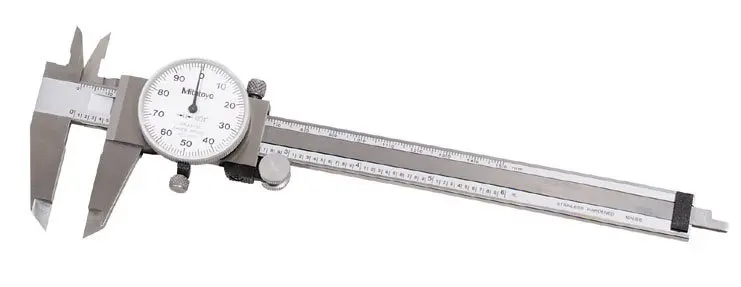
I use one of these accurate but dont need battries.

Dial-Caliper.jpg
 
19 out of 28 replies on a matter completely unrelated to my original question.
Many thanks to the 9 of you that manged to stay focussed. Your contributions were very helpful and much appreciated.
 
19 out of 28 replies on a matter completely unrelated to my original question.
Many thanks to the 9 of you that manged to stay focussed. Your contributions were very helpful and much appreciated.

Your gentle reprimand is based on bad numbers. There may have been 28 replies, but not 28 repliers. Several of us posted both on subject and off. Then there's the Posters Paradox: this post responds directly to the OP, so is it on subject or off? ;)

It's a forum, mate. Get used to it. And good luck with the prop.
 
Your gentle reprimand is based on bad numbers. There may have been 28 replies, but not 28 repliers. Several of us posted both on subject and off. Then there's the Posters Paradox: this post responds directly to the OP, so is it on subject or off? ;)

It's a forum, mate. Get used to it. And good luck with the prop.

++

Yes it's a forum and so bloody helpful. Tonight I'll be sitting down and going through everyone's replies regarding marine batteries on a thread I started a couple of months ago. (I'm all cashed up now and ready to go!)

Make that 29 off-topics!

Clive
 
Having spent most of my working life with high power engines which used tapers and keys to hold highly stressed components in place-and having proper training-I can state that with a key/taper assembly the key is just a locator. It should take no part in the transfer of power. In fact, the space a key/slot assembly takes reduces the surface area of the tapered joint.

Three years ago we lost a Kiwiprop in Glenarm Harbour. A new one was ordered, with a new 1/4X1/4 inch length of S/S key material.

The new prop was pushed fully onto the shaft without the key, the position it took marked with a turn of tape.

It was very difficult to remove, even with just hand pressure pushing it into place-a fair clout with a heavy hammer and a wooden block was reqired to "unstick" it from the taper. That is how good a closely matching pair of tapers can be.

The key was fitted after cutting to length, the prop replaced on the shaft where it could clearly be seen that the key was far too high-the boss was almost an inch from the tape marking where it should be.

Much fettling later-thanks to Jonny at the yard allowing me use of his bench and vice-the key was reduced in hight enough to allow the boss to fully engage to where the tape marked.

A wooden pole was placed under a prop blade to stop rotation, the retaining nut loctited and torqued and the retaining grub screws tightened to lock the retaining nut.

Job done.

So, the Key is a locator only, drive is taken by the taper.

A mechanic in the early days of Speedway-1928/1929-was measured on his ability to keep the outside flywheel attatched to the crankshaft of a Dirt Track Douglas. As these flywheels could hit the track quite easily when ridden well, the subsequent jolt often being enough to break the tapered joint if not fitted properly. Keeping them on the taper was very important if races were to be won-and money earned. Jack Parker could earn enough in a week to buy a house in Birmingham!

If either taper has damage, grinding paste if minor scoring, a fine file if heavier, followed by grinding paste should recify the damage.
 
Last edited:
Having spent most of my working life with high power engines which used tapers and keys to hold highly stressed components in place-and having proper training-I can state that with a key/taper assembly the key is just a locator. It should take no part in the transfer of power. In fact, the space a key/slot assembly takes reduces the surface area of the tapered joint.

Why does a properly matched tapered shaft and prop need a "locator"? If the key is not taking any part in the transfer of power, what is its purpose? :confused:

Richard
 
Why does a properly matched tapered shaft and prop need a "locator"? If the key is not taking any part in the transfer of power, what is its purpose? :confused:

Richard


A sensible question.

In the case of motorcycle engine components, many are balanced during manufacture and a key ensures they are fitted where they belong. In the case of flywheel magneto ignition systems, the key locates the rotating flywheel to the crankshaft at the point of maximum magnetic flux to ensure a good strong spark. In the case of CDI systems, in the correct place for the switching thyristor to release a belt of current from the capacitor at the optimum time for ignition performance.

One example where no key is used is on the Aermachi racing engines-the crankshaft gear is just held by the taper, no key.

As are car steering ball joints-they just rely upon the taper for a tight fit.

Years ago a work collegue left a nut off a Morris Oxford steering ball joint. He realised the next day when he found the new nut and split pin on his bench.

He fronted up to management, they asked the owner to "pop back in fo a few minutes for a re-check of the tracking "

The car came back, no nut and split pin, 60 odd miles since the new ball joint, but still firmly in place.

The nut and pin were fitted, no drama from the owner-who was unaware.

I really dont know why propellers and shafts have keys-probably because " Thats how we always do it "

I would be quite happy to leave the key out of my shaft once I had confirmed the integrity of the matching tapers.

Having the right kit-a VERY large top quality leg type puller with 2,3 or 4 leg options, and seeing how much pressure is needed to pull a well fitted prop off, I would have no reservations whatsoever about the ability of the matching tapers to drive without slipping.
 
I really dont know why propellers and shafts have keys-probably because " Thats how we always do it "

I would be quite happy to leave the key out of my shaft once I had confirmed the integrity of the matching tapers.

Having the right kit-a VERY large top quality leg type puller with 2,3 or 4 leg options, and seeing how much pressure is needed to pull a well fitted prop off, I would have no reservations whatsoever about the ability of the matching tapers to drive without slipping.

I wonder if they use the key because they are not always 100% sure about the integrity of the tapers, or perhaps a 1 in 10 taper is a bit "marginal" so the key is a sort of belt and braces?

My V8 Jaguar has no key on the four camshaft pinions and they are transmitting far more power than a auxiliary marine engine and against a much higher resistive force at much higher revs. However, I reckon that the taper is much shallower than 10:1.

Richard
 
For motorbike flywheels, the tip is to lap the flywheel to the crankshaft using valve grinding paste or similar. I don't know how possible this is if your prop is big, but it doesn't take too long. Add some paste, push the prop and twist, until the shaft and prop is an even, dull grey. Once the tapers match exactly the prop should bind onto the shaft and isn't reliant on the key.
 
Top