Propeller key

Jabamusic

Well-Known Member
Joined
12 Nov 2007
Messages
382
Visit site
All,

After loosing drive and taking a dip to go see what was happening, I have determined that the shaft is spinning with the prop unengaged.
I am assuming the key has broken (does that happen?) leaving me hopeless in the water.

I can dry out easily enough but would like to be as prepared to do the job in one tide.

I was wondering how to determine what size key I will need. Is their a calculation dependant on diameter of the shaft e.g. My shaft is 1".
The other factor is where does get one from? Who sells them?

Is there anything else I should consider, or just go have a look and then ordering?
As always, many thanks

Jaba
 
All,

After loosing drive and taking a dip to go see what was happening, I have determined that the shaft is spinning with the prop unengaged.
I am assuming the key has broken (does that happen?) leaving me hopeless in the water.

I can dry out easily enough but would like to be as prepared to do the job in one tide.

I was wondering how to determine what size key I will need. Is their a calculation dependant on diameter of the shaft e.g. My shaft is 1".
The other factor is where does get one from? Who sells them?

Is there anything else I should consider, or just go have a look and then ordering?
As always, many thanks

Jaba

I'm surprised this is possible with a key in place. My guess is that the prop is loose on its taper and that's why the key has failed. The mating of the prop on its taper is the main source of rigidity in the system surely? Was there vibration before the failure I wonder, indicating that the key was too proud for the prop to fit on the taper perhaps?

Anyway, you can buy some bronze key blank and file one to fit while dried out?
 
It’s likely to be 3/16 Square brass but If you remove your prop you will get the correct size you cut the key brass to length and file the ends make sure the prop does not sit on top of the key
You might even be able to grind the the prop on using Brasso polish and refit it without a key for a short period just make sure the nut is locked
 
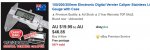
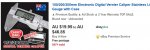
One of the best investments I've made recently is a digital vernier bought on eBay for about $A15. (£9) It is ideal for accurately measuring key-way sizes, bolt diameters etc.
 
One of the best investments I've made recently is a digital vernier bought on eBay for about $A15. (£9) It is ideal for accurately measuring key-way sizes, bolt diameters etc.

And if you can read a vernier scale correctly, you can buy a vernier caliper without the digital bit for about the same and it'll last you a lifetime without batteries.

Just look after it, keep it in the case and very lightly oiled. Mitutoyo is usually a good brand but others exist too.
 
All,

After loosing drive and taking a dip to go see what was happening, I have determined that the shaft is spinning with the prop unengaged.
I am assuming the key has broken (does that happen?) leaving me hopeless in the water.

I can dry out easily enough but would like to be as prepared to do the job in one tide.

I was wondering how to determine what size key I will need. Is their a calculation dependant on diameter of the shaft e.g. My shaft is 1".
The other factor is where does get one from? Who sells them?

Is there anything else I should consider, or just go have a look and then ordering?
As always, many thanks

Jaba

Yes, very, very occasionally the Woodruff key can break, usually as a result of the propellor not being tight on the taper (assuming that it isn't a Morse taper). Woodruff keys should be of a hard material but many think it should be soft in order to fail...

Assuming you have one of the 'normal' tapers on your propshaft I recommend that you speak to a supplier of propshafts to see what sizes of Woodruff key they would recommend for you (and if there are a number, buy them all to ensure you get the job done in one tide). Then dry out and remove the propellor and be prepared to chisel out the remnants of the key from the keyway and keyseat. Pop in a new one, mate the prop, tighten the nut to the recommended torque, remember the new splitpin and, hey presto, have a beer whilst the tide returns...

But remember, all the time your propellor is spinning on the shaft you are risking losing it (assuming that there is no pin or tab washer retaining the shaft nut), so move your boat to the scrubbing posts gently...
 
Thanks for the replies.
Yep I have calipers, what I don't have is real access to the prop until I dry her out and remove it - I've popped down underwater and seen the problem and i'm now confident that the key-way has sheared or for some reason the prop has come loose and the key-way has ddopped out. what I'm unsure of is how to best prepare for when she dries out. That was why i was wondering if there was a "rule" that determines key- way size based on shaft diameter? That way i can have the right size of bar ready to make up once ive removed it.
3/8 has been suggested as "likely"- thank you.
I'm tempted to have at hand various sizes to be sure......?
Comments have been made that I ensure that the prop does not sit on top of the key-way.... can I assume that that means the key-way must fit flush in its slot in the prop? Or what?
Many thanks for thoughts so far.
Any additional advice very much appreciated.


Finally (for the moment) what material? Brass, aluminium, steel, ....blimey this is complicated!!!
 
Last edited:
And if you can read a vernier scale correctly, you can buy a vernier caliper without the digital bit for about the same and it'll last you a lifetime without batteries.

Just look after it, keep it in the case and very lightly oiled. Mitutoyo is usually a good brand but others exist too.

+1
 
Thanks for the replies.
Yep I have calipers, what I don't have is real access to the prop until I dry her out and remove it - I've popped down underwater and seen the problem and i'm now confident that the key-way has sheared or for some reason the prop has come loose and the key-way has ddopped out. what I'm unsure of is how to best prepare for when she dries out. That was why i was wondering if there was a "rule" that determines key- way size based on shaft diameter? That way i can have the right size of bar ready to make up once ive removed it.
3/8 has been suggested as "likely"- thank you.
I'm tempted to have at hand various sizes to be sure......?
Comments have been made that I ensure that the prop does not sit on top of the key-way.... can I assume that that means the key-way must fit flush in its slot in the prop? Or what?
Many thanks for thoughts so far.
Any additional advice very much appreciated.


Finally (for the moment) what material? Brass, aluminium, steel, ....blimey this is complicated!!!

The keyway is already cut into the propshaft. The key is the bit that has broken (actually it has 'sheared'). The keyseat is in the propeller. (this is taking me back to my first year at college :) )

The key (which may be straight or a Woodruff key: semi-circular) sits in the keyway and stands proud to engage the propeller's keyseat.

The shaft taper should hold the propeller correctly and not allow it to rotate. The key is to make sure.

Remember that Wikipedia is your friend here (look up: Woodruff key) but you may have to recce it properly on a first tide before you fix it in the second. A piece of brass or stainless steel will do the job but when you're ashore in the winter do the job properly...
 
Of the 3 boats I've owned with 1" shafts, all have been 1/4" square, (or feather), keys IIRC. I've not come across a woodruff key, they might exist but their relatively shorter length could mean weaker.
I'd suggest stainless steel, but bronze is probably OK. I wouldn't go for brass due to possible de-zincification. The key must not sit too proud of the shaft keyway such that it stops the prop bedding fully on the taper, so a bit of radial clearance is needed.
A file is your friend here. Fitting width-wise should be as close as you can get .
Re. obtaining a key; I wouldn't think they're too widely available in suitable marine material, but a stern-gear supplier might stock/make them. OTOH, with a hacksaw, file and vice it's an easy "apprentice" job.
 
Last edited:
The key must not sit too proud of the shaft keyway such that it stops the prop bedding fully on the taper, so a bit of radial clearance is needed.

+1 This is absolutely...er, key...Jabamusic. As said, friction on the taper takes the load. The key itself is a backstop. With a home-made key, in particular there's always the danger that the prop will 'hang up', preventing the prop sitting fully on the taper. So first assemble the prop fully home on the shaft without the key, mark where it comes to, then assemble again with the key in place: it must reach the same position. If it doesn't, reduce the height of the key with a file and try again.
 
Last edited:
What on earth are you on about?

View attachment 72453

Clive

The 'Vernier' is the mechanical scale, similar in appearance to a slide rule: https://en.wikipedia.org/wiki/Vernier_scale

Your picture shows a Digital Caliper, not a vernier caliper, although many just use the expression 'just use a vernier'. The Vernier scale is also used on micrometers, mills, lathes, etc to increase the acuity of measurements and accuracy (to specification) of the items machined.

The deal is that almost anyone can read/quote/record what the digital caliper display shows, but you have to have been (slightly) trained to read the mechanical Vernier scale.
 
As a cost accountant I used to use a slide rule all the time before calculators came into use! (And I do have a micrometer).

Your picture shows a Digital Caliper, not a vernier caliper, although many just use the expression 'just use a vernier'

I think you are a bit pedantic!!

Temp Vernier.JPG
 
Stainless key steel is available on Ebay not too expensive so if you had a piece of 8 and of 10 and a file it would be acouple of hours work to fit the prop. Buying ahead saves the week having taken the prop off.
If the key has sheared there will be some damage to keyway and shaft to address as well
 
Top