Propeller antifouling

Last months PBO had a very good article on this subject. As a result I have used the Marlin Metal Primer and Marlin Velox Plus on my new propellor. Bought from Seamark Nunn for £58.85 in March.
Abraded propellor with 80 Grit, cleaned with Thinners, (I used the stuff West Epoxy supplies), one coat of primer, 3 coats of antifoul. I selected this because of the PBO article and it is tried and tested. Note: apply 3 x thin coats, apparently thicker costs flake off easier.
Tip, after abrading I placed a wooden pole through the centre and supported the prop on 2 axle stands while degreasing and painting.
 
Last months PBO had a very good article on this subject. As a result I have used the Marlin Metal Primer and Marlin Velox Plus on my new propellor. Bought from Seamark Nunn for £58.85 in March.
Abraded propellor with 80 Grit, cleaned with Thinners, (I used the stuff West Epoxy supplies), one coat of primer, 3 coats of antifoul. I selected this because of the PBO article and it is tried and tested. Note: apply 3 x thin coats, apparently thicker costs flake off easier.
Tip, after abrading I placed a wooden pole through the centre and supported the prop on 2 axle stands while degreasing and painting.

I can be pretty certain that my propeller will not suffer any fouling this year. ?
 
Velox Plus is still for sale in the UK. A quick Google will show a number of chandlers still selling it. Perhaps just running stocks down.
 
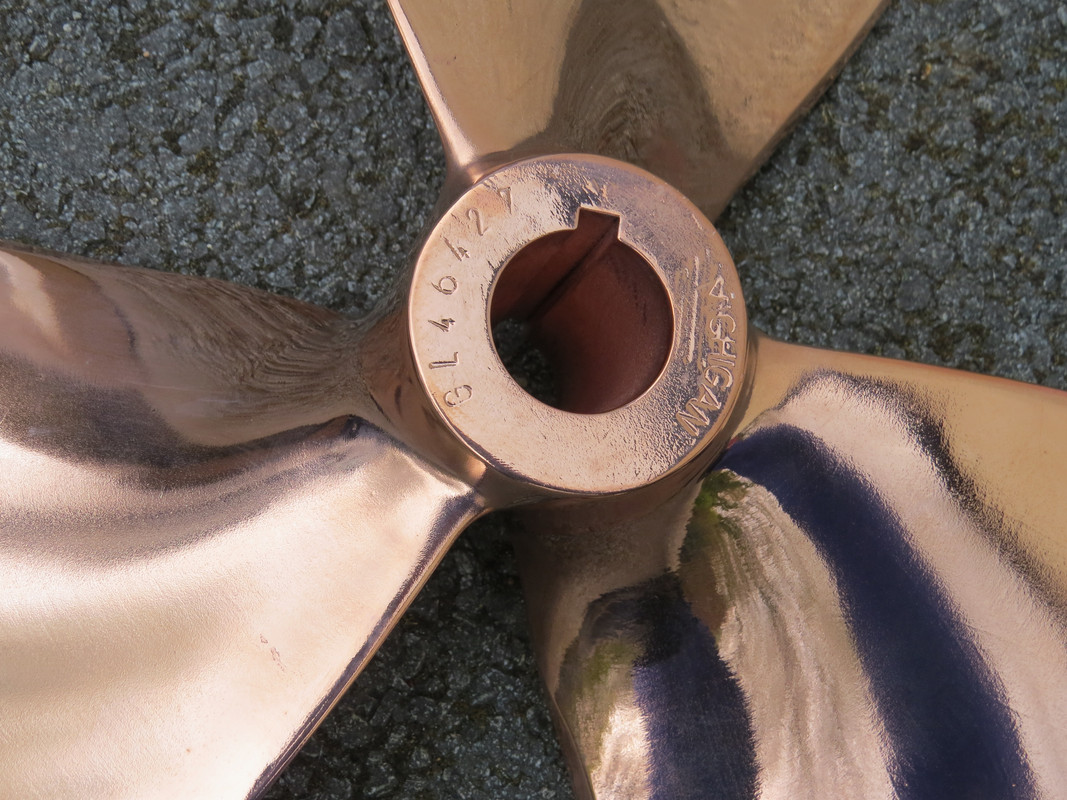
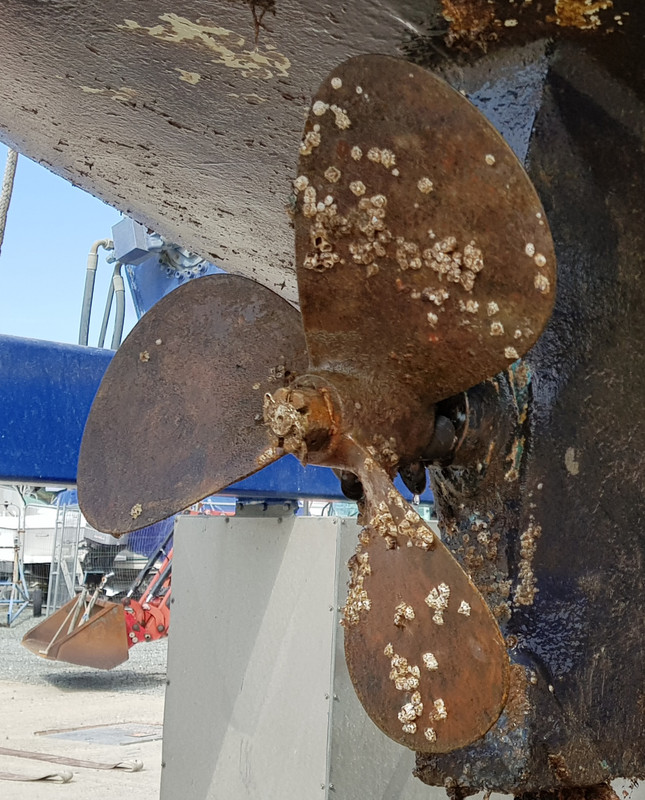
This is part of the PBO article. I copper plated the new prop on my little motor sailer in 2015. The boat was in a drying mud berth at Port Dinorwic for two winters, hauled out between. The boat was then taken to Pwllheli marina, where it remained afloat and almost unused for 2 years and four months. First pic shows it after plating. Second pic shows it as hauled out before any washing. The hull was liberally coated with mussels and other fouling (cleaned off before the photo was taken) but the prop was remarkably clean.

 
I've not been able to bring myself to antifoul my MaxProp on current boat, but probably should. With my previous boat I had success using Trilux on top of two coats of Hemple Prop Primer. The use of the primer is important, two or three thin coats from the spray can.
 
I've also used Velox for the last 3 yrs and it does work - 3 coats in the Deben estuary but not sure it will be tested this year...
OK I know I will get wise cracks. I did the last time but my boat is a Kelt .8.50. I have used cow's udder grease for over 5 years with great results and have only used less than half the tub. Let the wise cracks begin. I am the one laughing because it works and only cost a few euros.
 
  • Like
Reactions: RJJ
OK I know I will get wise cracks. I did the last time but my boat is a Kelt .8.50. I have used cow's udder grease for over 5 years with great results and have only used less than half the tub. Let the wise cracks begin. I am the one laughing because it works and only cost a few euros.

If it seems silly, but it works than it isn't silly.
Will give it a try.
 
I never antifoul the prop- as advised by manufacturer-I coat my Brunton prop in a thick layer of grease prior to seasonal launch. It usually sits in the berth for 3-4 weeks without moving. Then I go off cruising. At the end of the season, when hauled out, there is rarely any barnacles, but a sand paper like finish on the prop. No noticeable effect on performance. Takes longer to remove & refit the prop, to change the anodes, than it does to clean it with brick cleaner. Engine usually clocks up a hundred hours if I go into Dutch canals or if wind does not play ball.
 
  • Like
Reactions: RJJ
The most effective prop antifoul is to use the boat. Working boats never need to antifoul their props. Or at least run the engine in gear once a week.
 
I didn't want to abrade my shiny new Featherstream prop, so I just coated it with grease last April. After launch I notice the new skin fitting on the water intake was leaking. Instead of going to my mooring I headed over to Portland Sailing Academy for a lift out and hold in their hoist. It's only a 15 minute run and all the grease had gone.
Tried Velox on my old prop but still used to get a lot of worm. I was going to put on the Hempel spray prop antifoul, so far I have just put on 3 coats of primer. As it looks like we may not launch at all this year that's as far as I have gone.
 
Mileage may vary. Boat usage varies, as does how long and hard you run the engine. Also what works for one location may not work for anoher - sometimes even boats moored 100 yards apart. One boat may get occasional freshwater exposure, another may be out of the LW river flow and next to a bank of mussels. Tried polishing, grease, neither worked at all.

But for me simply antifouling prop with normal AF has worked well for years. Wet sand prop to dull bronze, coat of zinc-rich primer, then two or three thin coats of good quality eroding AF (usually Microm or Seajet 33), and after 8-10 months afloat in a high fouling area never had any fouling on prop, though with a fair bit of engine use. Not much AF left on prop at end of year, but usually enough to still be working. And an eggcup or two of ordinary AF is a lot cheaper than tins of special prop AF and primers - I'm a careful spender.

My test is GPS boatspeed at full throttle in still water at launch (typically 7.9 -8.1 knots) and then the same just before liftout at end of year. Usually it's still comfortably above 7.5 knots, with much of the reduction due to slime on the hull and some significant fouling on the flat underside of the keel that's impossible to prep and AF properly in the minutes in the slings before launch.
 
Hi, I have a 3 bladed bronze Autoprop. The prop has done about 10 years in the English Channel. Have tried various paint coatings with no success as non stayed on for the season. I now use a fine graphite paste rubbed into the metal with the fingertip and a rag and then burnish by hand. Rather like putting polish on a shoe. Buy some stove black called Stovax this is a fire grate polish and produces a very thin, very slippery coating and as long as the prop is used from time to time nothing adheres and it does not wear or get flung off as the graphite gets into the bronze at a molecular level. I usually dive down during the summer and rub the blades with a glove on and this is enough to clear any of the tiny barnacles we seem to get on the South Coast.
 
Hi, I have a 3 bladed bronze Autoprop. The prop has done about 10 years in the English Channel. Have tried various paint coatings with no success as non stayed on for the season. I now use a fine graphite paste rubbed into the metal with the fingertip and a rag and then burnish by hand. Rather like putting polish on a shoe. Buy some stove black called Stovax this is a fire grate polish and produces a very thin, very slippery coating and as long as the prop is used from time to time nothing adheres and it does not wear or get flung off as the graphite gets into the bronze at a molecular level. I usually dive down during the summer and rub the blades with a glove on and this is enough to clear any of the tiny barnacles we seem to get on the South Coast.
Graphite features in the galvanic series in an extreme cathodic position. Using it as antifouling will result in corrosion of the propeller metal.
 
Top