Probably stupid autopilot question!

pmagowan

Well-Known Member
Joined
7 Sep 2009
Messages
11,838
Location
Northern Ireland
sites.google.com
I was wondering if there was a way to have an autopilot permanently installed on a boat which is steered by a tiller. The idea is that you could have two helm positions, one controlled by the autopilot, which would allow you to get in out of the elements. The only autopilots I know for a tiller steered yacht are tillerpilots and so they are not permanently set up. I suppose you could set it up each time you want to steer from the forward helm but it would be more of a faff.

Is there any other way to have more than one helm position? I like tillers so the primary helm needs to be one. I know about extensions etc but that doesn't work in this scenario. This is all theoretical as it is just ideas I am having for a potential future project to build a ~40 foot boat.

Thanks
 
There is no tiller pilot made with a clutch so you won't be able to install it permanently. There is also none available suitable for a 40' boat. However, if the design of your boat is such that the rudder shaft goes through a space below deck you could use a normal below-deck ram type pilot system with clutch and still have your tiller up above.

A tiller on a 40' boat could be hard work. I have images of your losing control in reverse and being squished against the cockpit sides by a thumping great tiller.
 
What you need is a second tiller (only needs to be about ten inches long) in a dry place (ie below decks, or at worst in some kind of enclosure at deck level). Then you can fit a standard linear drive and be just like a wheel-steered boat with a below-decks pilot. I have heard of tiller-steered boats being modified like this, but if you're building the boat then it should be easy to incorporate.

Pete
 
A tiller on a 40' boat could be hard work. I have images of your losing control in reverse and being squished against the cockpit sides by a thumping great tiller.

I've sailed, albeit briefly, a 45-footer with a tiller. Look at old (and replica) pilot cutters and trawlers.

Pete
 
I've sailed, albeit briefly, a 45-footer with a tiller. Look at old (and replica) pilot cutters and trawlers.

I agree that there are many tiller steered boats of that size and it is perfectly possible to steer them. However, I stand by saying that it can be hard work, and can catch you out in an embarrassing squishing of the ribs kind of way.
 
There is no tiller pilot made with a clutch so you won't be able to install it permanently. There is also none available suitable for a 40' boat. However, if the design of your boat is such that the rudder shaft goes through a space below deck you could use a normal below-deck ram type pilot system with clutch and still have your tiller up above.

A tiller on a 40' boat could be hard work. I have images of your losing control in reverse and being squished against the cockpit sides by a thumping great tiller.

Thanks. My current boat is 28 foot and has a tiller going to a transom/keel hung rudder but I am used to a 38 foot boat also with tiller. I know that the larger the boat the more the tiller has to deal with but I don't think you can beat the feeling of tiller steering. You just seem to be much more connected to what is going on.

The two main contenders are: the below deck clutched ram (as per your idea) and some kind of mechanical linear drive. Both of these would allow a second helming position and I could add an autopilot to the second also. The benefit of the second solution is that it would be mechanical and therefore more reliable.
 
The two main contenders are: the below deck clutched ram (as per your idea) and some kind of mechanical linear drive.

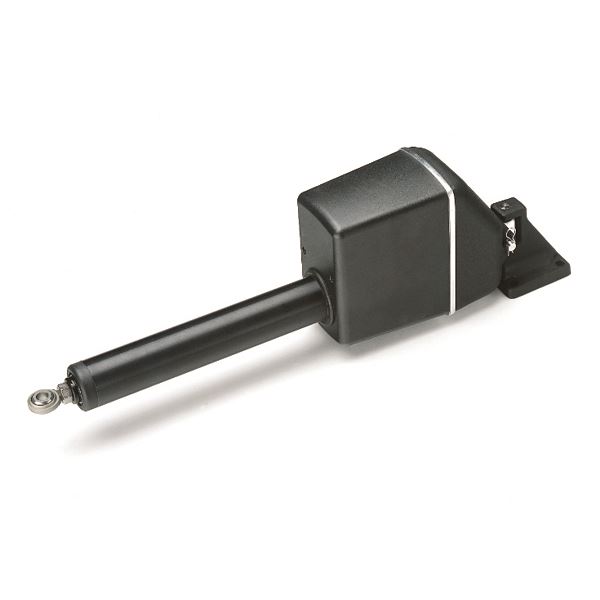
By "linear drive" in the context of autopilots, most people mean something like this:

ZRAYM81130.jpg


This is exactly the same thing that Angus means when he talks about a clutched ram. So on the face of it, your "two main contenders" are the same thing.

Unless you mean something different by "linear drive"?

Pete
 
By "linear drive" in the context of autopilots, most people mean something like this:

ZRAYM81130.jpg


This is exactly the same thing that Angus means when he talks about a clutched ram. So on the face of it, your "two main contenders" are the same thing.

Unless you mean something different by "linear drive"?

Pete

Sorry, I am probably being confusing by mixing two things together.
I am looking for dual helming positions: This is simply an idea I have to allow helming from a forward position where you are not exposed to the elements. This position could be in some sort of 'doghouse' or under the sprayhood or even down below. The primary helming position would be the tiller. The secondary helming position does not have to be autopilot controlled it could be mechanical. I would want to have autopilot also (in any event).

So options are:
Fit a clutched autopilot to the shaft running to the rudder in both cases for autopilot functionality. Use this to mount a control system where required and use the autopilot as the secondary helm control. Or, also have a mechanical system running to a forward position, possibly a wheel, in addition to the autopilot.
 
Sorry, I am probably being confusing by mixing two things together.
I am looking for dual helming positions: This is simply an idea I have to allow helming from a forward position where you are not exposed to the elements. This position could be in some sort of 'doghouse' or under the sprayhood or even down below. The primary helming position would be the tiller. The secondary helming position does not have to be autopilot controlled it could be mechanical. I would want to have autopilot also (in any event).

Not sure if linking 2 tillers together mechanically would be feasible. The friction would make them both very hard to operate losing the feel that you want from a tiller. Why not have your normal tiller, below deck autopilot with clutch, and in the forward position have an autopilot remote and perhaps even an autopilot joystick so you can still do direct steering from there. Raymarine make all the kit to do this.
 
Sorry, I am probably being confusing by mixing two things together.
I am looking for dual helming positions: This is simply an idea I have to allow helming from a forward position where you are not exposed to the elements. This position could be in some sort of 'doghouse' or under the sprayhood or even down below. The primary helming position would be the tiller. The secondary helming position does not have to be autopilot controlled it could be mechanical.

Ah, I see.

You could also consider hydraulic steering. One ram on the stub tiller could be driven either by a wheel or an autopilot pump. This would give you a lot of flexibility on where you mount the wheel below, although if you fit a small wheel (not many interior arrangements have room for a big one) it will have a lot of turns and not much feel. But if you've retreated to the below-decks steering position, perhaps you no longer care about connection with the water (and I know exactly what you mean about the directness of a tiller).

On that basis, how much do you really need below-decks steering, versus a below-decks watchkeeping position with an autopilot control to order course changes? Controllers are available with a big knob for adjusting course, so it needn't necessarily mean poking a "+10" button repeatedly. I know on passage I rarely hand-steer, and then only because conditions are nice and I fancy "doing some sailing". The rest of the time, very definitely including inclement weather, George is steering and I am watchkeeper, not helmsman.

Or, swinging to the opposite end of the technological scale, how about a whipstaff for your sheltered steering position? Basically a tiller that stands up vertically, and leans side to side to steer. It would have a cable linkage to the rudder shaft (stub tiller or quadrant). Provided you have somewhere suitable to sit (either side, like with a tiller, not behind it like a wheel) the steering action very quickly feels natural. They can be rigged either way round - our yard's motor launch has one where the top of the stick is moved the way you want to go, but for a sailing boat I suspect the reverse might feel more natural (pull to windward to bear away, like a tiller). Anyway, the reason I suggest it is that you could hide the pivot and wires below the sole of the cabin or doghouse, with a small access panel above. To use it, take the staff itself from a nearby stowage position and insert into the socket at deck level. Take it away again, and the space is unobstructed.

Pete
 
Not sure if linking 2 tillers together mechanically would be feasible.

Gypsy Moth essentially has this - the rudder stock is a long way aft of the cockpit with the mizzen mast in between. So the tiller is mounted on a simple pivot near the cockpit, and the two are connected by quadrants and a pair of wires.

Pete
 
Ah, I see.

You could also consider hydraulic steering. One ram on the stub tiller could be driven either by a wheel or an autopilot pump. This would give you a lot of flexibility on where you mount the wheel below, although if you fit a small wheel (not many interior arrangements have room for a big one) it will have a lot of turns and not much feel. But if you've retreated to the below-decks steering position, perhaps you no longer care about connection with the water (and I know exactly what you mean about the directness of a tiller).

On that basis, how much do you really need below-decks steering, versus a below-decks watchkeeping position with an autopilot control to order course changes? Controllers are available with a big knob for adjusting course, so it needn't necessarily mean poking a "+10" button repeatedly. I know on passage I rarely hand-steer, and then only because conditions are nice and I fancy "doing some sailing". The rest of the time, very definitely including inclement weather, George is steering and I am watchkeeper, not helmsman.

Or, swinging to the opposite end of the technological scale, how about a whipstaff for your sheltered steering position? Basically a tiller that stands up vertically, and leans side to side to steer. It would have a cable linkage to the rudder shaft (stub tiller or quadrant). Provided you have somewhere suitable to sit (either side, like with a tiller, not behind it like a wheel) the steering action very quickly feels natural. They can be rigged either way round - our yard's motor launch has one where the top of the stick is moved the way you want to go, but for a sailing boat I suspect the reverse might feel more natural (pull to windward to bear away, like a tiller). Anyway, the reason I suggest it is that you could hide the pivot and wires below the sole of the cabin or doghouse, with a small access panel above. To use it, take the staff itself from a nearby stowage position and insert into the socket at deck level. Take it away again, and the space is unobstructed.

Pete

Thanks everyone for your detailed replies. I have never really sailed much with an autopilot so perhaps I am overthinging this. It may be, as you say, that you simply fit an autopilot control panel somewhere convenient. I take your point that by the time you decide to give up at the tiller you probably are happy for Mr Auto to take over. This does really take me to the question of doghouses. My idea is to build a wooden boat of about 40 foot length and I want to design it myself also. I know there are many problems with this idea and it is pretty mad but that is what I want to do and I have all the time in the world to think about it and finally do it. I am keen to get the style of the old wooden yachts like Buchanans or even my own Honeybee (identical looking to a Twister) but also to get some of the functionality of modern designs, such as space. I like the idea of a 'doghouse' of some sort to give a watchkeeping position while remaining out of the elements. So far, however, I have not seen one that fits style-wise or space-wise. It may be that I simply need a good sprayhood, maybe with a glass screen. It is in this space that I would intend to have the auxillary controls.
 
It may be, as you say, that you simply fit an autopilot control panel somewhere convenient.

When I'm at the forward end of the cockpit, I actually drive the autopilot using a wireless remote:

0000004106.gif


I was originally going to fit a second normal control head, then I realised a remote would do the same job and also let me adjust the course from the foredeck or anywhere else I want to sit on a calm day.

That said, this particular remote is not the easiest thing for gross course alterations (lots of button presses) and cannot do manual "power steering" at all, so if you are setting up a specific "second watchkeeping position" then a fixed panel with a big knob (or even Angus's suggestion of a joystick) may be a better choice.

Pete
 
So far, however, I have not seen one that fits style-wise or space-wise. It may be that I simply need a good sprayhood, maybe with a glass screen. It is in this space that I would intend to have the auxillary controls.

There are many designs - and boats built that have these characteristics, but not in the main from high volume builders. Common in Scandinavia and Holland and some built in UK. Southerlys for example have dual steering positions with the inside one being either wheel or Autohelm. Nauticats almost all have dual helms. However, it is rare to have a tiller steered dual helm boat with a wheelhouse or shelter mainly because such arrangements only become practical with a boat of say 36' and more likely 40'+ and at this size a tiller becomes increasingly impractical. I know older boats used to have tillers, but they also often needed two people to helm or regular use of tackles to relieve the strain.

Whilst on a smaller boat a tiller is the obvious choice it rarely works well on larger boats. Perhaps you need some experience of helming a modern wheel steered boat before you dismiss it as lacking in feel etc. Wheel steering is used almost universally on performance boats and is very sensitive and direct, nothing like the old low geared twirly systems often used in the past. However, providing two helm stations can be complex and result in loss of feel unless you have a method of disconnecting them independently. That is one the attractions of using the Autohelm method as that does not introduce any extra drag in the system.
 
Have seen several tiller steered boats with permanently mounted autopilots, based on Raymarine 'linear drives' mounted either a few inches along the tiller or on the rudder head aft of the pivot point. These drives have a clutch so no drag when switched off. The only snag is they cost quite a lot, compared to a removable tillerpilot, however they are much more powerful.

If you have a transom-hung rudder you can get the autopilot electrical drain down to very low levels by making the AP drive a trim tab on the back of the rudder, rather than the rudder itself.
 
Have seen several tiller steered boats with permanently mounted autopilots, based on Raymarine 'linear drives' mounted either a few inches along the tiller or on the rudder head aft of the pivot point.

How do they cope with the fact that these drives are not waterproof?

Pete
 
Thanks everyone for your detailed replies. I have never really sailed much with an autopilot so perhaps I am overthinging this. It may be, as you say, that you simply fit an autopilot control panel somewhere convenient. I take your point that by the time you decide to give up at the tiller you probably are happy for Mr Auto to take over. This does really take me to the question of doghouses. My idea is to build a wooden boat of about 40 foot length and I want to design it myself also. I know there are many problems with this idea and it is pretty mad but that is what I want to do and I have all the time in the world to think about it and finally do it. I am keen to get the style of the old wooden yachts like Buchanans or even my own Honeybee (identical looking to a Twister) but also to get some of the functionality of modern designs, such as space. I like the idea of a 'doghouse' of some sort to give a watchkeeping position while remaining out of the elements. So far, however, I have not seen one that fits style-wise or space-wise. It may be that I simply need a good sprayhood, maybe with a glass screen. It is in this space that I would intend to have the auxillary controls.

My old HR94 motor sailor - a far cry from what you are planning, I know - has a doghouse with wheel steering with an aft tiller directly clamped to the top of the rudder shaft with the quadrant below connected to the wheel cables. The tiller hinges up when not in use, close and parallel to the backstay. I have a Raymarine wheel autopilot that everyone will tell you is rubbish, especially if you plan to cross oceans, but it works for my modest cruising. More expensive would have been a proper ram drive but I took the cheap solution as a retro-fit. I actually use the tiller quite a lot when sailing but it does get a bit uncomfortable in the Adriatic sun and I soon move back into the shade of the doghouse ... not just a northern climes advantage.

The ST6002 controller is forward of the chart table with the ST60 wind display, the Smartpilot computer behind the housing below the wheel and the fluxgate compass out of sight below the helm-person's seat. There is also a rudder sensor unit fitted to the quadrant.


AP1307.jpg


HR946.jpg
 
Last edited:
I had a similar aspiration to self build a timber boat about 36-40' though in cold moulded timber and for a different purpose (performance cuiser/racer) for about 30 years. I felt I had the skill to build it but despite being an architect working with CAD, not the skill or knowledge to design the hull to the standard I aspired to. I kept making notes to give to my chosen designer, in the end I had a book full. I needed a shed with power and heat and when I was offered one it was only for one year, not nearly long enough. I am too old to start now and consider that perhaps I had a lucky escape. though I enjoyed all the planning and refining work as a relief from my day job.
So my advice, based on years of thought and absolutely no experience-
A good big shed with services and access is key and if you find one take possession even if you are not yet ready.
Sail in as many different boats as you can, each one will teach you something, this is easier and cheaper if you are prepared to go racing, even cruising boats take part in Saturday regattas.
Go to every boat show including second hand ones and become an inveterate tyrekicker.
Do not pay much attention to magazine boat reviews, read them sure but in a one or two day sail the writers miss more than they find. Read all the technical design books at least twice, they all conflict but the info. is in there.
Try to recognize that your aspirations are over influenced by the boats you have owned, you are eventually going to spend over £100k so £10k on research, chartering' travel etc. to get it right is reasonable.
If you build something extreme you may have to be prepared to own it for the rest of your life.
Do it before you are too old to get the years you need out of it to repay the massive effort involved, if you retire early enough you can wait until then but I reckon even with some help 5 years is quick.
 
Why not have a similar setup as an aircraft rudder with trim tab.For autopilot lock the rudder central with some sort of quick release thing, then the tillerpilot operates a large trim tab on the rudder.So the tillerpilot is permanently fixed to the top of the rudder.I suppose it depends on the boat design!
View attachment 42982
 
Top