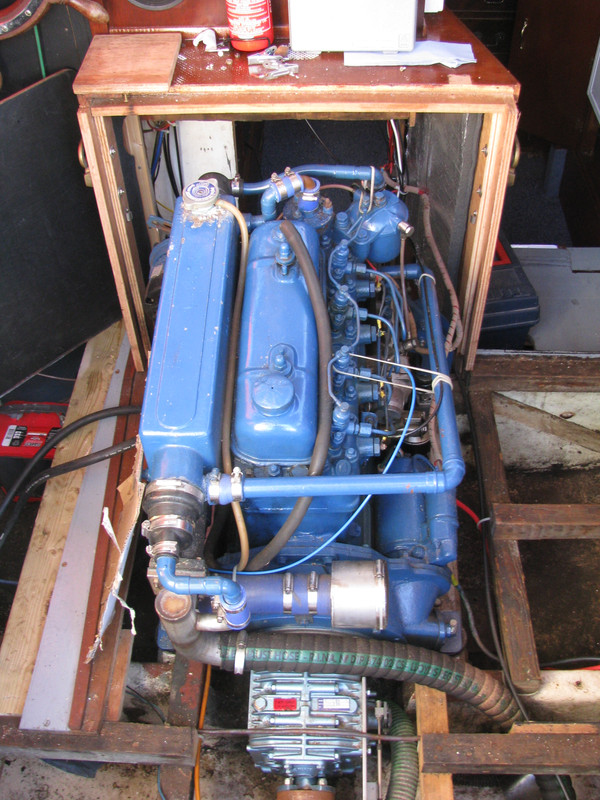
Possible loss of water in Bowman heat exchager on BMC Commander diesel

Not an insult in any way

Sounds like a insult to me picking out former colonies

and I'm certainly not prejudiced.

Oh seems like you are prejudice against former colonies

But once again you leap in to argue and criticise.

I'm just interpretation the facts you presented.


The fact that you deny and criticism just just indicated to me what kind of man you are.
 
Sounds like a insult to me picking out former colonies


Oh seems like you are prejudice against former colonies


I'm just interpretation the facts you presented.


The fact that you deny and criticism just just indicated to me what kind of man you are.

Once again, you're being argumentative and insulting. Please stop it, or I may have to put you on "ignore".
 
Sounds like a insult to me picking out former colonies

Oh seems like you are prejudice against former colonies

I'm just interpretation the facts you presented.

The fact that you deny and criticism just just indicated to me what kind of man you are.

Roger

PVB is obnoxious. I wouldn't waste time arguing with him
(You should see the responses he gets from others on different forums)
 
Roger

PVB is obnoxious. I wouldn't waste time arguing with him

Clive its too much fun. BTW I agree with your first sentence

(You should see the responses he gets from others on different forums)

Don't really have too much time it's just the lockdown that allows me to post. When the lockdown is lifted I will be on my boats enjoying myself more.

In the meantime i'm enjoying his comments too much which i think is hilarious.
 
Our old motor boat has sat ashore, shamefully ignored, for 4 years now (once upon a time, we used to use her mainly as a static houseboat).

5 years ago, both engines were fitted with lovely, shiney, new Bowman heat exchangers, just like the one in this little vid:


I now want to see if both engines will start with their customary ease and reliability, and have been checking things over and bleeding the fuel systems.

Both engines still look clean and neat, and they turn over easily (just for a few seconds).

So........... I'm trying to pluck up courage to see if they'll start.

However, the engines and gearboxes obviously have to slope down towards the stern to mate up with the prop shafts.

So it's quite understandable, even for one with such a simple mind as I, that the antifreeze mix will accumulate towards the rear of the heat exchangers.

In the starboard heat exchanger, the mix is still visible.

However, the port engine's mix has completely disappeared from view. A finger waggled around inside, comes out dry.

There's no obvious signs of any leakage, and I've tentatively tried adding just a little bit more mix, to top it up. I thought about a pint should bring it into view, so went for that.

Result: still no sign of the mix, so I then lost my nerve (sadly, I've never had any delusions of being a competent mechanic).

So .... please ...... what do the forum Gurus advise?

Should I be braver, and just continue adding more mix, till it shows?

Or could it be leaking to unmentionable, and possibly, serious places internally?

Thanks for any thoughts.


To get back to helping you, are the engines cooled by raw water into the heat exchangers with antifreeze in the engine cooling systems? I believe they are from your post, so they should not have frozen up with the inherent frost damage.
You can see no coolant under the engines or run to the back of the boat?
Are these wet exhaust? ie. do both engines dump cooling water overboard when running?
Or are they on skin tanks in the hull?

Check the sump for water, it will not necessarily show on the dip stick, loosen the sump plug until something oozes out, is it oil?
Get back to me when you have done these checks please.
 
I have the same engine

After four years of inaction I would be astonished to find the coolant level at the top, there are so many possibilities for leakage or evaporation. You have said that the engines turn over, so presumably water has not leaked through a cylinder head gasket into the engine, which would be the worst case. I would check the dipstick for any signs of water, if you have a Pela withdraw some oil from the bottom of the sump to ensure there is no water there. Assuming all looks OK there is nothing else that will be damaging if there is a leak. Top the low one up and start the engine. If there is a leak it should become obvious but I suspect all will be well.
 
Yet more thanks for all the tips, which have been most carefully noted.

I've been down there all afternoon, so feel duty bound to give a bit of feedback:

- there are no signs of water in the engine oils (ie none showing on the dipsticks, and none showing in Pela extracted sump samples - which look clean, fresh and healthy)

- I'm reluctant to tempt fate, but there is unlikely to be frost damage, as I put an electric tube heater in each engine compartment over the cold periods

- I've changed the fuel filters (two to each engine), and bled the fuel.

- I added about a litre of fresh water to the port heat exchanger, and it seemed to stay there quite happily for over three hours, with no obvious signs of external leaking or any apparent loss of volume. I'll check it again on Wednesday. All being well, I'll then try firing them up (but need to sort out a suitable cooling supply, as she's ashore at the moment).

Cheers!!
 
are the engines cooled by raw water into the heat exchangers with antifreeze in the engine cooling systems?

Yes

You can see no coolant under the engines or run to the back of the boat?


Correct

do both engines dump cooling water overboard when running?

Yes

Check the sump for water, it will not necessarily show on the dip stick, loosen the sump plug until something oozes out, is it oil?


As already mentioned, no signs of water on dipstick or extracted sump samples.

Get back to me when you have done these checks please.

I just have :cool:

Thanks again
 
I would never suggest that engines are quite simple ............. as that would somewhat devalue my considerable skills. o_O

Richard

In principe they are it just a piston doing up and down driving a crank to turn linear motion into rotary motion and a means of mixing air and fuel whit a means to ignite the fuel.

The real skill is making it all to operate for a long time, rebialliby, efficiently and quietly. The manufacture in quantity at an economic cost is also a real skill.

Of cause the other parts of cars, trucks, boats and aeroplanes that use engines to operate in the same way is also quite a skill.

Richard your skill is in getting and engine to operate in a manor that you or the owner in a way that i acceptable. That's the your real skill. The skill of the manufactures is to make and assemble the components in a way that makes it reliable, easy to use.

A big end bearing that was made or fitted with too much clearance and with not enough lubrication would not last long so the skill an knowledge is to ensure there parameters are correct and proper lubrication is available.
 
Top