Polyurea coating on the outside of a steel ship hull

lisbett Jensen

New Member
Joined
16 Sep 2025
Messages
5
Visit site
Hello, does anybody know something about Polyurea coating on the outside of a steel ship hull?
For example:
How many years does a polyurea coating last? Any live examples? (I was hoping 20 years?).
Costs?
How to repair it?
Is is a good idea at all?
Does ultrasound still work - does it measure through the coating?
How thick is the coating and is it only one layer
Does it work like antifowling? or how to maintain it / clean it?
Is it still necessary with anoten?
Does it give stability to the hull?

I would be very happy to hear about your knowledge and experiences!
 
Do you mean polyurethane?

Oh wait, I looked it up, and it is apparently a 2-part industrial coating thing, which I hadn't heard of. Apologies.

Clearly I have no experience of it, but Wickipedia says "It is thought that polyurea coatings last 25-30 years" (on narrowboats, so not a marine environment)
There seem to be a lot of different formulations, so it may be worth identifying the brand used (or intended to be used) on your hull, if possible.
 
Last edited:
Do you mean polyurethane?

Oh wait, I looked it up, and it is apparently a 2-part industrial coating thing, which I hadn't heard of. Apologies.

Clearly I have no experience of it, but Wickipedia says "It is thought that polyurea coatings last 25-30 years" (on narrowboats, so not a marine environment)
There seem to be a lot of different formulations, so it may be worth identifying the brand used (or intended to be used) on your hull, if possible.
Thanks for your reply! Indeed I think I have to look more into specific brands!
 
This was not a product I was familiar with but, with time on my hands, I did some research. It would seem to be a very versatile coating with many advantages for a wide variety of substrates. Well worth a try I think 8 Things to Know About Polyurea Coatings

The problem, as with all coatings on steel, is ensuring that water does not penetrate beneath, rusting the substrate and blowing off the coating. Several coats seems to be the best that can guard against this
 

vyv_cox

The problem, as with all coatings on steel, is ensuring that water does not penetrate beneath, rusting the substrate and blowing off the coating. Several coats seems to be the best that can guard against this

Agreeing with the above advice.. If I may suggest.
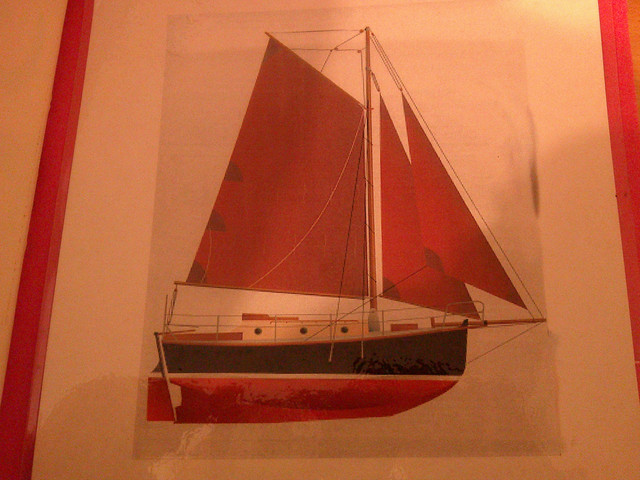
When I painted my all steel Gaff Cutter inside and out with 2 pack epoxy paint I used 3 different colours. Pale grey epoxy primer, then light brown first coat and gloss black final coat. Easy to see areas missed and the boat suffered no rust problems internally for the ten, nearly eleven years that I owned her.
 
I have had limited experience of epoxy on steel and the most important thing was to get the etch primer on as soon as the grit blasting was finished. Leave it for a day and the rust will start again. I have seen a ship in Singapore being grit blasted and the rust appeared in minutes because of the very high humidity.
You need to follow the manufacturer's instructions for Polyurea exactly and get the whole process correct or the protection will fail.
 
I have a steel sailing yacht that was grit blasted in a very; ow humidity and painted with epoxy within hours,

Above the watering was painted with further 8 coats od epoxy primer followed but epoxy filler then long boarded and further coats of epoxy followed with polyethene topcoat.

Below the waterline I used epoxy tar as it is much less hydroscopic,

The inside was also grit blasted and costed again with epoxy primer followed by a ceramic epoxy.

This was about 20 7ears ago and the inside could do with cleaning and repainting, but the outside still looks OK even with some damage due to colliding with my moorings cut has been repaired OK using phosphoric acid to clean any rust from the hull.

Its all about the preparation and a low humid prep area

No experience with polyurea but could be worth investigation
 
Is it dramatically different to polyurethane 2 pack paint in performance and price? I have used polyurethane on my GRP boat and find it easy to patch up scratches etc. It goes hard quite quickly and repairs seem to look ok (not perfect) I would think polyurethane ok for steel hull . ol'will
 
This was not a product I was familiar with but, with time on my hands, I did some research. It would seem to be a very versatile coating with many advantages for a wide variety of substrates. Well worth a try I think 8 Things to Know About Polyurea Coatings

The problem, as with all coatings on steel, is ensuring that water does not penetrate beneath, rusting the substrate and blowing off the coating. Several coats seems to be the best that can guard against this
Thanks, and yes. I wonder if polyurea is really waterproof when long term under water? Or if it really starts to loose the grip?
 
The OP doesn't say if this is a new build, or re-coating Polyurea surfaces in good condition, or a restoration project.
So is info' is only of any use if it is a new build or a stripback and start again.

In the North Sea oil industry both tar epoxy and ceramic epoxy have been used successfully and extensively.
I've seen tar epoxy steel looking as "as good as new" when structures have been decommissioned after 10's of years submerged. And ceramic epoxy coatings on subsea pipe lines survive daily scouring by silt laden tidal flows.
The principle problem is likely to be finding someone to supply these coatings to an individual.
 
Most steel yachts rust from the inside out.
The coating needs to be better on the inside, than the outside as you cannot get to it to patch it up.

Where this may be the case, it can only be due to one or more of the following - poor performing older type coatings, the wrong choice of coating, poor/inadequate preparation of the steel or inadequate application of the two pack epoxy coatings. This could be lack of coverage, thickness or number of coats.
The conditions that the exterior of the hull on a steel boat are subjected to, are far more arduous than those experienced by the inside. So with correctly applied modern epoxy coatings, the logic would be that the inside corrosion protection should perform at least as well as the exterior. Probably better, because it won’t be subjected to mechanical damage!
The other big factor in preventing corrosion on a steel boat, is the design and methodology adopted during construction. Think of the mild steel hull and superstructure being a piece of steel which is totally encapsulated in a plastic coating of even thickness throughout. If that protective skin is penetrated anywhere, you invite the opportunity for a corrosion cell to commence.
So - no square edges to finished steel in order to maintain an even thickness of epoxy , no tapped holes for fixings, where holes for through bolts can’t be avoided - they should be drilled oversized (e.g. 10mm for a 6mm bolt) all edges epoxy coated during the painting process and a plastic shouldered washer used to prevent the thread of the bolt from damaging the epoxy.

There’s a channel on YouTube (Saving Blue Steel) worth having a look at. This is the story of a couple attempting to save a very corroded steel 14m motor cruiser which was originally professionally built by a yard in the Netherlands. A good pedigree you would think, but wow! It’s seems to be a good example of how not to build a steel boat! Still has its original teak deck which is fixed to the hull with literally hundreds and hundreds of set screws drilled and tapped into the steel deck! All the deck fittings seem to be attached in the same way too!
 
The OP doesn't say if this is a new build, or re-coating Polyurea surfaces in good condition, or a restoration project.
So is info' is only of any use if it is a new build or a stripback and start again.

In the North Sea oil industry both tar epoxy and ceramic epoxy have been used successfully and extensively.
I've seen tar epoxy steel looking as "as good as new" when structures have been decommissioned after 10's of years submerged. And ceramic epoxy coatings on subsea pipe lines survive daily scouring by silt laden tidal flows.
The principle problem is likely to be finding someone to supply these coatings to an individual.
That is true in my experience too. But, and it is a big but, I used to have a copy of the paint specification for topsides using epoxy paints. From memory, it called for two or three primer coats, five coats of middle (undercoat) and two or three coats of finish. Various tests to be carried out between each paint type. Very few yacht owners will go to anything like this level of effort.
 
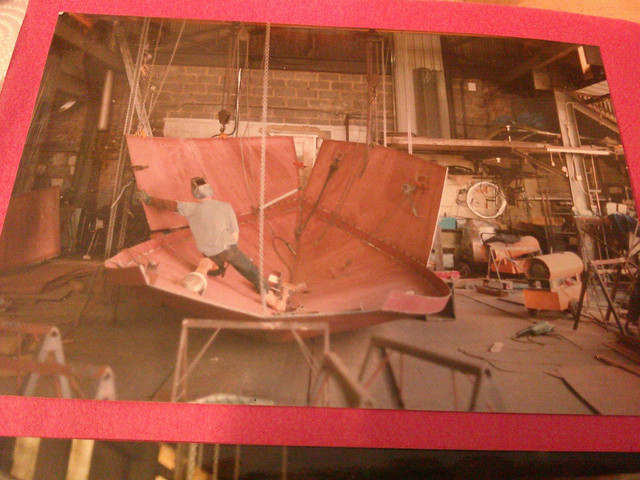
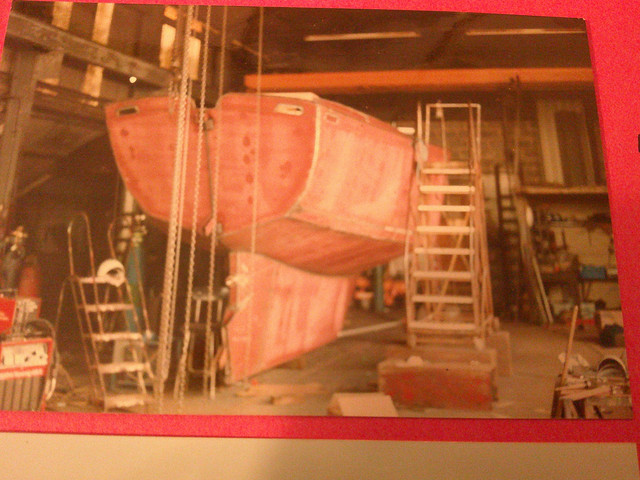
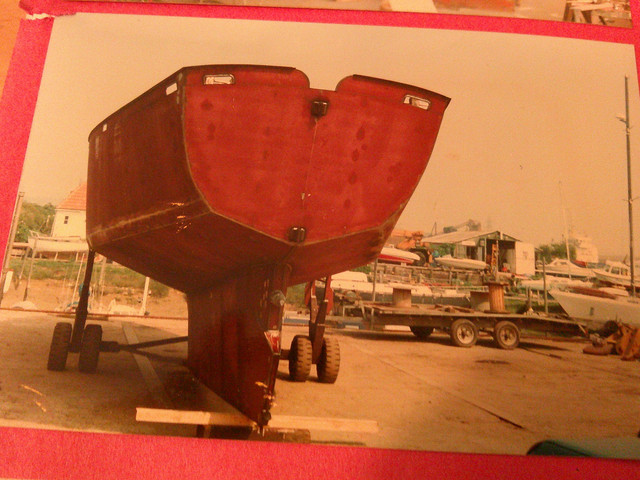
It's so long ago that I can't remember the specification for the steel used to build my Gaff Cutter. She was built by a very experienced builder whose usual product was Fishing Trawlers up to about 60 feet in length. The steel I believe was from Poland and I think called 'Blast primed' or something similar. It came ready primed a red oxide colour which seemed to be the colour of the steel itself rather than a coating which could be scraped off as a normal paint coating might be. I painted the welds with grey 2 pack epoxy as the work progressed. All construction/ painting was done inside and at the end of each days work I fully primed the completed sections. Hull build took place from late June and into July in a large waterside building and all paint was applied by brush or roller. The epoxy paint came from the same supplier that provided the paint for the Trawlers, but unfortunately I can't recall the name brand. Apart from touching up the welds as the build took place I'm pretty sure that I only applied 3 complete coats in total and rust never showed inside the hull. Outside, on deck or over the side where scrapes, chafe and wear took place required, as with any boat, regular attention.
 
" This is the prep and coating of my steel boat"

rogerthebodger


Goodness ! What a difference in boats... :giggle:

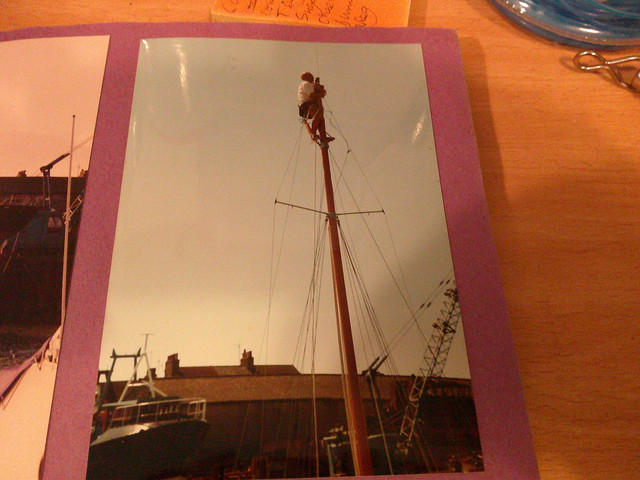
I had to photograph these pictures from an album, so not very clear I'm afraid..


At this stage she was painted inside. We rolled her out into the sunshine and tidied up in the shed, then back inside for me to paint the ouside.


Then took me a month to rig her...:giggle:
 
Last edited:
Another different vessel type here!

For anyone with an insomnia problem, my build is here:


Prep and painting of the exterior is on tabs 6 and 7
 
Top