PBO #603 P84: Vaseline FFS

Even more mind boggling :) :) You're not a Catholic Priest are you ? :)

I was asked to build a sort of game that demonstrated the muscles and tendons of the human shoulder and arm. The rubber strips helped hold the ball into the socket of collarbone and shoulder-blade, and the vaseline lubricated the joint. The schoolchildren had remote control of one or two muscles each, and they had to work together to complete a task with the arm. The person who asked me to build it chose to make that task the knocking of rubber ducks off of stands, a bit like a coconut shy, and for reasons best known to himself he also insisted I make the hand using a rather camp zebra-print glove that he supplied.

I made two of these rigs about eight years ago, and they're probably still in a cupboard in IBM's basement :)

Pete
 
During our two season trip in Scotland, Ireland and the IOM the bow lamp failed.
I managed to repair it but the rubber gasket was US. This is what caused the failure-seawater got in.
After cleaning it up and getting it back together working I discarded the gasket and sealed all the areas where water might get in with a thick bead of pound shop petroleum jelly.
We took plenty of green over the front crossing from Arklow to Newlyn and a week later Brixham to Cherbourg and finally Cherbourg to Gosport. The lamp stayed dry and working. Where dollops of green had hit the lamp it was possible to see the petroleum jelly had been re-shaped, but the seal remained intact.
I really think it is a good thing to have on board
I have carried a jar of the stuff on board as long as Ive had a boat. Was brought up in the good old days when it was recommended for terminals. I also use it for light lube such as the stem on the toilet pump. As ive said before, it worked and is still working, Practical Boat Owner is what it is about. I did a Google on the merits of it against up to date stuff, it still lies next to the posh stuff in most comparisons. I will continue to use it.
Stu
 
Silicon grease is normally easy to get hold off from a decent diving shop, and is a better glop for use if there is any possibility of rubber.
 
... So for electrical conductors I'd recommend Silicone grease instead, or if you must, an overpriced branded version of it, such as Contralube ...
Except that silicone grease is an insulator. It binds to the high points on contact surfaces (asperities) and can reduce the contact area. Contralube 770 is not based on silicone grease, there is a PDF on the Contralube 770 web site that explains how it works, look for Facts & Myth About Using Contralube on Electrical Connections.
 
Last edited:
Except that silicone grease is an insulator.

Any product that you would want to smear into a multi-pin plug is an insulator. Contralube is too, and their website clearly states this. Of course it is, if it weren't, and you'd smear it into e.g. a DB-25 connector (just because the Facts & Myths sheet you pointed to has a picture of one), it would merrily make connections between the pins, which would be most undesirable. So there is no difference in that regard between Vaseline, silicone grease, Contralube or even mineral oil (a fun sport amongst computer geeks is immersing the whole PC innards in a fish tank filled with mineral oil - see YouTube). All of them are insulators and that's a good thing.

It binds to the high points on contact surfaces (asperities) and can reduce the contact area.

No it doesn't, and the Facts & Myths sheet doesn't claim that, instead it even has an explanation of what happens in the contact area - for ANY of the above mentioned products, because this is all purely about their mechanical properties, which do not differ significantly from each other:

contralube_fact.PNG


Note the careful use of the generic term "contact lubricant" rather than their product name.

Contralube 770 is not based on silicone grease, there is a PDF on the Contralube 770 web site that explains how it works, look for Facts & Myth About Using Contralube on Electrical Connections.

Maybe it isn't based on silicone grease. They don't seem to publish what it is made of. But it certainly seems to be functionally equivalent for the purpose of smearing into plugs and pins. In fact, apart from its undesirable side effects on the non-conducting parts of the plug (see earlier post), Vaseline would be functionally equivalent too. Silicone grease by the way also has a well known undesirable side effect, which is turning into silicone carbide in the presence of arcing, as any old BT engineer will be happy to tell you stories about. Not a problem around boats though, as what few relays we have are (hopefully) encapsulated.

One good thing is to be learnt from Contralube though - the syringe they're packaging some of their product in. I've suckered some of my 500g tub of silicone grease into a disposable syringe and it makes an excellent applicator and less finger wiping. :encouragement:
 
The problem with silicone grease is it it can't be removed except by sanding it off. If painting is a real pain. I restrict its use to o rings, where I don't know the type of material used. For contact and corrosion protection and as a general grease I use Superlube, for waterproof grease Ramanol advanced, for galvanic corrosion protection and sometimes for contacts I use Tefgel. That's enough greases to keep, so Vaseline is no longer used. Cheap, but not good enough at other jobs. Just like workers these days, you have to be versatile and good.
 
... Facts & Myths sheet doesn't claim that, instead it even has an explanation of what happens in the contact area - for ANY of the above mentioned products, because this is all purely about their mechanical properties, which do not differ significantly from each other ...
Well according to their technical guy, the mechanical properties are so significantly different that they pay a huge premium for the base gel. That's why the price went up a few years ago, the sole manufacturer put the wholesale price up. I don't claim to understand the process, but it is formulated to wipe off the asperities when contact is made. Silicone will not do this.
 
Quote Originally Posted by Sandyman View Post
Have to wonder what kind of silicone grease you use. Never had a problem getting it off with thinners.

I doubt you ever tried painting on top of the surface that you thought was cleaned or if you did that you tested adhesion? I was referring to silicone oil/greases and they are pigs to remove.
 
I assume he meant silicone sealant.
Crossed my mind until post below.

Quote

I doubt you ever tried painting on top of the surface that you thought was cleaned or if you did that you tested adhesion? I was referring to silicone oil/greases and they are pigs to remove.

Confused. Must be me but I can't see what you are getting at. As said Thinners does the job.
 
The problem with silicone is as Zing says, you can't easily remove it completely. If you try to paint or do a GRP repair it won't stick. Applies to grease, sealant & products like Fabsil. Try it if you have doubts.

Hence the magic potion we used to put in cellulose paint when anyone could, afford the paint and could actually spray their own car. Prevented the dreaded fisheyes where peeps had been using silicone polish. Phew, its a few years since I sprayed a car though!
Stu
 
The problem with silicone is as Zing says, you can't easily remove it completely. If you try to paint or do a GRP repair it won't stick. Applies to grease, sealant & products like Fabsil. Try it if you have doubts.

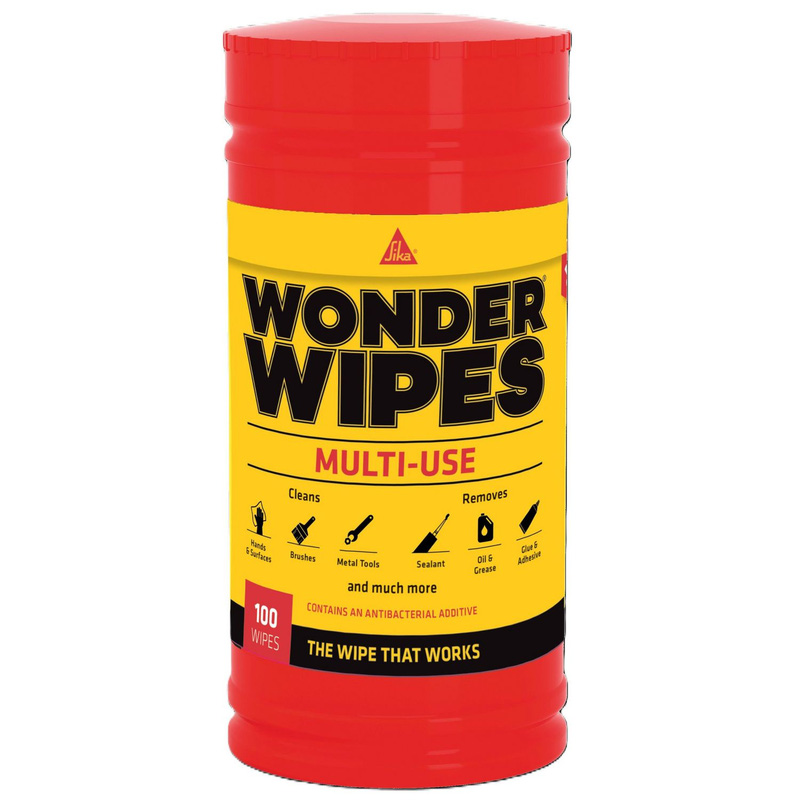
I've had success cleaning up the gelcoat interior bits on my boat that were coated with something siliconish and indeed nothing would stick to it. To do so, I've used these (for once the claim on the packaging is true):

11364.jpg
 
Top