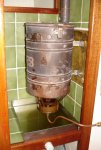
Paraffin heaters and carbon monoxide

misterjenkins

Well-Known Member
Joined
14 Dec 2015
Messages
75
Visit site
We've been using a Taylor's heater ( with external flue) and an optimus parrafin cooker for years with no problems.

In the last couple of months, our carbon monoxide alarm has triggered 3 times. Twice when running the heater and the cooker together, once when running the heater alone. Since it first happened, I've stripped then both down, replaced the burners and rebuilt, but it happened again over new year. Is there some trick to tuning the burners? ( The flames on both are a little yellow, not pure blue) If not I fear I may need to replace the lot, but Kite is almost 50 years old so I'm loathe to install gas from scratch?
 
Carbon monoxide sensors don't last for ever. Beg borrow or possibly buy a new sensor. Problem might not be your burners.
 
We've been using a Taylor's heater ( with external flue) and an optimus parrafin cooker for years with no problems.

In the last couple of months, our carbon monoxide alarm has triggered 3 times. Twice when running the heater and the cooker together, once when running the heater alone. Since it first happened, I've stripped then both down, replaced the burners and rebuilt, but it happened again over new year. Is there some trick to tuning the burners? ( The flames on both are a little yellow, not pure blue) If not I fear I may need to replace the lot, but Kite is almost 50 years old so I'm loathe to install gas from scratch?
As already mentioned, try another CO detector, but I had a problem with occasional CO alarms which I thought was due to a heater, eventually realised it was my battery charger causing the batteries to give off a gas that triggered the alarm. Fitted a new multistage modern charger and no more false alarms.

Www.solocoastalsailing.co.uk
 
The reactions above are worth trying. Most household alarms contains sulfuric acid as a gel and that triggers the alarm and so it needs replacing after some years.
Remember that ventilation is of the essence. Maybe something has changed there? Try getting some draft in the boat, air circulating will remove CO and fresh air gets in.
Note that the longer you use the burners the more CO is produced. As with any open flame, there will be CO as well as C02, H20 and other waste products.
C0 is slightly less dense than air so it is a good idea to mount the CO alarm at waist height since the build up of CO will be nearly evenly spread.
With no ventilation it rises up rather than settles. C0 levels can rise pretty fast and a normal level when cooking indoors on an open fire can be 15ppm and more.
When it reaches 50ppm or more you´re in trouble.
Anything above 15ppm will trigger modern day alarms.
Also CO can burn so there is a fire hazard as well though one will suffocate first.
 
Worth checking the heater burner case if you haven't already done so. There is a seam weld down the back which is prone to corrosion and cracking after a few years. It happened to me and was allowing combustion fumes into the cabin.
 
I prefer to use a CO meter and measure the CO levels throughout a boat, if your CO meter is deteriorating and giving spurious readings and false activations youy meter will give an accurate reading.
 
Don't forget the damp and carbon nano particles that hydrocarbon heaters produce. If not properly ventilated, for every litre of fuel you burn, you create approx one litre of water as vapour.

Don't get me started on carbon nano particles as a bio-hazard. . . .
 
Don't forget the damp and carbon nano particles that hydrocarbon heaters produce. If not properly ventilated, for every litre of fuel you burn, you create approx one litre of water as vapour.

Don't get me started on carbon nano particles as a bio-hazard. . . .

I wondered what Sarabande was on about but......

What are the dangers of nanoparticles?
Materials which by themselves are not very harmful could be toxic if they are inhaled in the form of nanoparticles. The effects of inhaled nanoparticles in the body may include lung inflammation and heart problems.
Nanotechnologies: 6. What are potential harmful effects of ...
https://copublications.greenfacts.org › 6-ealth-effects-nanoparticles


Search for: What are the dangers of nanoparticles?
 
Perhaps Taylor's paraffin heaters never made it to the outback? They have flues.

I'm not sure what your point is?

"They have flues" And..........?

The fact is that if the cabin is not sufficiently ventilated due to lack of oxygen the heater could start producing carbon monoxide which can cause death. That is essential for a flued heater as well.

What is an open-flued heater?
Open-flued heaters draw air from the room to feed the fire and direct combustion products outside via a flue. Inadequate ventilation and use of exhaust fans can draw carbon monoxide (and other exhaust gases) back into the room in certain circumstances.
Its design means the combustion circuit is exposed to air pressure from within the room at the burner inlet, and at the flue terminal outside. Consequently, factors such as wind or the use of appliances including bathroom exhaust fans can lower the air pressure inside the room
If the negative pressure is high enough, airflow through the flue may become restricted or in some cases even reversed. If the supply of fresh air to the burner is interrupted, the flame will produce high levels of carbon monoxide.

 
I can't see any need to replace your kit, but overhaul the burners. If your burners are OK and the jets are new you should be able to get them to burn cleanly. I have used a Taylors stove for years but I have no CO detector so I don't know if I'm dead. I'm sure that you know as much as me about it so ignore the following if so. My experience is that a slight yellowing of the flame is either that the jet is worn or that you are running at too high pressure. Basically squirting out more fuel than can burn cleanly. When I switched to the German Hanse burners (which I like) I had to drop the operating pressure dramatically. This is all conjecture based on my experience. Someone with more knowledge may correct me. (I have a 55 year old wooden boat and don't want to hack it about for a gas installation,)
 
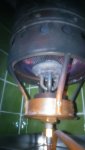
Here's my old Taylors heater going full pelt. No trace of yellow in the flame and no odour in the boat.


20180509-taylors_heater_burner_in_action (1).jpg

It's important to have a good length of flue, adequate ventilation and avoid down-draught at the flue.
 
When I switched to the German hich I like) I had to drop the operating pressure dramatically

Oh this is very interesting. I hadn't thought that the newer burners might run at a different pressure. If that is the case it would correlate very well with what I've seen. Will try reducing the pressure. Certainly quicker and easier than replacing the lot.
 
Here's my old Taylors heater going full pelt. No trace of yellow in the flame and no odour in the boat.


View attachment 83192

It's important to have a good length of flue, adequate ventilation and avoid down-draught at the flue.
hello, I just installed, it seems, the same heater as yours(Taylors 065) and I have 2 questions : there is a heat insulation top plate inside that seems to be asbestos(?) and is in bad shape. By what should I replace it?..and the burner seems a bit irregular, like breathing...is that normal? A jet or pressure problem? All the best, Jerome
 
I still have the original asbestos(?) plate but I think there are replacement materials not containing asbestos available.

Does this help? >>> Asbestos Substitute | Model Engineer

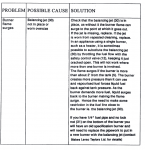
Re the surging. This is from the later 079K handbook.

1608114670851.png
https://www.sparesmarine.co.uk/_webedit/uploaded-files/All Files/Taylors 079K Paraffin Cabin Heater.pdf


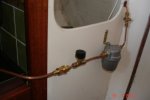
I don't have the 'balancing jet' or an adjustable burner so I fitted a needle valve in the fuel line and careful adjustment of this gives a steady flame with no surging.

You could contact Blakes Lavac Taylor Ltd for advice on fitting a balancing jet but I have not found it necessary.

taylors cabin heater (2).JPG

taylors cabin heater (3).JPG
 
I still have the original asbestos(?) plate but I think there are replacement materials not containing asbestos available.

Does this help? >>> Asbestos Substitute | Model Engineer

Re the surging. This is from the later 079K handbook.

View attachment 104973
https://www.sparesmarine.co.uk/_webedit/uploaded-files/All Files/Taylors 079K Paraffin Cabin Heater.pdf


I don't have the 'balancing jet' or an adjustable burner so I fitted a needle valve in the fuel line and careful adjustment of this gives a steady flame with no surging.

You could contact Blakes Lavac Taylor Ltd for advice on fitting a balancing jet but I have not found it necessary.

View attachment 104974

View attachment 104975
Thanks a lot, very useful information! Jerome
 
ANy flame-based heater that is producing a yellow flame is suspect; it means that the flame is too cool for complete combustion. And unless it's a balanced flue, even a heater with a chimney can leak exhaust gases back into the cabin if conditions are wrong.
 
Top