Painting & Varnishing a Traditional Pram Dinghy

Babylon

Well-Known Member
Joined
7 Jan 2008
Messages
4,401
Location
Solent
Visit site
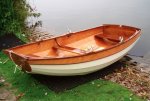
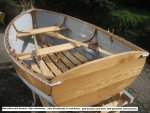
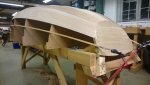
I'm currently building an 8ft pram dinghy as a working tender. It is of epoxied marine ply planking, with solid oak transoms and laminated knees, pine thwarts and floorboards, etc. The ply is to be be painted and the solid wood parts varnished, but I've no previous experience of finishing a boat, so would welcome some advice!

I'll be using Epifanes products.

Re paint, how many coats would I need each of primer, undercoat and enamel respectively? Obviously will rub down between coats and ensure early layers are as perfect as can be for a good final finish.

Re varnish, what would be the minimum number of coats? And what's the difference between one- and two-pack varnishes?
tender.jpeg
 
  • Like
Reactions: gus
Personally I would plan on one primer, two undercoat if that fills the grain, then two gloss coats. I'm not familiar with Epifanes products though, the above advise is generic. More coats won't harm unless the paint coat gets too thick when it cracks in hot sunlight.
ref the varnish, one pack dries by evaporating off solvents and two pack sets by cross-linking of polymers, though solvents are also in there. Two pack is a harder finish but difficult to touch up when damaged. Polyurethane one pack is also quite hard and prone to cracking off so also difficult to maintain.
Number of ordinary varnish coats is probably more than three but less than 10. Thin the first coat to improve penetration.
If the tender is going to be a workhorse it might be better to plan on regular maintenance ie a quick brush on of ordinary paint rather than major repair of a complex paint system. But that is only my 2d worth and others will disagree no doubt
 
I’d be tempted to use Deks Olje on the inside. Use D1 as the primer layer and then a number of coats of D2. It’s more flexible than traditional varnish, doesn’t require sanding between coats and doesn’t need to be stripped before topping up worn patches.
 
I built one just like that in my parents' garage more than 40 years ago!

Get the painting guides from Hempel or International.

If its a workaday boat it will get bashed around a bit, so as @Rum Rum says, go for a system that is easy to maintain. I painted mine with conventional paints - primer, u/c, 50/50 uc and gloss, then 2 coats of gloss. Interior with 3-4 coats of one pack polyurethane. The interior still looked good after 3-4 years.
 
Are you planning to epoxy coat all of the ply, or just epoxy glue the joints?
If you are epoxying the ply I would suggest using a fairly hard paint like plyurethane.
Any epoxied wood which is to be varnished needs a varnish with UV filter performance, unless you use an epoxy chosen for UV resistance and non-yellowing.
2 pack polyurethane is an option. 1 pack an alternative.

Some 'trad' varishes can do odd things over some epoxies.
 
I made a cedar strip dinghy about 15 years ago and chose to use an epoxy finish - (several coats but really difficult to get flat)- with 2 pack varnish on top of the epoxy - 3 coats. Two pack varnish properly applied doesn’t flake so every few years I rub it down& add a couple of coats. I don’t think I would bother with single pack varnish because having to strip it to recoat is a pain. If you choose not to use two pack, the Deks product is good.
Brass or bronze fastenings on the oak are preferred to stainless which can react with the tannins. I suspect others know more about this than me.399FD44B-48C4-4186-B568-7E783FD77C39.jpeg399FD44B-48C4-4186-B568-7E783FD77C39.jpeg
 
I’d be tempted to use Deks Olje on the inside. Use D1 as the primer layer and then a number of coats of D2. It’s more flexible than traditional varnish, doesn’t require sanding between coats and doesn’t need to be stripped before topping up worn patches.

Wonderful stuff but just remember that D2 is very slippery when wet.
 
Thanks folks - all really helpful information thanks, particularly the priming/undercoating/top-coating procedure.

It is going to be a 'working tender' - so beaches, slipways, walls, pontoons, towed astern, capsized on foredeck, car-topped and stored in shed back home. However I'm enjoying the making enormously and would like it to look something like other boats by the same designer pictured below - the first pram identical to mine, the second a stem dinghy - but with all the ply painted both inside and out, with just the solid wood components varnished.

The plank laps and all other joints are epoxied (with thickener) but I don't know what merit there'd be in sealing the ply with neat epoxy before then priming? If I did it at all then I'd only trouble to seal it on outside for possible extra 'scratch-resistance', if any?

Sounds like the two-pack varnish is the way to go for ease of future maintenance.

Screen Shot 2019-12-24 at 08.46.43.jpg


AUK 3.jpeg
 
Sounds like the two-pack varnish is the way to go for ease of future maintenance.

I'm following this one to as I will shortly be getting started on my own dinghy build project,
I have to say I drew the opposite conclusion from the comments, that two-pack would be less easy to maintain. I've done a little work with it, on a friend's boat, and it is like chipping off formica. Maybe if you keep on top of it, and it never lifts or blisters, it make sense. It certainly is hard as nails anyway, but it's a mixed blessing.
 
Re one- or two-pack varnish, I've carefully re-read all the above posts - which seem to offer contradicting views - and I'm now actually slightly confused!

Perhaps Deks would be a more sensible option?
 
I'm following this one to as I will shortly be getting started on my own dinghy build project,
I have to say I drew the opposite conclusion from the comments, that two-pack would be less easy to maintain. I've done a little work with it, on a friend's boat, and it is like chipping off formica. Maybe if you keep on top of it, and it never lifts or blisters, it make sense. It certainly is hard as nails anyway, but it's a mixed blessing.
+1 Two pack varnish and paint is wonderfiul for a few years, then bits chip and water gets under, and more flakes off around the chip. But the remaining 95% or so is still hard as a rock, and can only be removed back to wood with an inordinate amount of effort sanding. Sooner or later you are going to have to strip and revarnish/repaint, and if you used two-pack you will be cursing the fact you used it. Ordinary single pack varnish comes off quickly and easily with a scraper and hot air gun - I used to use a paraffin blowlamp but hot air gun is better.
 
Just a thought. A working boat is going to get dings in the varnish. If those dings get wet and the water gets under the varnish, the only solution is to go back to bare wood and build up the full number of coats. Maybe an oil would be more forgiving, as you can pretty much just slap a bit more over the top. It'll probably need doing more often, but it's a lot less work.
 
  • Like
Reactions: gus
I use 2 pack on my dinghy oars, and have done for more years than I care to remember. When cured it's as hard as nails and is very difficult to damage. The oars are often used as punt poles to push the dinghy on and off rockie Scottish west coast beaches and they survive remarkably well. Scratches don't pentate the paint and if I chip a bit off the end of the blade, it easy to repair. I take them home for the winter, dry then out in the house, sand around the area to be repaired, then mix a bit of 2pack and touch it up.
The main problem is mixing a small quantity accurately. However, if you mix too much you can cool the excess and warm the repair and I can get 3 coats out of one mix.
 
Very good point Stenmar - Deks oil followed by their varnish top-coats sounds increasingly attractive.

Yes my pram dinghy is Iain Oughtred's 'Humble Bee design: Humble Bee The other picture is indeed his Auk, which I referenced just as a guide to the sort of scheme I'd like. Paint colours for mine would be mid-grey for interior planking, probably with darker grey for exterior. The alternative for exterior would be bright yellow, which would look smart capsized on foredeck against the duck-egg blue of my yacht's topsides (see picture on left) and nicely visible crossing the shipping-lanes etc... but no-one would be looking anyway and yellow would get dirty very quickly!

The Humble Bee drawings show options for rigs (lug, sprit and gunter) with either a centreboard or a swappable lee-board - but my primary purpose for this boat is as a working tender under oar or outboard, and its frankly far too small for any kind of comfortable work as a sailing dinghy. I do however enjoy making so much, so a possible future build would be his 15' Elf based closely on traditional Norwegian faerings, with just three wide planks each side and a sprit sail for decent day-sailing fun: Elf - Small Boats Magazine
 
Before your first coat of anything, can I suggest a coat or two of clear preservative e.g. clear cuprinol, soaked into the wood. That way, if you ever has a situation where your sealing coat be it epoxy or varnish is damaged, the wood will already have antifungal properties and reduce the chance of having black mould appearing. I have tried it and it appears to work.
 
I've used Cuprinol extensively and it does work, however, it has a solvent base and you need to be really sure that all the solvent has evaporated before applying any paint or varnish. That takes several days at normal UK temperatures. If you don't, the coating may bubble.
I've also known the solvent to weaken the adhesive in plywood.
 
I think the first thing is to decide whether the boat is a fine piece of craftsmanship to be displayed at its best and cossetted, or is it a knock-about tender.
I've owned wooden dinghies with 'Paintcraft' type quality of finish. You would not subject such a boat to the kind of use a typical tender gets.
When you leave your tender at the quay steps, you cannot expect other boat users to treat it like a Jon Turner masterpiece.

I bought a ten year old dinghy which had been repainted in 2 pack. I raced it for 3 years including doing open meetings and nationals, just touching up the inevitable scratches. I kept it in a garage in winter. I sold it after 3 years it's since been sold again. I think this kind of finish can look good for 10 years with care and touch ups.
However I think a Paintcraft refurb will cost more than replacing the plywood.....
Paintcraft have the facilities to varnish and paint you boat to the highest standard.
 
  • Like
Reactions: gus
Top