ProMariner
Well-Known Member
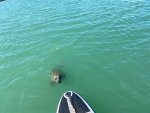
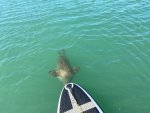
We have a couple of paddle boards we use mainly when it's flat calm, for an evening trip around the bay. They are ridiculously poor at efficient propulsion, compared to a kayak or rowing boat, but they are good full body exercise, it's nice not having to sit on a wet arse all the time like kayaking, and the height of eye is nicer for sight seeing. Am guilty of often just picking up stuff by trial and error, but we actually paid for a formal lesson before we bought, partly to try before you buy, and partly to avoid getting into bad habits from the start.
Our key takeaways from the lesson were: 1. Don't try and stand up fully before you get to deeper water, as falling off can hurt you if you fall / step onto something sharp. 2. Smaller boards are fine for smaller people, or those with great balance, but I need a bigger board, a smaller board than you need is just miserable. 3. If going against a good breeze, kneel down, if it's choppy and you keep falling off, kneel down. You can just use the paddle like a kayak paddle if you have to when your kneeling or sitting, the handle provides less drag than the blade, but it's good enough. 4. Expect to fall off, dress appropriately, I try to get falling off out the way early in the session, so I don't have to worry about it. 4. Learn an effective stroke, so you work all your mussels effectively. Making progress makes the board more stable, drifting is more unstable than travelling.
It's not just paddle boards, people attempt to take all manner of boats to sea with zero knowledge, I guess they assume that because they are from the land of Nelson, they have some kind of ancestral nautical instinct. If it wasn't paddle boards, it would be inflatable swans, or pedalos, or speedboats etc, the problem isn't the boats. A Shetland outboard angling boat managed to ground on a well known local hazard at ten last night, the novice skipper complained that there should have been a sign or something to tell sailors about it. He forgot his chart plotter, so was 'doing it by eye', at night, a 20 NM trip he had never made before, in a boat he had never used before. He seemed surprised and upset that the Coastguard didn't rock up with a skyhook and a low loader, it's just like the AA, right? The problem isn't the boats.
Our key takeaways from the lesson were: 1. Don't try and stand up fully before you get to deeper water, as falling off can hurt you if you fall / step onto something sharp. 2. Smaller boards are fine for smaller people, or those with great balance, but I need a bigger board, a smaller board than you need is just miserable. 3. If going against a good breeze, kneel down, if it's choppy and you keep falling off, kneel down. You can just use the paddle like a kayak paddle if you have to when your kneeling or sitting, the handle provides less drag than the blade, but it's good enough. 4. Expect to fall off, dress appropriately, I try to get falling off out the way early in the session, so I don't have to worry about it. 4. Learn an effective stroke, so you work all your mussels effectively. Making progress makes the board more stable, drifting is more unstable than travelling.
It's not just paddle boards, people attempt to take all manner of boats to sea with zero knowledge, I guess they assume that because they are from the land of Nelson, they have some kind of ancestral nautical instinct. If it wasn't paddle boards, it would be inflatable swans, or pedalos, or speedboats etc, the problem isn't the boats. A Shetland outboard angling boat managed to ground on a well known local hazard at ten last night, the novice skipper complained that there should have been a sign or something to tell sailors about it. He forgot his chart plotter, so was 'doing it by eye', at night, a 20 NM trip he had never made before, in a boat he had never used before. He seemed surprised and upset that the Coastguard didn't rock up with a skyhook and a low loader, it's just like the AA, right? The problem isn't the boats.
Last edited: