
Overheating and heat exchanger condition in just one year!

Solent_Boating

New Member
Joined
15 Jul 2013
Messages
20
Visit site
A couple of weeks ago I noticed the temperature gauge sitting higher than normal and checked the impeller and decided to look at the heat exchanger... it was serviced last year (summer 17) and I noticed it's badly clogged up... how is it possible!Heat exchanger.JPG
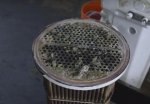
 
A Volvo tech told me last year that this can happen on some engines if the level of the cooling water (when the boat is at rest with the engine stopped) sits within the level of the cooler, so half may be in the water and half out. With a hot engine the hot half will evaporate the water and leave deposits. Sounds plausible.
 
Last edited:
A couple of weeks ago I noticed the temperature gauge sitting higher than normal and checked the impeller and decided to look at the heat exchanger... it was serviced last year (summer 17) and I noticed it's badly clogged up... how is it possible!View attachment 68561

When you say it was serviced do you know what was actually done? I would not expect to see that after just 7 months!!
 
My heat exchangers had built up a similar amount of scale this year. I have also noticed mine drain down back through the pump and inlet valve when not in use leaving a partial water level and I think this definitely contributes to the scaling issue. I used brick cleaner and left them to soak for ~ 6 hours, which removed the vast majority. Others here swear by Rydlyme.
 
A couple of weeks ago I noticed the temperature gauge sitting higher than normal and checked the impeller and decided to look at the heat exchanger... it was serviced last year (summer 17) and I noticed it's badly clogged up... how is it possible!View attachment 68561

When you say serviced was it removed and stripped down with new seal rings or was it just flushed with rydelime ?

Is this a VP D series intercooler or heat exchanger stack?

Over the years I’ve seen many diy and pro attempt at cleaning coolers to get the temp down , with poor results .

I’ll give you an example, just rigging up a pump through system can give good results in older engines with larger diameter tubes , however the later generation engines have smaller tubes and more of them to save space and weight, unfortunately a flush through doesn’t give good results. The best way is to strip down the unit, certainly if possible remove the end cap and see how bad it is before you go wasting money on rydelime , on the vp range you will find bits of old impellers, old remains of anodes, sea shells and recently a Thames boat taken to the coast was packed with green fine weed that had made its way through the strainer , fuel cooler , intercooler finally resting in the front end cap of the heat exchanger, rydelime will not break this down and give results you desire, the weed acted a bit like a fine mesh cloth blocking the water flow .

I’d be asking whoever how he did your job especially if you have a hefty bill, that looks to me like a quick job and not been opened up. Or sadly never at all.
 
Top