Outdrive anodes gone in 4 weeks

They’re DPG legs - stainless props and yes they have the old-style impressed current system. 2 units on each side. The lights blink at roughly the correct rate as far as I can tell but I have no idea if they really work. Do they ever wear out? Or need refurbishing?
I did see something about VP and Aluminium anodes - but it didn’t seem to make any sense to me either. I don’t see how AL protects AL drives. I definitely have zinc ones at the moment. Sounds like I’d better lay in a store of them…
 
I don’t see how AL protects AL drives.

Aluminium anodes definitely do protect the drives. I have been using them with DP-E legs quite a few years . The anode material is obviously not the exact same aluminium alloy as the drive and props. But I keep my boat is on fresh water with occasional salty water trips and Aluminium anodes fit well with this use.

For salt water full time use you should stick with Zinc . Aluminium anodes will fizz away faster than zinc.
 
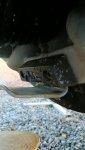
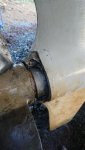
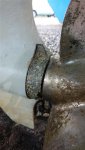
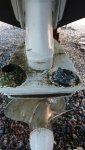
@Roughcut - is there any steel vessels nearby your mooring ? the other year the marina dredger was moored near my boat (ss props and DP-G drive) fortunately was getting lifted out a couple of weeks later but the side the dredger was on ate half of the ring anode and the other side of the anode was still pretty good. Please see the pics on my old drive - The starboard side eaten away
 

Attachments

  • DSC_0790 (Medium).JPG
    DSC_0790 (Medium).JPG
    72.4 KB · Views: 27
  • DSC_0791 (Medium).JPG
    DSC_0791 (Medium).JPG
    78.4 KB · Views: 26
  • DSC_0795 (Medium).JPG
    DSC_0795 (Medium).JPG
    79 KB · Views: 26
  • DSC_0793 (Medium).JPG
    DSC_0793 (Medium).JPG
    92.3 KB · Views: 28
Last edited:
Aluminium anodes definitely do protect the drives. I have been using them with DP-E legs quite a few years . The anode material is obviously not the exact same aluminium alloy as the drive and props. But I keep my boat is on fresh water with occasional salty water trips and Aluminium anodes fit well with this use.

For salt water full time use you should stick with Zinc . Aluminium anodes will fizz away faster than zinc.

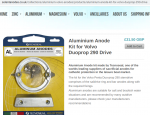
VP have discontinued the zinc anodes and only supply aluminium now for fresh and salt water.
 
@Roughcut - is there any steel vessels nearby your mooring ? the other year the marina dredger was moored near my boat (ss props and DP-G drive) fortunately was getting lifted out a couple of weeks later but the side the dredger was on ate half of the ring anode and the other side of the anode was still pretty good. Please see the pics on my old drive - The starboard side eaten away
Thanks - that's very interesting. Your pictures are similar to some of mine. There are no steel boats nearby - but the boat is on a long trot, so I think all the moorings must be linked by a single (steel?) chain. I did wonder if that might be acting as a big electrode. I'm the only motor boat on that trot with outdrives. I'm hoping to move to a single mooring further out, so that will show me if mooring chain is a factor.
 
VP have discontinued the zinc anodes and only supply aluminium now for fresh and salt water.
Thank you. I didn't know (til I started this thread) that VP were discontinuing Zinc anodes. I just wonder how well their new(?) Aluminium anodes will protect in salt water. I've got a small stock of Zinc for now - I imagine 3rd party suppliers will keep selling Zinc for the time being.
 
Thanks - that's very interesting. Your pictures are similar to some of mine. There are no steel boats nearby - but the boat is on a long trot, so I think all the moorings must be linked by a single (steel?) chain. I did wonder if that might be acting as a big electrode. I'm the only motor boat on that trot with outdrives. I'm hoping to move to a single mooring further out, so that will show me if mooring chain is a factor.
It doesnt necessarily need to be a steel hull if a boat is "leaking" current from its props thru hull fitting etc - However you do mention a mooring chain this indeed could act as a earth for all the boats depending on how they are hooked up to itor what the chain is connected to.
at a previous marina I was in my ring anode lasted 3 months all of it gone and I later found out that it was the marina's electrical hook up points had bad earthing.
Another preventative/slow down method would be to use a hanging anode.
 
If it is the C style SS that goes with the DPE drive the hub is designed to and needs to be isolated from the SS steel. Over time or "suddenly" one year this isolation stops working due to corrosion and general (mis)handling. Anyhow, very common and when it happens the anodes starts to wear down much faster. There is an easy check in that you measure the electrical resistance between the hub and the blades preferable sometime before you mount them.

This is not to say the OP may have another more serious issue but this is very common and for some reason it is typically ignored.
Thanks for this - that’s a really useful thought. It would explain the more rapid corrosion of the ring anodes which are right next to the SS props. The props have been re- bushed, and I believe VP have changed the design of the hub- so I’m wondering if that could be the cause of a change in electrical insulation with the rest of the leg - triggering the corrosion mechanism you describe. I’ll put a meter on the hubs next time I can beach the boat .
 
  • Like
Reactions: A_8
Just a post-script for anyone still at all interested in this! I finally found the problem. One of my drives had been rebushed and both SS propellers had been fitted with Aluminium hubs rather than the electrically insulated bronze hubs. So there was effectively a galvanic circuit set up from the prop and bush on 1 leg, flowing through the bonding wires to the 2nd leg and then through the seawater back to the original prop again. I temporarily installed Aluminium props and the corrosion has dropped to normal. It seems as if Volvo Penta dealers are not best briefed on this and so we've had misleading info from different sources. In addition - there's still a large annular plastic washer that comes with each (correct) re-bushing kit, that no-one (inc VP) seems to know where it goes. There's no obvious place for it when re-fitting the props.

So thanks to A_8 above for pointing me in the direction of hub insulation. Just to complicate matters even more - a friend of mine has had VP stainless props re-bushed with the correct hubs, but when brand new - not showing any electrical isolation. So it looks as if it needs a meter continuity check before any re-fitting goes on.

Anyway - hope this is useful for someone else. It's been a bit of a detective hunt to find the cause - so thanks for everyone who helped with suggestions.
 
Thank you. I didn't know (til I started this thread) that VP were discontinuing Zinc anodes. I just wonder how well their new(?) Aluminium anodes will protect in salt water. I've got a small stock of Zinc for now - I imagine 3rd party suppliers will keep selling Zinc for the time being.
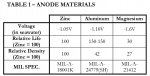
Aluminium anodes are not pure aluminium, they have some zinc and indium added which gives better protection and longer life than pure zinc in saltwater, plus the ability to protect in fresh water. Best of all worlds. No wonder VP made the switch.
AnodeComparison.jpg
 
Just a post-script for anyone still at all interested in this! I finally found the problem. One of my drives had been rebushed and both SS propellers had been fitted with Aluminium hubs rather than the electrically insulated bronze hubs. So there was effectively a galvanic circuit set up from the prop and bush on 1 leg, flowing through the bonding wires to the 2nd leg and then through the seawater back to the original prop again. I temporarily installed Aluminium props and the corrosion has dropped to normal. It seems as if Volvo Penta dealers are not best briefed on this and so we've had misleading info from different sources. In addition - there's still a large annular plastic washer that comes with each (correct) re-bushing kit, that no-one (inc VP) seems to know where it goes. There's no obvious place for it when re-fitting the props.

So thanks to A_8 above for pointing me in the direction of hub insulation. Just to complicate matters even more - a friend of mine has had VP stainless props re-bushed with the correct hubs, but when brand new - not showing any electrical isolation. So it looks as if it needs a meter continuity check before any re-fitting goes on.

Anyway - hope this is useful for someone else. It's been a bit of a detective hunt to find the cause - so thanks for everyone who helped with suggestions.
I am glad it worked out and you are correct, not many "prop shops" understand this and I've had my fair share of harch discussions with them. On newish, original props there is a metal cover over the hub that gets very close to the SS in the prop (less than 1mm) and this sometimes falls off, gets damaged or not put back together as it should effectively connecting the hub/drive with the ss in the prop.

Generally best practice is to measure/confirm isolation everytime the boat is out of the water.

Btw I eventually switched to the J series prop in part because of the anode hassle but also after finding out what happened to the drive when running into debris at 25 knots, better to break a €500 prop that pay €5000 for a renovated drive,
 
I am glad it worked out and you are correct, not many "prop shops" understand this and I've had my fair share of harch discussions with them. On newish, original props there is a metal cover over the hub that gets very close to the SS in the prop (less than 1mm) and this sometimes falls off, gets damaged or not put back together as it should effectively connecting the hub/drive with the ss in the prop.

Generally best practice is to measure/confirm isolation everytime the boat is out of the water.

Btw I eventually switched to the J series prop in part because of the anode hassle but also after finding out what happened to the drive when running into debris at 25 knots, better to break a €500 prop that pay €5000 for a renovated drive,
Yes - for similar reasons I'm rethinking my plan to re-fit the SS props after all this - and just keep the Aluminium ones on. As far as I can see using B6 rather than C6 gives me the same WOT, same top speed, MUCH smoother take up from neutral into gear, and a cheaper repair if (when!) I hit something. The only difference I've noticed so far is a bit less torque when manoevering slowly. But that makes docking etc a bit gentler - so no bad thing.
 
  • Like
Reactions: A_8
Aluminium anodes are not pure aluminium, they have some zinc and indium added which gives better protection and longer life than pure zinc in saltwater, plus the ability to protect in fresh water. Best of all worlds. No wonder VP made the switch.
View attachment 143821
Thank you - that's a useful chart. Not seen before... Looks like I'll be trying them next season.
 
Top