
Osmosis treatments - need advise

oldsalt83

New Member
Joined
3 Jan 2024
Messages
4
Visit site
Hello All,

After sanding all layers of old antifouling on my Bavaria 37 2001 some osmosis signs were discovered (picture attached), despite the were no visible blisters before af was removed.
I'm concerned about wet spots, small hols are just gelcoat porosity - not good but has nothing to do with osmosis.
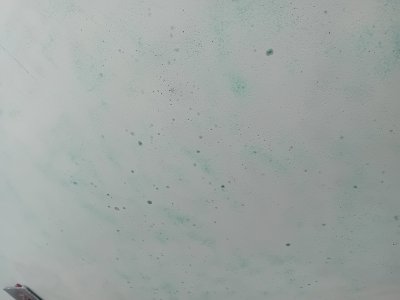
hull.jpg

Marina technicians suggest to wash the hull with warm water multiple times (2 times per week), then dry it and apply epoxy cover scheme.

I doubt it make sense to apply epoxy without complete gelcoat removal, because it would be impossible to remove all acids/breakdown products under gelcoat, so blisters will appear after sometime and epoxy will not prevent this.

Does anyone has practical experience with such problem?
 
Hello All,

After sanding all layers of old antifouling on my Bavaria 37 2001 some osmosis signs were discovered (picture attached), despite the were no visible blisters before af was removed.
I'm concerned about wet spots, small hols are just gelcoat porosity - not good but has nothing to do with osmosis.

View attachment 170068

Marina technicians suggest to wash the hull with warm water multiple times (2 times per week), then dry it and apply epoxy cover scheme.

I doubt it make sense to apply epoxy without complete gelcoat removal, because it would be impossible to remove all acids/breakdown products under gelcoat, so blisters will appear after sometime and epoxy will not prevent this.

Does anyone has practical experience with such problem?
Welcome to the forum
Highly unlikely it is osmosis. Virtually unheard of in that age Bavarias. They look more like pin holes in the gel coat, but perhaps you need the hull surveyed to check for moisture before doing anything drastic. Gel coat removal is rather out of favor now and only really used if there is a sign of retained moisture in the laminate, which again is unlikely given the materials and methods used in the factory at the time of build.

Filling and fairing with an epoxy filler like Watertite - you don't need a perfect surface underwater - then 4 or 5 coats of epoxy and Coppercoat would be appropriate.

BTW how do you like your Bavaria? I had the same model and year for 15 years from new.

Worth visiting here bavariayacht.org/forum/index.php I have been a member since it started over 15 years ago and I don't recall a single post about osmosis. Plenty about blasting the hull, epoxy coating and Coppercoat though
 
Osmosis has not been eradicated as implied by T ...

The resin used for layup was changed well before that year to REDUCE the likelihood of it - but never stopped it.

If you want a hull that is nearly immune - then pay the money for an epoxy built hull ...

OK - the advice given by the shore guys is reasonable ... do not add any soap or wash medium to the water ... but repeated fresh water wash .. you don't need to wait so long between ... the action is to remove any salts / residues that can interfere with any coating you apply.

Personally - I would give the hull an epoxy primer coat once dry .. letting the primer fill the pinholes ... nothing more ... then give it the usual antifoul job ..

Why pinholes ??

Having been observer of hulls being moulded - the modern method of powered layup - can lead to the gelcoat initial layer if not carefully done to have a few pinholes ... even to the layers after ..

I know there will now be howls of derision ... calls to shoot me at dawn .. but its true. If the operator is not careful with that gun ..
 
I agree, it does not look like osmosis. Have you measured moisture content? The problem with applying Gelshield 200 is that moisture can be sealed in, causing serious problems. When I did mine I removed all the antifouling in October and Gelshielded in April.
 
Osmosis is a bugbear that is used to move money from innocent yotties to boatyards of questionable integrity. It does exist and, in extremely rare cases, it can be extremely serious, but for 99.9% of boats, a few - or even a lot of - blisters aren't an issue. The appropriate treatment is to ignore them until it's convenient to grind them out and fill with epoxy filler.

Yes, wash down your hull regularly with plain water through the winter - in the UK Freyr* will do most of your work for you, Come spring, apply a few coats of Gelshield or similar, and Coppercoat or you usual antifoul and off you go.

* Norse god of rain, amongst other things
 
Osmosis has not been eradicated as implied by T ...


I know there will now be howls of derision ... calls to shoot me at dawn .. but its true. If the operator is not careful with that gun ..
Where did I say it had been eradicated? Surely the words "highly unlikely" and "virtually unknown" convey reality and do NOT mean eradicated.

Where did the idea of guns being used in the moulding of Bavaria hulls? Just like most builders at the time the gelcoat and layup was carried out by hand.

All the indications from the photo and knowledge about hulls moulded at the time suggest it is not osmosis but moisture check and allowing to dry before recoating would be wise.
 
I had the same dilemma a few years ago when I had layers of old antifoul blasted off and then the company suggested expensive treatment! the paint guy at my yards said to sand, fill and fair then prime for a fraction of the cost of " osmosis treatment " and has been fine ever since! Don't worry too much and enjoy sailing!
 
I had the same dilemma a few years ago when I had layers of old antifoul blasted off and then the company suggested expensive treatment! the paint guy at my yards said to sand, fill and fair then prime for a fraction of the cost of " osmosis treatment " and has been fine ever since! Don't worry too much and enjoy sailing!
Thanks, Chubby! What boat do you have and did you discovered osmosis signs? Did you applied epoxy or just fill and primer?
 
Folks, thank you for advises!

I know this is common believe that osmosis should not occur on modern boats. But it is like it is, and I’m trying to understand how to deal with my hull to not just waste money and end up with same issue in a year or two. I’m concerned about wet spots shown on picture, and not about dark pin holes in gelcoat which are clear problem appeared on manufacturing stage.

I’m also not sure if those wet spots appeared because of osmosis process, but the only other explanation I can find is that moisture was absorbed by gelcoat pin holes which were close to surface (that is why there are dry and wet pin holes), and in this case laminate itself should be dry enough. But if this is stage2 of osmosis (when there are no blisters yet but there is moisture and acids/glycol/breakout products accumulated under gelcoat) which could progress for decades without any blisters, then application of epoxy will just speedup the blistering because it will conservate the moisture in laminate (=waste of many and time)

I did not get moisture readings yet (the boat is in Greece and I’m not there), but I think this most vital test to decide on further actions. I’m thinking also about stripping gelcoat just around one of the wet spots to inspect real laminate state.

But would you agree it does not make sense to apply epoxy if moisture level will not be acceptable (a/f was sandblasted in November, so I still have some time to April for hull to dry out)? The answer is not obvious for me because after sandblasting gelcoat is not as strong as it was before, also there are pin holes discovered. So I’m not sure if make sense to leave laminate almost unprotected (w/o epoxy and with poor gelcoat) if it has some moisture…

@Tranona, thank you very much for warm welcome! I own this boat for one year and I like it very much. She had just one owner before and is in perfect condition. The only disappointing think is what was found after stripping of a/f...
 
I bought my boat after it had failed a survey for osmosis. At the time there was a helpful quote from the yard for a full peel and re coat at a ridiculous cost.

They were not amused when I asked them to just apply two coats of anti foul, which I supplied.

They were less amused when I gave them a Tin of blue for the first coat and a can of red for the second coat.

18 years later after sanding and antifouling it personally many times I still have not seen any blisters😁

In Greece , if you let it alone by spring it will surely be dry, at that stage fill the holes and gel shield if you are happy with the readings.
 
Doesn’t look like osmosis usually does, I’d say. You sure you are down to the gel coat there ?
 
Agree, but what it is then? Yes, not doubts it was sandblasted down to the gel coat.
Obviously there is no doubt that you have seen this close up in person. You’ll know what she looks like there, better than I, from a picture. But if I didn’t know any better, I’d say that doesn’t look as if it’s down to the gel coat there. Unless the gel coat has been seriously etched and roughened before her first coat of AF. Is there any smooth gel coat visible at all, elsewhere and away from that area ? It just looks like a base coat or something to me or white antifoul.
One of my current boats, when new or nearly new, had a serious coat of white AF applied professionally. Over the years, many self eroding blue coats on top of that.
At the minute, if I power wash her with any intent at all, the blue will come off, but still leave the original white underneath. That’s much more stubborn. At a glance, one might even think that it’s the bare hull on show. Not the case.
Anyway, thought I’d mention it, just in case. But like I say, you’ll know better than anyone looking here at a picture. But it sure does look like a coating of some sort still remains, from the pics.
If she is truly down to the gel coat, it’s perhaps showing one of a few possibilities.
It’s been seriously etched at one point, or if it is actually osmosis, then it’s been attended to, half heartedly by some one. Perhaps bubbles burst or rubbed down, then covered up ? Certainly doesn’t show similar to what the usual signs look like anyway.
Perhaps a final thing from me might be an assumption that a boat of that age, in the salt and with her most likely always having a coat of AF on her from new…might suggest that osmosis taking hold, is fairly unlikely. She would normally have to be sat for years without being on the hard, for that to happen. Even at that..in the presumed salt water and with AF usually helping to seal her from easily suffering absorption…need to be extremely un lucky you’d think.
 
Looking at the photos, this looks very like small bubbles of air that were trapped in the gel coat mix and not brushed to work them out of the mould. As Tranona says the hulls for this period were hand laid, I am also assuming the gel coat was brushed rather than sprayed. I have some very similar on my Westerly Fulmar and everytime she is lifted, I fill a few more. 10 years ago the surveyor said to strip the antifouling and apply just 3 coats of Gel Shield not the recommended 5 coats as the air bubbles will continue until all have finally burt and been filled. Very simple to do and nothing to really worry about. Finding air bubbles in a moulded non slip deck section is a nighmare by comparison.
 
Top