Fr J Hackett
Well-Known Member
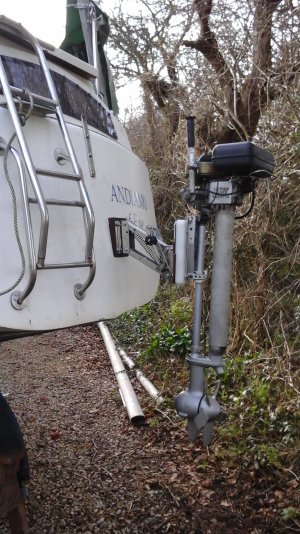
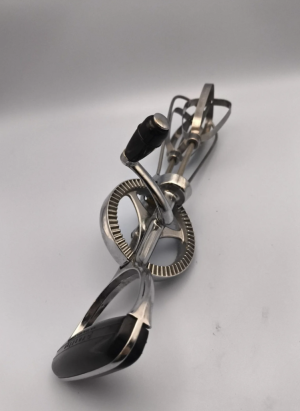
What about a couple of these

You mean Zen and outboards!…….my outboarding has included two Seagulls and an American Evenrude,as regards spark plugs I recall my father heating the plugs of his Morrisover the gas …..no wonder I am traumatized!Yes. Assuming there's nothing wrong with the engine, it's usually just knowing the correct starting drill - the order of things, and the right amount of choke and throttle, etc. - and getting the 'swing' of how hard or gentle and fast or slow you need to pull the starter on that particular engine.
(Those who rode old motorbikes with kick-starters, especially big singles, will understand the point. You'd sometimes see an inexperienced owner busting a gut jumping up and down repeatedly on the starter to no avail, when an experience owner would stroll up, get on an identical model bike and take a leisurely swing at the correct (sometime quite leisurely) pace and it would immediately rumble into life.)
Handy tip, make sure Mrs. W's face especially, or other obstructions, are not in the way of the trajectory your elbow is going to make as you follow through the pull.
If it is regularly difficult to start, get it properly serviced and mixture etc. adjusted. Don't over-economise on new spark plugs.
Understand how to recover if you flood the engine with petrol - e.g. choke off, full throttle and repeated pulls to try to 'blow-dry' the plug, and if that fails take the plug out (you will, of course have a suitable plug spanner and other relevant tools to hand?), dry the plug and maybe even heat the electrodes it with a lighter, before re-inserting (don't over-tighten it).
If all else fails, don't get in a strop (the engine will then know it's won!). Relax, leave the engine on the naughty step, put the kettle on, accept you're not going anywhere in the next 20 minutes, enjoy your cuppa, and come back to it when you're less rattled and out of breath, by which time the engine might well have seen the error of its ways and decided to behave after all.

Our motor is remote and electric start. I guess we could leave it on board all the time and service it in situ. It has just become habit to take it off and bring it home for that.I think your best option would be a 4stroke 8-10 hp with electric start and remotes. Next best thing to an inboard.
With that you will always be able to get back to your berth, whatever the weather and wherever you are coming back from, not struggling with something too small for anything but benign conditions.
If you have remote controls on an outboard, don’t consider easily taking it off the boat, whatever the weight. Disconnecting the remotes isn’t a quick job if you are mechanically challenged. It will stay on the boat all year round, and get serviced by a professional if you have any sense!

Is your outboard also fitted with tiller controls? They can be easier to unmount from remotes if the attachments are on external points like gear shift levers.Our motor is remote and electric start. I guess we could leave it on board all the time and service it in situ. It has just become habit to take it off and bring it home for that.
Disconnecting the remotes is not too difficult just a little fiddly.
It has a backup manual start but that requires the plastic flywheel cover to be removed, so the essential tool kit is a spanner to do that and of course 2 spare spark plugs and a plug spanner.


I'm not applying, but am overqualified.IfI won the pools Iwould have an MFV…….with a grumpy alcoholic engineer in charge of the engine room
AndyourSottish ….perfectI'm not applying, but am overqualified.

On the back of my Seal 28Ihave one in the shed …….


The plan after reading forum advice is to start the existing Eight hp engine with help of previous owner who is ultra confident it will start.Will then see if I can start it .Ifnot investigate installation of remote starter and control or buy a smaller engine ,four hp ……….or a sculling oarWansworth, I feel you and not getting the best advice. If you look at all the small day fishing boats with outboards, they have a big outboard and a small one for when the big one does not start. Why not keep your existing outboard and add a smaller one on the other side of the transom.
Thanks,very informativeFor 4-strokes, from all the manufacturers I can think of - Honda, Mercury (re-badged Tohatsu at this size), Suzuki, Tohatsu, Yamaha - the 4, 5 and 6hp outboards within each brand are all the same single cylinder engine and weight (25-27kg ish). The different horsepower ratings are achieved by use of a different carburetor and/or higher/lower max revs.
The next size up is 8 and 10hp (or 9.8 or 9.9), again same base engines (now two cylinders) with quite a jump in weight at 37-40kg. BUT some of these (I think only the Tohatsu and Tohatsu-based ones so far) now have EFI instead of a carburetor. EFI models should be easier to start because for example there's no choke to fiddle about with and you can't flood them. In my experience this is true - they are a bit easier/more willing to start - but none of the EFI motors at this size have been around long enough to be neglected (lack of long-term neglect helps!). With EFI there's also no carb to "gum up" and they should be more efficient, although not many would accuse the carburetor ones of profligacy. At this size you can often have electric start and other luxuries (or complications and extra weight, depending on how you look at it).
On the water a twin cylinder 8/10 is much nicer to use than a single cylinder 4/5/6. Quieter, smoother etc. But if you need to be able to lift it on and off frequently then 26kg is "just about OK" for many people, whereas 40kg is not.
Electric options exist in the 6-10hp size and of course they're really easy to start/use, and quiet, and won't choke you on their exhaust fumes. The outboard part is quite likely to be lighter than a petrol one too, depends on model but definitely lighter than a 8/10hp petrol. But depending on how much range you want the batteries required may put the price out of contention, and possibly be too heavy, although battery weight doesn't have to be on the transom (it may even be beneficial weight if you can get it low and central in the boat).
I know nothingI’m not exactly sure what the problem is?
It’s not got electric start and is too awkwardly positioned to hand start readily?
Or
Someone left old E10 ( 10%ethanol) fuel in it for months without either running it dry or adding fuel stabiliser and the carburetteur is now all gummy?
Which is it?

You’re the captain!I know nothing
 ️
️
Shame he’s in Spain, I have that motor in my workshop, complete with charging coil. It would cost more to ship it than it is worth.You’re the captain!
Wot Leslie frank says as above- just buy an old 2str long leg 5 hp Yamaha or Mariner, it will push that boat along with ease- And yiu can fit a battery charging coil to it for 100 euros. Job done, time to get out sailing
It’s the thought that countsShame he’s in Spain, I have that motor in my workshop, complete with charging coil. It would cost more to ship it than it is worth.

Worth a maiden voyage for then!Shame he’s in Spain, I have that motor in my workshop, complete with charging coil. It would cost more to ship it than it is worth.