tillergirl
Well-Known Member
UKHO Permanent/Temporary/Preliminary Notices
Just the 1 this week
FRANCE - North Coast - Automatic Identification System. - Temporary notice advising that the south cardinal buoy ‘DY2’ in the Dyck Oriental channel (offshore north of Dunkerque) has its AIS temporarily removed.
Local
1. Gravesend Reach to Northfleet Hope - Dredging Operations - On or around 8th January 2025, the vessel AQUADELTA will commence water injection dredging operations at the entrance to Tilbury Dock & Tilbury CMAT. Works are expected to take no longer than 5
working days. Dredging activities from the vessel AQUADELTA will only take place on ebb tides at the locations indicated. See the image at: Notices to Mariners. Requirements to proceed with caution or at slow speed will be made in accordance with the procedure set out in the Port of London Authority’s Port Information Guide, under ‘London VTS’, ‘Section 4’. International Code Flags ‘Romeo Yankee (RY)’ will be displayed accordingly.
2. Dredging Works at Shotley Marina - Mariners are advised that dredging works will be taking place at Shotley Marina from 06 January 2025 for approx. 5 weeks. Works will take place Monday to Friday between 08:00 and 16:00. Contact Shotley Marina (VHF Ch.80) for further information.
3. Surveyed Depths – Harwich International Port and approaches – Update 1 - recent surveys have identified the following depths in the approaches:
• Area dredged to 8m (not including berths): Minimum depth – 8.0m below chart datum
• Area dredged to 9m (not including berths): Minimum depth - 8.9m below chart datum
See survey chart extracts for further information and berth depths. Go to the above quoted webpage and select the local list. For further information contact the Harbour Master Team at Harwich Haven Authority (+44 1255 243030).
4. Surveyed Depths – Harwich Deep Water Channel – Update 6 - the latest hydrographic surveys showing depths in the Harwich Deep Water Channel. The minimum available depth of water on the centreline is approx. 15.9m below chart datum in the area of Number 1 Buoy, with the channel predominately at 16.0m BCD or greater. There are shallower sections including sand waves on the centreline and towards the channel edges Contact Harwich VTS or Haven Pilots for further information. This local notice to mariners is cumulative and replaces notice 62-2024 which is now withdrawn.
5. Surveyed Depths – Harwich Harbour – Update 12 - the latest hydrographic surveys showing depths in Harwich Harbour. The controlling depth for deep draught vessels navigating within the harbour area should currently be taken as 15.4m below chart datum, plus height of tide. The minimum depths below chart datum (not including inside berth boxes) are:
• 15.3m - spot soundings between the Shotley Spit Buoy and Babergh Buoy
• 15.5m - spot soundings between the Grisle Buoy and Shotley Spit Buoy
• 15.4m - spot soundings between the Fort Buoy and Grisle Buoy
See survey chart extracts at the above quoted webpage for further information. Subject to availability of a suitable tidal window, vessels up to 17.0m maximum draught may be accepted. Contact Harwich VTS or Haven Pilots for further information.
6. River Medway – Gillingham Marina to Hoo Marina - Hydrographic Survey of Gas Pipeline - ‘Northern Divers’ will be conducting a hydrographic and “walk-over” survey of the River Medway between Gillingham Marina and Hoo Marina. The survey will be concentrated over the sub-sea gas pipeline running between the two locations. (See local list on the webpage quoted above). Survey work will commence 14/01/2025 and is expected to be completed by 17/01/2025. Multiple survey runs will be performed at slow speed over the low water periods using a RIB Callsign “Northern Divers Sea Rover” who will be monitoring VHF Channel 74 at all times. All work will be completed from the surface and across the mudflats during multiple low water periods, NO diving will be undertaken. Please be advised that during survey operations the vessel will be restricted in it’s ability to manoeuvre and other vessels are requested to be mindful of the nature of the works, reduce their wash when passing, maintain an appropriate safe distance and monitor VHF Channel 74 at all times. Admiralty Charts : 1835 & 2482 refer. Further information may be obtained from Medway VTS on VHF Channel 74, call sign “Medway VTS” or telephone 0151 949 6148 or 0151 949 6650 (Recorded Lines).
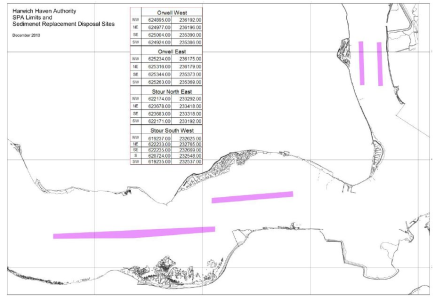
7. MDL Woolverstone Dredging - that dredging works will be conducted at MDL Woolverstone from Thursday 9th January for a period of 6 weeks. The works will be undertaken by the vessel CH Horn. The vessel will dump the spoil at the River Orwell disposal site TH 034.
The CH Horn will maintain a listening watch on VHF CH68 at all times. Mariners requiring more information should contact ONS on VHF CH68.
That's it.
Just the 1 this week
FRANCE - North Coast - Automatic Identification System. - Temporary notice advising that the south cardinal buoy ‘DY2’ in the Dyck Oriental channel (offshore north of Dunkerque) has its AIS temporarily removed.
Local
1. Gravesend Reach to Northfleet Hope - Dredging Operations - On or around 8th January 2025, the vessel AQUADELTA will commence water injection dredging operations at the entrance to Tilbury Dock & Tilbury CMAT. Works are expected to take no longer than 5
working days. Dredging activities from the vessel AQUADELTA will only take place on ebb tides at the locations indicated. See the image at: Notices to Mariners. Requirements to proceed with caution or at slow speed will be made in accordance with the procedure set out in the Port of London Authority’s Port Information Guide, under ‘London VTS’, ‘Section 4’. International Code Flags ‘Romeo Yankee (RY)’ will be displayed accordingly.
2. Dredging Works at Shotley Marina - Mariners are advised that dredging works will be taking place at Shotley Marina from 06 January 2025 for approx. 5 weeks. Works will take place Monday to Friday between 08:00 and 16:00. Contact Shotley Marina (VHF Ch.80) for further information.
3. Surveyed Depths – Harwich International Port and approaches – Update 1 - recent surveys have identified the following depths in the approaches:
• Area dredged to 8m (not including berths): Minimum depth – 8.0m below chart datum
• Area dredged to 9m (not including berths): Minimum depth - 8.9m below chart datum
See survey chart extracts for further information and berth depths. Go to the above quoted webpage and select the local list. For further information contact the Harbour Master Team at Harwich Haven Authority (+44 1255 243030).
4. Surveyed Depths – Harwich Deep Water Channel – Update 6 - the latest hydrographic surveys showing depths in the Harwich Deep Water Channel. The minimum available depth of water on the centreline is approx. 15.9m below chart datum in the area of Number 1 Buoy, with the channel predominately at 16.0m BCD or greater. There are shallower sections including sand waves on the centreline and towards the channel edges Contact Harwich VTS or Haven Pilots for further information. This local notice to mariners is cumulative and replaces notice 62-2024 which is now withdrawn.
5. Surveyed Depths – Harwich Harbour – Update 12 - the latest hydrographic surveys showing depths in Harwich Harbour. The controlling depth for deep draught vessels navigating within the harbour area should currently be taken as 15.4m below chart datum, plus height of tide. The minimum depths below chart datum (not including inside berth boxes) are:
• 15.3m - spot soundings between the Shotley Spit Buoy and Babergh Buoy
• 15.5m - spot soundings between the Grisle Buoy and Shotley Spit Buoy
• 15.4m - spot soundings between the Fort Buoy and Grisle Buoy
See survey chart extracts at the above quoted webpage for further information. Subject to availability of a suitable tidal window, vessels up to 17.0m maximum draught may be accepted. Contact Harwich VTS or Haven Pilots for further information.
6. River Medway – Gillingham Marina to Hoo Marina - Hydrographic Survey of Gas Pipeline - ‘Northern Divers’ will be conducting a hydrographic and “walk-over” survey of the River Medway between Gillingham Marina and Hoo Marina. The survey will be concentrated over the sub-sea gas pipeline running between the two locations. (See local list on the webpage quoted above). Survey work will commence 14/01/2025 and is expected to be completed by 17/01/2025. Multiple survey runs will be performed at slow speed over the low water periods using a RIB Callsign “Northern Divers Sea Rover” who will be monitoring VHF Channel 74 at all times. All work will be completed from the surface and across the mudflats during multiple low water periods, NO diving will be undertaken. Please be advised that during survey operations the vessel will be restricted in it’s ability to manoeuvre and other vessels are requested to be mindful of the nature of the works, reduce their wash when passing, maintain an appropriate safe distance and monitor VHF Channel 74 at all times. Admiralty Charts : 1835 & 2482 refer. Further information may be obtained from Medway VTS on VHF Channel 74, call sign “Medway VTS” or telephone 0151 949 6148 or 0151 949 6650 (Recorded Lines).
7. MDL Woolverstone Dredging - that dredging works will be conducted at MDL Woolverstone from Thursday 9th January for a period of 6 weeks. The works will be undertaken by the vessel CH Horn. The vessel will dump the spoil at the River Orwell disposal site TH 034.
The CH Horn will maintain a listening watch on VHF CH68 at all times. Mariners requiring more information should contact ONS on VHF CH68.
That's it.