Daydream believer
Well-Known Member
I do not have the twist & lock .( mine is the grey handle circa 2003) Can one buy this as an adaption to the original unit or are all the mountings different?


I do not have the twist & lock .( mine is the grey handle circa 2003) Can one buy this as an adaption to the original unit or are all the mountings different?

Mountings are the same. Just buy a T&L pump unit (blue handle) which I think comes with a new bottom flap valve which the T&L handle will push down on to seal.
Having said that, I replaced the entire toilet - bowl, seat, lid - as a cheap deal on eBay was not that much more expensive and I sold the old toilet on eBay for £40.
Richard

Returning to the original question, traditional NRVs need a reasonable head for them to seal properly so is unlike to work with only a foot or so of head behind them. A spring loaded one would stand a better chance.
I have this horrible vision of you bringing the old toilet back in hand luggage to sell on eBay :disgust:

..... instead of those awful sucking bog things they have on the plane.
You're supposed to get off before pressing the button.


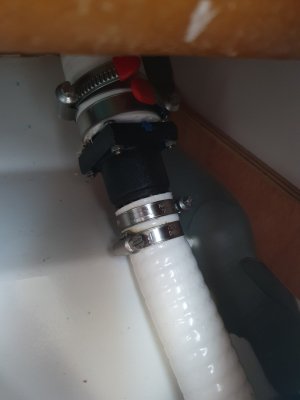
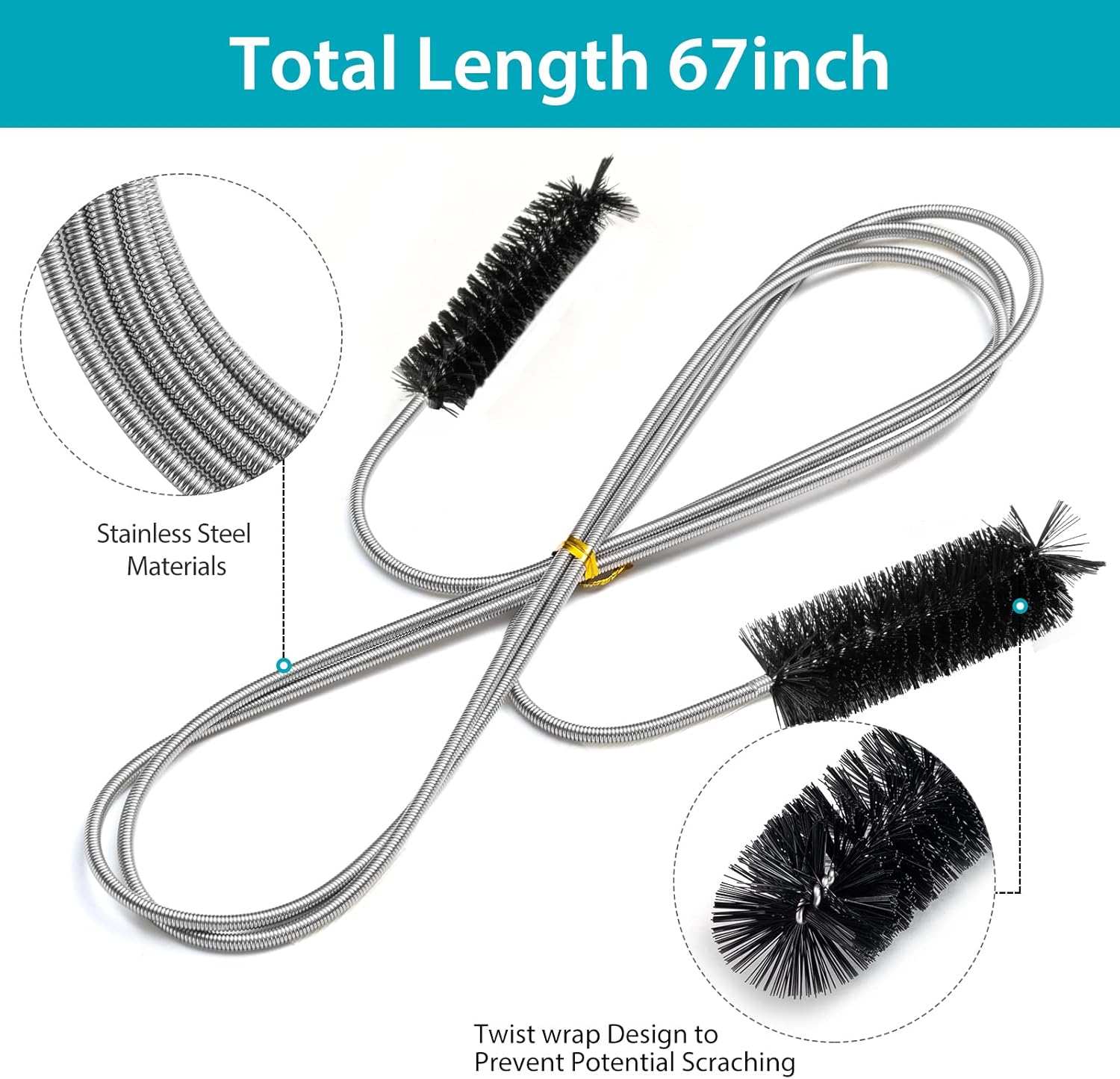
Exactly what we do ChrisNorman, I am assuming that you can also pump to the sea by changing the diverter to/ the tank/sea. In which case, the 38mm outlet pipe will go in a big loop to to the deck head before coming down again.
If pumping to the sea, when the volume of water pumped is not critical, you should pump sufficient number of times that all the dirty water is expelled from the pipe. Then only clean water drains back to the loo. This has the added benefit that you get no calcite deposits in the pipe as there is no urea left to react with the seawater, and also the water left standing in the pipe will not gradually diffuse through the pipes to make them permanently smell.
If pumping to the tank than obviously you cannot pump so much. So perhaps once you have done 12 pumps to the tank, you can switch over to the sea and pump for england. The number of times to pump of course depends on the length of your pipes.

I tried to tack onto existing posts (however old) to avoid internet forums being clogged with the repeats of the same topic. The only exception of course are radio check & anchor postsWow, this is an ancient thread.

Looking at a picture of the Trudesign, there appears to be a spring mechanism inside the fitting. Does this not get in the way of any .. ahem .. solids passing by?I did in fact fit 38mm Tru-Design non-return valves to both heads. These are lightly sprung and proved very successful, only occasionally failing to prevent flowback, and quickly cured by pumping plenty of water if they did.


Solids are well macerated by the foot and joker valves. Paper is shredded. What comes out of the skin fitting is brown soup.I tried to tack onto existing posts (however old) to avoid internet forums being clogged with the repeats of the same topic. The only exception of course are radio check & anchor posts
Looking at a picture of the Trudesign, there appears to be a spring mechanism inside the fitting. Does this not get in the way of any .. ahem .. solids passing by?
View attachment 165411

Perhaps one like this would be a good idea. You'd be able to watch the solids being pumped up the pipe and see if any blockages occur.There are various types of non return valves from flan to spring loaded to the heart type non return valve as usen in the outlet of the henderson Mk V pump
Some are better as preventing back flow some require more pressure than others to open
Different types for different applications
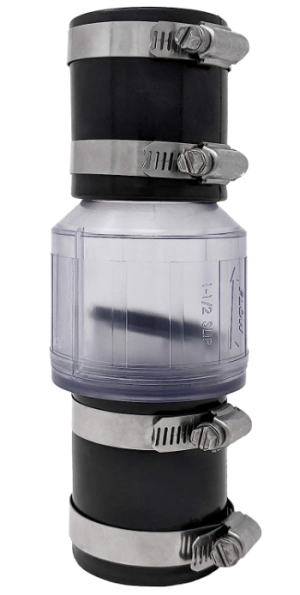
Solids are well macerated by the foot and joker valves. Paper is shredded. What comes out of the skin fitting is brown soup.
Indeed, but most blockages are initiated by carbonate accumulations. My holding tank was once blocked by a flake of it that fell off one wall of the tank.Understood .... hopefully remains like that ...
Blockages still occur downline from such valves ... only have to check odd forum posts ....