Tranona
Well-Known Member
Yes, your engine is pre CE marking rules so won't have the same ID plate as newer engines. Pretty sure Beta will be able to tell if it is one of theirs.




My nic26 sail no. Is 1102Y ..... Close but no idea why. Did people really race in them?I think I'm right in saying that the RYA will allocate sail numbers, primarily for racing id. I believe a builder or class can request a block of numbers which they then allocate. Whether your number relates to class/builder/yard or just your boat I don't know.
). We're needing to renew our exhaust system. The current one has splitting hose and an old, worn out "Elastomuffle" silencer.
Either the NLP type Jamie has if you have enough depth below the exhaust outlet to get the necessary 30cm fall of pipe or the WLOK type also from Vetus. Make sure you get the right hose sizes for your engine.Another new question (sorry
Bearing in mind the cramped nature under the cockpit sole on a Nic 26, I was wondering what others may have done when needing to replace exhaust bits.
We've been looking into various Vetus muffler/silencer/waterlocks etc. What do other think?
TIA
On my Folkboat, had a S/S manifold made by a guy near Inverness, it then has the flexible exhaust hose, up to a fairly standard type water block, and out of the back of the boat.
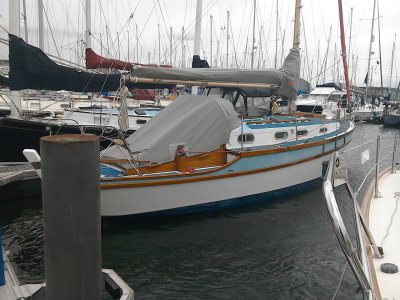
By coincidence, I do have a Vetus waterblock that is for sale in the for sale section of YBW...., plus I'm Inverness based on pontoon E opposite you guys, as seen in your photo from post #25!
That'd be great. Many thanks.I'll leave the unit in my cockpit over the weekend, so you can actually have it hands on to see if it suits.

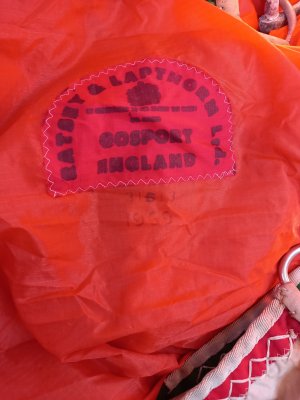
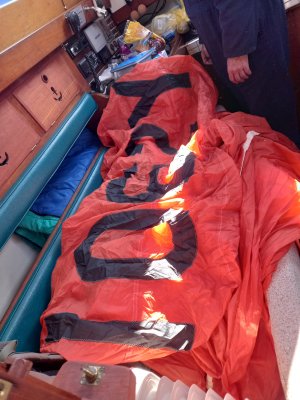
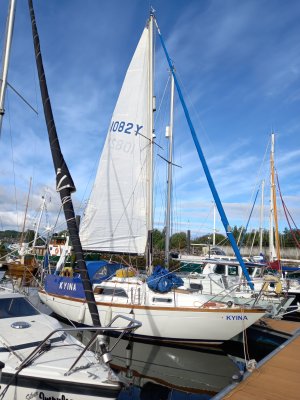
We checked out the spinnaker the other day, which has the year 1969 stamped on it - and the number 1062Y.Ok, a new question. We hoisted the mainsail for the first time yesterday. Its number is 1082Y. Is this something to do with Nicholson's, Burnes Boatyard, or just a sail that happened to fit? View attachment 160291
That's great. Thank you for the advice.It is probably either teak or mahogany. The former is often left bare. some people use teak oil, but it is pretty much a waste of time and effort as it both attracts dirt and then disappears in a short period of time meaning you are forever replenishing.
If you want a good finish and protection then a proper coating after stripping back to bare wood is the way to go. there are essentially 3 different types of coating. Traditional varnishes which are single pot and come in various different forms that work by building up coats to seal the wood from moisture. Second are 2 pot coatings which form a hard impervious shell on top of the wood. Last and becoming more common are porous woodstains, mostly carried over from the construction industry although all the main manufacturers have products of this type aimed specifically at the yacht market. These are mostly single pot although there are 2 part (one after the other) products available. Application methods vary. Some are simple brush on and leave to dry, others more labour intensive with multiple coats at set intervals. All require somewhat similar preparation of back to bare wood although it is possible to recoat sound existing surfaces with some products.
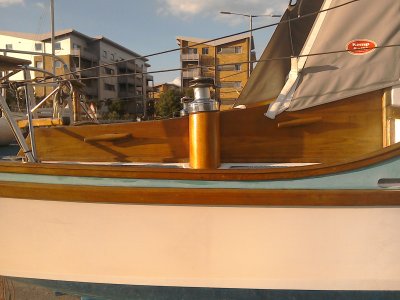
You will find advocates of all of these. Personally I use woodstains as the best balance of cost/effort/appearance and durability. The simplest product is International Woodskin which I use, but it does have downsides, particularly the less than shiny finish and shorter life on horizontal surfaces. Photos show the teak trim on my boat