Nick_H
Well-Known Member
I was going to add this to Hurricane’s tender thread, but I thought Smart Tabs may be of interest to quite a few people, and it will be easier to find in its own thread.
A bit of background, which you can of course skip if you just want to know if the smart tabs work! My previous Zodiac tender dissapointingly fell apart over the summer at only 8 years old, so I needed a new one. I’ve always preferred tenders with a jockey console because the drivers weight is further forward so they plane easier, and in choppy sea you can stand to absorb the bumps with your knees. They do have the downside though that passengers have to sit on the tubes all the time, which can mean a wet bum, and there’s not much knee room for them between the inside of the tubes and the console.
The family wanted a Jet Rib, but the 285 is too small, and the 325 is too heavy for my crane, plus older one’s seem temperamental and newer one’s are very pricey. I prefer an outboard anyway as they seem to stand much more abuse, for example I only serviced my previous Honda 30 once in 8 years and it ran fine, although it was a particularly gutless motor.
So, I ended up looking for an outboard powered RIB with bench seating, and settled on the Brig Eagle 340. I like the way the steering console provides lots of knee room (I’m 6’3”), but still puts the wheel in a comfortable driving position so you don’t need to lean forward to drive it.
It’s officially rated for 35hp, but of course no-one makes a 35 and I wanted to be sure I had enough power for pulling adult skiers and wakeboarders, and large towable inflatables, so I asked the French dealer for a quote with a 40 Evinrude (because it’s a 2-stroke) or Suzuki (because it has a large displacement for its weight, so more low end torque). Both are OK weight wise on the transom.
The dealer offered me a Suzuki 50 for almost the same price as the 40, and it’s the same weight, so I decided to go for it, on the basis that it’s better to have the extra power and not use it, than not to have it and find you need it. The total price new was about half the cost of a 325 jet rib.
The boat and engine were in stock, so it all arrived quite quickly in time for a lads weekend I have at the end of each summer. We did some skiing and wakeboarding behind it and the boat runs very nicely at speed, and the engine is very smooth, quiet and powerful.

I did have one major issue though. Due to the seating position at the back, with only the driver on board the bow rise to get on the plane was excessive, and the bow would start to rise even at very modest pootling speed, which wouldn’t be great for the morning pootle into harbour to get fresh criossants. I looked around for a solution and found the smart tabs made by Nauticus in the US.
Smart Tabs
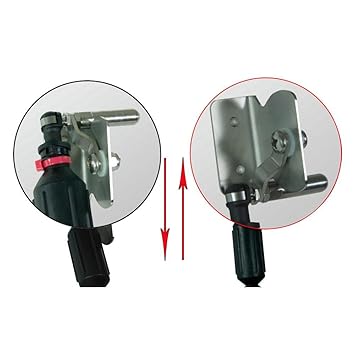
These tabs have gas struts which push the tabs down at low speed to help planing, in just the same way as powered tabs in the lowered position. As boat speed increases, the force of the water pushing the tabs up also increases and so the tabs start to lift. The gas struts are sized so as to lift completely at higher planing speed. Of course they will always be applying downward pressure, but you can use the trim control on the outboard to counter this so there’s no tendency to dig the nose in at higher planing speeds.
They come in two types, the first generation metal tabs, or the new generation plastic ones. The newer one’s look better IMO, but due to the shaped transom on the new RIB I knew I was going to have to modify them, so I had to go for the original metal ones. I couldn’t fit them as intended, so had to use different hinges and attach them to the underside of the hull. I also had to create an angle on the leading edge of the tabs, so that at planing speed they would sit parallel to the water flow. The rest of the install was straight forward, and I got to try the RIB again with them fitted this weekend.


The great news is they work really well. Bow lift before planing is substantially reduced, minimum planing speed is a fair bit lower, and they even have quite an effect at low speed, so I can pootle into harbours at a more sensible speed without the bow rising too high. They even seem to provide some benefit at high speed as the RIB seems more planted. I’m really pleased with them.
I need to do some more fine tuning, by fitting spacers between the hinges and tabs to lift them by 10mm as they create some spray at the moment. I also want to try the different fixing holes as these change the characteristics of the tabs. If you move the lower attachment point closer to the hinge, then the effect is reduced, further away and it is increased. I've also found the tender still runs a bit better with some weight in the front, so I want to look at moving the start battery into the bow locker, as this would move 15 kgs from stern to bow.
If anyone has issues with bow lift on their tender then I would certainly recommend trying these
A bit of background, which you can of course skip if you just want to know if the smart tabs work! My previous Zodiac tender dissapointingly fell apart over the summer at only 8 years old, so I needed a new one. I’ve always preferred tenders with a jockey console because the drivers weight is further forward so they plane easier, and in choppy sea you can stand to absorb the bumps with your knees. They do have the downside though that passengers have to sit on the tubes all the time, which can mean a wet bum, and there’s not much knee room for them between the inside of the tubes and the console.
The family wanted a Jet Rib, but the 285 is too small, and the 325 is too heavy for my crane, plus older one’s seem temperamental and newer one’s are very pricey. I prefer an outboard anyway as they seem to stand much more abuse, for example I only serviced my previous Honda 30 once in 8 years and it ran fine, although it was a particularly gutless motor.
So, I ended up looking for an outboard powered RIB with bench seating, and settled on the Brig Eagle 340. I like the way the steering console provides lots of knee room (I’m 6’3”), but still puts the wheel in a comfortable driving position so you don’t need to lean forward to drive it.
It’s officially rated for 35hp, but of course no-one makes a 35 and I wanted to be sure I had enough power for pulling adult skiers and wakeboarders, and large towable inflatables, so I asked the French dealer for a quote with a 40 Evinrude (because it’s a 2-stroke) or Suzuki (because it has a large displacement for its weight, so more low end torque). Both are OK weight wise on the transom.
The dealer offered me a Suzuki 50 for almost the same price as the 40, and it’s the same weight, so I decided to go for it, on the basis that it’s better to have the extra power and not use it, than not to have it and find you need it. The total price new was about half the cost of a 325 jet rib.
The boat and engine were in stock, so it all arrived quite quickly in time for a lads weekend I have at the end of each summer. We did some skiing and wakeboarding behind it and the boat runs very nicely at speed, and the engine is very smooth, quiet and powerful.
I did have one major issue though. Due to the seating position at the back, with only the driver on board the bow rise to get on the plane was excessive, and the bow would start to rise even at very modest pootling speed, which wouldn’t be great for the morning pootle into harbour to get fresh criossants. I looked around for a solution and found the smart tabs made by Nauticus in the US.
Smart Tabs
These tabs have gas struts which push the tabs down at low speed to help planing, in just the same way as powered tabs in the lowered position. As boat speed increases, the force of the water pushing the tabs up also increases and so the tabs start to lift. The gas struts are sized so as to lift completely at higher planing speed. Of course they will always be applying downward pressure, but you can use the trim control on the outboard to counter this so there’s no tendency to dig the nose in at higher planing speeds.
They come in two types, the first generation metal tabs, or the new generation plastic ones. The newer one’s look better IMO, but due to the shaped transom on the new RIB I knew I was going to have to modify them, so I had to go for the original metal ones. I couldn’t fit them as intended, so had to use different hinges and attach them to the underside of the hull. I also had to create an angle on the leading edge of the tabs, so that at planing speed they would sit parallel to the water flow. The rest of the install was straight forward, and I got to try the RIB again with them fitted this weekend.
The great news is they work really well. Bow lift before planing is substantially reduced, minimum planing speed is a fair bit lower, and they even have quite an effect at low speed, so I can pootle into harbours at a more sensible speed without the bow rising too high. They even seem to provide some benefit at high speed as the RIB seems more planted. I’m really pleased with them.
I need to do some more fine tuning, by fitting spacers between the hinges and tabs to lift them by 10mm as they create some spray at the moment. I also want to try the different fixing holes as these change the characteristics of the tabs. If you move the lower attachment point closer to the hinge, then the effect is reduced, further away and it is increased. I've also found the tender still runs a bit better with some weight in the front, so I want to look at moving the start battery into the bow locker, as this would move 15 kgs from stern to bow.
If anyone has issues with bow lift on their tender then I would certainly recommend trying these