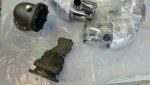
New exhausts

Portofino

Well-Known Member
Joined
10 Apr 2011
Messages
12,443
Location
Boat- Western Med
Visit site
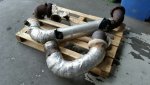
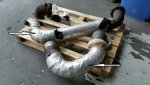
When I bought it winter 2014 the exhausts were repaired as part of the negotiations.
Removed by the Apreamare yard near Naples Just welded up and refitted .
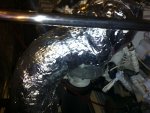
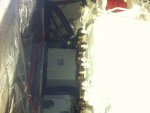
F3A497DD-1F5A-4F70-90A0-F139FAFAEFE4.jpeg
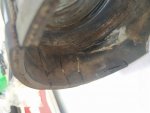
^^ sorry pic is an old one and one it’s side .
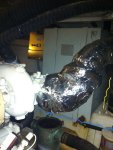
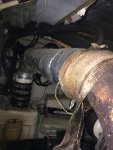
CC3F0661-2797-4C42-A8CC-BE638218EB04.jpeg
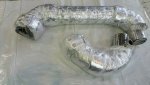
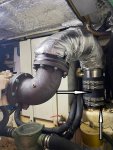
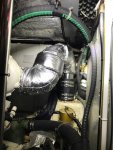
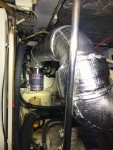
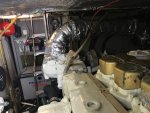
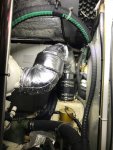
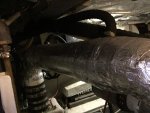
They were covered in silver heat proof wrap over a cloth heat bandage .
E34FCA26-608C-47F5-A9D0-E7590A2D13E4.jpeg
19A88233-C90D-40F9-B218-D395ECD6BB67.jpeg
They go into a underwater exhaust box , of which the top part where they fit is above the WL pic below .
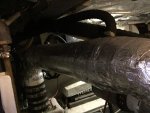
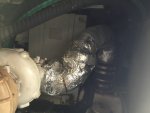
E7138AF4-E617-4319-A27A-1603AC4D87F6.jpeg
0CBC3856-53F7-472D-BE85-BD4B225575A4.jpeg
A few years later the aluminium foil discoloured so I took it off and replaced it simultaneously checking the integrity.All seemed well .6723E29C-0099-4099-AD6E-C49F38BF3F31.jpeg
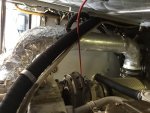
Then last season I noticed a exhaust whiff , when entering the ER after returning from a run out .
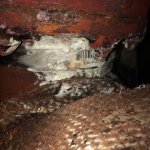
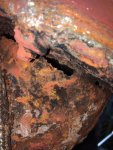
Further investigation reviled a hole in one ( the port ) elbow .
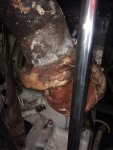
BD031C22-0679-4F06-9BA1-75F9F0DFE0E5.jpeg
2AA61669-F56F-4EEE-8960-E1CCAB98F234.jpeg
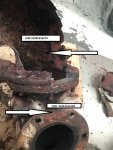
Note the soot under the bandage material and the state of the metal .
B9623385-83CA-4B4F-A23C-F5AFFE49B2C5.jpeg
Bit of poking about ......oh dear ! ^^^
TBC
 
Cont .
05A56B31-1042-4A23-BCFC-698584D7C72E.jpeg
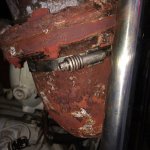
I used theses large clips + regular auto repair paste to temporarily patch up .Even bodged up a srainless steel plate from a cake knife ( Shhhhh s don’t tell the Admiral where hete knife went :) ) .It all held out .
6B904C6E-80AC-430B-97AD-FCE6DB037D0A.jpeg
August in the Med is tricky getting hold of engineers and when I finally got hold of a local accredited MAN guy he suggested it would be a winter job .
December comes around .
A17EA5D1-0074-47AA-B3F3-9BE80D1F7633.jpeg
675ED7AB-7489-42AC-9A88-628AD5FF86BE.jpeg
E1BD4FA7-1C7E-45BD-B107-52D5E008BB94.jpeg
0128B6A8-E4FF-4839-9B3E-3E64E15436E4.jpeg
They got them off and two actual parts of the engines , Convention has it the builder is responsible for the exhaust and the engine manufacturers responsible for up to the exhaust turbo flange .One flange clearly had to come off as it s elbow bolts were fast .
Parts sent away to a specialist marine manufacturer.

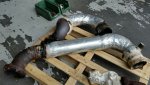
What came back was below .
C712B542-C4A9-411C-80B4-16F12ADE1ADD.jpeg
FFA1D7A2-AC8E-415D-9FEB-80E298FA394F.jpeg
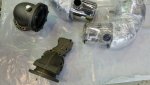
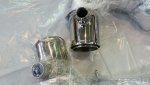
New parts , one for each engine .The rest in inox .
632FA56C-1685-4386-A26B-E569FC2538FD.jpeg
E0CB1C80-E2FF-425F-B9E8-BB7A08ABEEA3.jpeg

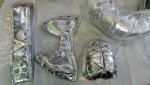
New lagging as well custom made .^^
TBC
 
D7531DB3-2E59-4486-8D58-43308D635FA0.jpeg
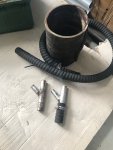
The rubber pipes that connect the exhaust to the top of the underwater box had perished / cracked on further inspection at the re fit ,
C585558E-8D44-4891-AC1F-5B5B096A5432.jpeg
So time to replace theses and all the metal Y joints as theses showed signs of corrosion.Also a few water pipes “ while in there “
71EECC14-9221-425C-A7DD-C3AF8525A536.jpeg
This part .( STB )
883593A7-EF63-42E2-825D-23739342D503.jpeg
Port being reassembled.Some new small pipes and fittings .The large white plastic pipe is the fart pipe going towards the stern .
All those yellow / transparent, 4 are bilge pumps and cockpit drains going into a metal manifold which passes rearwards towards the stern .It ends up underwater discharging out of sight .So no pepper pot holes in the lateral aspect of the hull .
Passes through a gland in the rear ER bulkhead as each compartment is water tight .
Same on the other side .

402225BD-47B0-4E19-A212-82562DC64DD0.jpeg
STB finished .^^
614076F2-3662-4523-9D1C-E463A36F1405.jpeg
Port finished .
691B3B9E-89C1-4FBA-B736-6721977258AF.jpeg
Another view of port with the new flange ( bright white new looking ) .

All in all it looks a top job for the winter .
They want to sea trail it , waited for the annual lift / AF + clean bottom etc .

It just the diesel fumes + salt water + temps = nasty cocktail of acids which with time eat metals even stainless I am told .
Inox or stainless last longer of course but nothing in the marine exhaust environment lasts for ever .

They say you ( or your tech ? ) should periodically peel back or remove the lagging to inspect any how .
On the hoof repair s can be successful using clamps, wire , paste and SS plates .
 

Attachments

  • 0BDC39F9-7541-41D7-A932-FBA0DB1EB89C.jpeg
    0BDC39F9-7541-41D7-A932-FBA0DB1EB89C.jpeg
    77.8 KB · Views: 8
Parts sent away to a specialist marine manufacturer.
CoFeMe, possibly?
In Italy, that's the most well known OEM supplier of exhausts, also to Ferretti Group among others.
I know your boat is pre-FG, but I'd be surprised if Amati used anything else.

PS: I see your point on the raw water pump thread that the BodgeFlow wouldn't have made a big difference with the seal.
But try to argue that it wouldn't have made a difference to your completely rusted elbow above, if you can! :D
 
CoFeMe, possibly?
In Italy, that's the most well known OEM supplier of exhausts, also to Ferretti Group among others.
I know your boat is pre-FG, but I'd be surprised if Amati used anything else.

PS: I see your point on the raw water pump thread that the BodgeFlow wouldn't have made a big difference with the seal.
But try to argue that it wouldn't have made a difference to your completely rusted elbow above, if you can! :D
Yes that firm in Turin with some top grade inox .
Not sure how original the replaced ones were tbh .They were not inox and had evidence of old repairs welded up .

Your second point it’s the nasty acids the products of seawater + diesel exhaust .It dissolves / corrodes / destroys all metals with time .Inox just last longer , hopefully a meaningful longer time ? However it does dissolve eventually with the nasty nitrous + sulphuric acid derivatives .
Not to be confused with electrolytic corrosion a fine nuance I know .

Suspect initially a pin hole leak or failed weld ( previous repair ?) and sea water seeped out under the bandage , heat would have dried it at rest or even running .
Still can’t see how a 10 min low pressure low rpm tick-over flush with fresh water would have prevented this .
Its an inevitability .
The new lagging is easy to remove for periodic inspections , kinda held on with buttons .
 
You got your money's worth out of the old ones for sure, everything there is consumable really, it's just a matter of what timescale.
 
Its an inevitability
I'm not saying it isn't, but as penfold just said, it's a matter of timescale.
If given a choice between leaving the internal steel surface of the exhaust covered with salt 24/7 through their whole lifespan, or flushing them with freshwater before every long period of lack of usage, the choice seems an easy one to me.
Whether the useful life will only increase by 1% or it will double, I really don't know.
But pretty sure it won't get shorter!
 
The accelerated corrosion happens when it's warm and wet, so flushing at shutting down time probably won't help much. You could make exhausts out of cunifer if you want them to last longer! :p
 
interesting thread, well done PF.
Two Qs:
A. assuming admiral is not peaking over your keyboard, what was the price for elbows and SS exhaust bits?
B. if exhausts were un-lugged, what would be the most important disadvantage (other than heat in the e/r - which cannot be much tbh when you have a over a ton of iron in there anyway...)

Second Q is because I'm thinking that having them ss pieces visible does pay off as you notice the tell tale signs of corrosion much faster. Never bothered lagging my custom ss exhaust elbows and seeing that I wont be in a hurry to do so :)

V.
 
interesting thread, well done PF.
Two Qs:
A. assuming admiral is not peaking over your keyboard, what was the price for elbows and SS exhaust bits?
B. if exhausts were un-lugged, what would be the most important disadvantage (other than heat in the e/r - which cannot be much tbh when you have a over a ton of iron in there anyway...)

Second Q is because I'm thinking that having them ss pieces visible does pay off as you notice the tell tale signs of corrosion much faster. Never bothered lagging my custom ss exhaust elbows and seeing that I wont be in a hurry to do so :)

V.
A - The exhaust pipes were €4800 a pair inc the lagging sent out to a specialist made in quote translated below .

“works that will be carried out by the specialized center:
complete reconstruction of the tubing of the exhaust gas system including the stainless steel risers with perforated connection flange, supply and installation of shaped and removable heat insulation. The pipes will be in AISI 304/321 steel and the final riser will be in AISI 316 steel”

A quick google of the various SS grades and you soon go down various rabbit holes , briefly it’s a combo of resisting acid attack , heat attack and something to do with grain density and crevice corrosion.The three interact .

I,am a trusting kinda guy as assume professionally if find the right people they know what they are doing ? I hope ?.

The two other bits ( on reading the invoice / quote again ) were for the port engine .
The STB engines elbow , the shorter one indeed the exhaust seemed pretty ok , it just made sense to do a pair ,That elbow was replaced as well rather than wait a few more years .

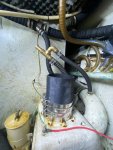
It was the port engine that leaked , one of the water pipes unions on top had seeped, the nearest in this pic along with the underneath of a flange as shown earlier .
3E044BE9-AA66-44B2-BCB7-F0C9C27D4F00.jpeg
Theses bits in grey OEM MAN parts were €1800 and €1200 not sure which was which .I guess normally theses could have been avoided if I had acted sooner , any how all new now .
251220FA-BFE8-4C19-AEB3-8A7CE1F7A0DB.jpeg

Q2 - Yes you would have thought leave the lagging off ? But this easily unbuttons for inspections and tbh from an efficient pov , the general running and longevity of other stuff in the ER I guess anything to keep ER temps down is a blessing .
Exactly how effectively the lagging is to meet that end remains to be seen .

All prices ex tax , labour , and small fittings gaskets etc ,

Total came in around €14 K .I have hardly spent anything except annual services in 6 seasons and as I said I knew the risers were on there last legs when I bought it .
I do not mind putting this into the boat it’s visible and dare I say it should the time come to sell I suspect I would get the majority back .As it happens the boats value has risen anyhow .No man maths needed , or indeed recent Covid staycation factor .

Mentally when spending large ish amounts on boats or indeed rising value classic cars i use this adage .
You are just moving one investment class asset , cash in this case into another , boat in this case .Cash is doing nothing in a bank theses days .
This is over and above the seaworthy ness enjoyment , piece of mind factor and residual valve equation .

Partly the reason we moved across to Italy I knew I needed some heavy winter jobs doing and would be best placed , figured i did not want anything to do with the French at the moment :) .Rather spend it in Italy tbh .Personal choice that one .;)
 
Last edited:
The accelerated corrosion happens when it's warm and wet, so flushing at shutting down time probably won't help much. You could make exhausts out of cunifer if you want them to last longer! :p
Again, I never denied that.
But time is always a component, in any corrosion process.
I believe there must be some contribution to it, albeit possibly to a much lesser extent, also while the engines are off.
After all, it's during that timeframe that salt remains attached to the metal, because it can't obviously deposit anywhere while they are running.
And depending on how religious you are with fresh water flushing after usage, at least THAT corrosion component can be drastically reduced.

The proof of the pudding is something that I heard from several mechanics, who all agree that boats moored along a river suffer much less corrosion just about anywhere, exhausts included.
And I'm not talking of boats also USED in fresh water, for which the advantage is obvious, but of boats normally used at sea, and "automatically" flushed upon return to their river berth.
In fact, it's common practice among these boaters to run genset and airco while coming back, which makes good sense.
A BodgeFlow precursor, so to speak... :cool:
 
Again, I never denied that.
But time is always a component, in any corrosion process.
I believe there must be some contribution to it, albeit possibly to a much lesser extent, also while the engines are off.
After all, it's during that timeframe that salt remains attached to the metal, because it can't obviously deposit anywhere while they are running.
And depending on how religious you are with fresh water flushing after usage, at least THAT corrosion component can be drastically reduced.

The proof of the pudding is something that I heard from several mechanics, who all agree that boats moored along a river suffer much less corrosion just about anywhere, exhausts included.
And I'm not talking of boats also USED in fresh water, for which the advantage is obvious, but of boats normally used at sea, and "automatically" flushed upon return to their river berth.
In fact, it's common practice among these boaters to run genset and airco while coming back, which makes good sense.
A BodgeFlow precursor, so to speak... :cool:
It’s a complex subject but your basic salt corrosion is a tiny factor in the degradation of marine exhausts .
Apparantly it’s down to the acid by production of the sea water hitting the hot gasses ( fits in with your fresh water river use signs ) AND crucially what’s happening under the cake .
The cake is the sooty deposits at a granular level that holds the nasty acids in contact with the metal grain structure.
As I said even stainless steel is eventually undone , particularly the welds .

So pootling apparently is a no no in terms of exhaust longevity as this cake layer thickens up and the concentration of nasties held increases .Counter intuitive I know ,

I do not think a Idle speed 10 min fresh water flush is gonna make a 8uggers difference to what’s laying under the “ cake “:
You are just steaming the top surface temporarily as remember it’s open to the sea via its UW exit .So 1/2 hr after your flush the atmosphere is salty , back to sq 1 .

Happy to repeat “ there is an inevitability “ to your metal destruction of your diesel marine exhausts .

Lets leave it at that as I often get criticism for getting too technical.Guilty as charged guys . :)
 
Last edited:
Because of the cost not many want it, so few bother to set up to fabricate it.
[/QUOTE

It works out cheaper in the long term and is worth doing and I have access to inconel tube and my own TIG welder and if you can do it yourself it saves even more.
 
Last edited:
Apparantly it’s down to the acid by production of the sea water hitting the hot gasses ( fits in with your fresh water river use signs ) AND crucially what’s happening under the cake .

No it isn't, this is a small factor, its the acids produced by the combustion process which causes the greatest problem and if you dissolve them in sooty deposits from combustion you effectively get a soot and acid paste inside your exhausts.
 
Top