nasa battery monitor

pvb, I think you should really give up.
The arguments for NASA are really difficult to comprehend.
Ppl think that a rough guestimate of battery juice left is ok compared to victrons accurate values.
ppl think that there absolutely no need for a relay configured to do all sorts of things if too many things are left on and ppl left, or the solar controller failed and batteries are going to be foobared, due to having consumptions on that need to be turned off manually, etc.
ppl also think that's is ok to manually reset the meter when you think it's fully charged rather than doing it itself even when you're having your afternoon siesta and the sun is burning over your coachroof with the solar panels finishing off the charge on your batteries.

I've no probs with NASA even bought new a wind thing, and had for a year an AIS3, all fine.
But for 30quid or so you get so much more that it's difficult to say no (at least that's what I thought, but I'm obviously wrong)

I went to Victron based on all the reports I read, the fact that it's a excellent piece of engineering, designwise it's miles ahead (counts for me, sorry) and I can do the BT, the programmable relay, and lately NMEA2K, which means it will integrate nicely with the plotter on the f/b (BMV is on the lower helm)

cheers

V.
 
NMEA2K. For me that's the Victron's killer feature.

I don't have to go downstairs and peer at the battery monitor and throw up, nor do I need to dedicate space on the binnacle to it. It's just a preset page on the i70s. "Been sailing a while, we left the fridge on, how's the battery doing?" *press a button* "Oh, it's still got 60% in, that's fine." *press button again, i70s goes back to displaying AIS*.

OT, can you point to an online shop that sells the N2K cable please? Cannot find any!

cheers

V.
 
We're obviously in the minority! I think most people think that a battery monitor is a voltmeter.

Peter - I was looking at the webs site and the Victron monitor. As far as I can see it only displays one bit of info at a time, with you having to scroll through the display to see amps. The NASA BM1 shows these on the main display all the time, unless you switch to cumulative.

I remember looking at the Victron and discounting it because of the basic single item display. I think its essential to see volts and charge/discharge together.

Glad I bought the BM1 and did not buy the inferior display product. It really does not make up for all the other attributes. My BM1 is now 10 years old.
 
My Victron is mounted near the chart table, i rarely look at it. It is connected, via a USB cable, to the onboard computer, as is the Victron solar controller. I can look at the screen on the bulkhead and see at a glance all of the data from both devices, as well as a wealth of historic data. The built in relay triggers a 12v/240v relay at a preset voltage, to turn the mains charger on if the batteries get low. During the Summer the solar panels yield is more than sufficient for my needs, but in Spring or Autumn there are times when they do not provide enough power, it is inefficient to leave the mains charger on all of the time, as you can waste potential solar power, the relay is very useful for this.

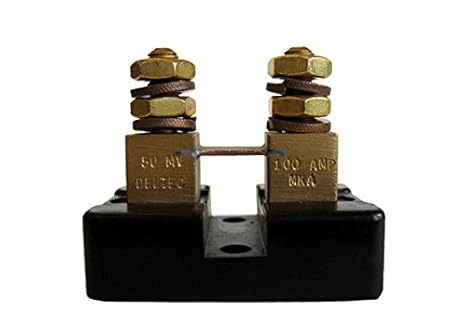
NASA shunt :
41Brj3nDgFL._SX466_.jpg


Victron shunt :
Victron-Energy-500A-50mV-Shunt-500x500.jpg


Spot the differences ?

What do you suppose happens if the shunt fails ?
 
Last edited:
I remember looking at the Victron and discounting it because of the basic single item display. I think its essential to see volts and charge/discharge together.

If you don’t have networked instruments I guess that’s a concern. NMEA2K is really quite mature tech now tho.
 
Last edited:
If you don’t have networked instruments I guess that’s a concern. NMEA2K is really quite mature tech now tho.
So I have to display it on an always on screen somewhere on the boat - taking constant amps...... So whats wrong with the display on the NASA - always on - with B all amps being used to see how much you have left - or to charge if your screen has discharged your batteries on account of being on all day!

Nah - KISS
 
So I have to display it on an always on screen somewhere on the boat - taking constant amps...... So whats wrong with the display on the NASA - always on - with B all amps being used to see how much you have left - or to charge if your screen has discharged your batteries on account of being on all day

I think you misunderstand. The NMEA2K network does not need to be powered up for the Victron to do its thing. However, if it is then the battery status is written to it for display at the helm.

If the boat is at anchor or in her berth, then the helm isn’t going to be powered up. It’s only generally powered up when I’m sailing, at which point I don’t want to go below to check the battery monitor.
 
I think you misunderstand. The NMEA2K network does not need to be powered up for the Victron to do its thing. However, if it is then the battery status is written to it for display at the helm.

If the boat is at anchor or in her berth, then the helm isn’t going to be powered up. It’s only generally powered up when I’m sailing, at which point I don’t want to go below to check the battery monitor.

I dont misunderstand at all! You have just confirmed that I am really happy to have bought the BM1. Having to run a screen that uses amps just to see your charge/discharge and voltage is not my idea of useful. I agree that it is useful to be able to have an additional display, but when its not switched on at 8 in the morning I want to see at a glance when I walk past the chart table what the volts and amps are. That tells me all I need to know.
 
I dont misunderstand at all! You have just confirmed that I am really happy to have bought the BM1. Having to run a screen that uses amps just to see your charge/discharge and voltage is not my idea of useful

But you don’t. The instruments are already on when sailing. When they aren’t, you can use the smaller display on the Victron head itself, which is always on. Like yours, it’s at the chart table. Unlike yours, the fact it’s networked means I don’t have to go in the cabin and risk calling for huey to check it underway.
 
Obviously 2 wildly differing trains of thought here. Those who like to play with integrated computers, tablets etc and have lots of info at their finger tips (quite a few of whom don't seem to do much sailing) and those of us who just like to see at a glance what voltage the batteries have and how much current going in or out. Victron blue tooth is good and I can monitor my solar and batteries on tablet when I want to but it certainly isn't a priority.
 
If you are one of those who dismiss all of the features of the better monitors as a waste of time and you ignore the SOC readout (because it's rubbish), (and if that's all you want then that is fine, your choice) then all you really want is a voltmeter and ammeter. Why spend around £100 for a cheap battery monitor, why not buy something like this https://www.ebay.co.uk/itm/DC-10A-5...hash=item1a34bbc866:m:mynnSOklpGr8xey0QE57hOA

Serious question.
 
If you are one of those who dismiss all of the features of the better monitors as a waste of time and you ignore the SOC readout (because it's rubbish), (and if that's all you want then that is fine, your choice) then all you really want is a voltmeter and ammeter. Why spend around £100 for a cheap battery monitor, why not buy something like this https://www.ebay.co.uk/itm/DC-10A-5...hash=item1a34bbc866:m:mynnSOklpGr8xey0QE57hOA

Serious question.

Because it does not read charge and discharge amps would be one reason
It appears that 10amps passes through the device itself so will therefore need relatively heavy/short wiring between its self and its shunt.

Many people who do not want all of the features of the MORE EXPENSIVE monitors seem to be very happy with their choice of a Nasa battery monitor.
 
Because it does not read charge and discharge amps would be one reason
It appears that 10amps passes through the device itself so will therefore need relatively heavy/short wiring between its self and its shunt.

Many people who do not want all of the features of the MORE EXPENSIVE monitors seem to be very happy with their choice of a Nasa battery monitor.


Might want to go back and read the description again.

Plenty of cheap ammeters out there.
 
Last edited:
Because it does not read charge and discharge amps would be one reason
It appears that 10amps passes through the device itself so will therefore need relatively heavy/short wiring between its self and its shunt.

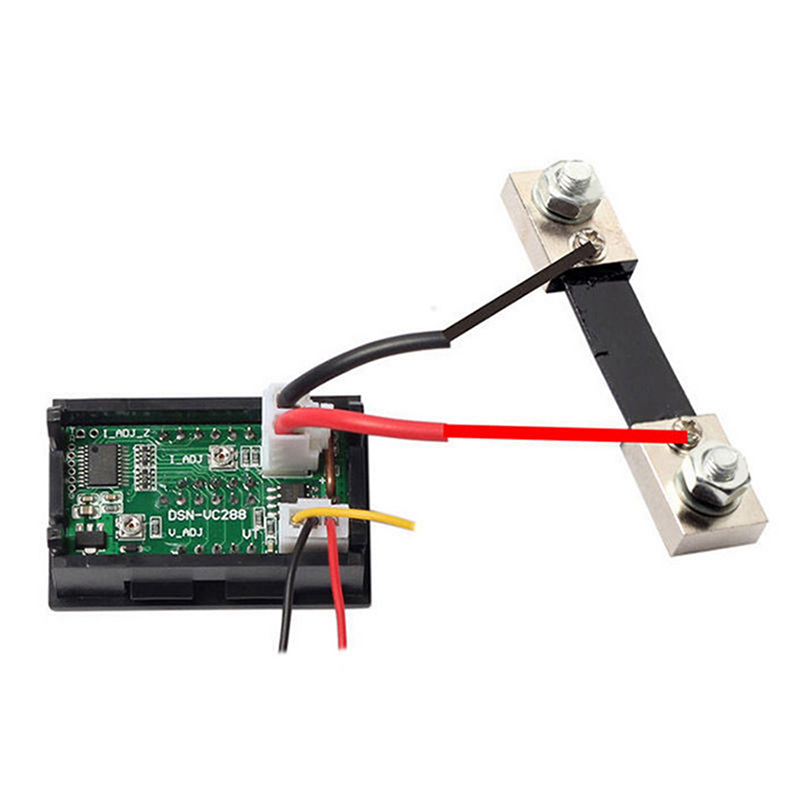
Then select the 50A or 100A version. It uses a shunt through which the 10A (or whatever your battery drain is) passes. Two of the device's wires - thin and long - go to either side of that, and by reading the tiny voltage drop across the shunt it calculates the current flowing through it - and therefore into or out of the battery bank. Still only costs a fiver.
 
Then select the 50A or 100A version. It uses a shunt through which the 10A (or whatever your battery drain is) passes. Two of the device's wires - thin and long - go to either side of that, and by reading the tiny voltage drop across the shunt it calculates the current flowing through it - and therefore into or out of the battery bank. Still only costs a fiver.


The pictures in the link show two short heavy wires connected to the shunt unlike a proper battery monitor such as a BM1 which is connected by relatively long and thin wires to the shunt.
This implies a farily large current flow, presumably upto the 10 amps which the device can measure without a shunt.

YPG9011g09.jpg
 
Last edited:
The pictures in the link show two short heavy wires connected to the shunt unlike a proper battery monitor such as a BM1 which is connected by relatively long and thin wires to the shunt.
This implies a farily large current flow, presumably upto the 10 amps which the device can measure without a shunt.

The pictures also show a label on which the version is marked. You'll see there are 2A, 5A and 10A versions, plus two versions with shunts, 50A and 100A, which according to the photo have 75mV shunts.

This implies a very small current flow for the shunt versions.
 
Top