Motorboat replacement engines project and a bit of a refit.

I've got a keel cavity, its about 2" wide and 12" deep, its a right bugger to keep clean. I've been reading threads about keels and water...

I'd like to fill it in and glass over it. Lead shot expensive. Iron slugs might rust. Foam might get soggy.

My proposal is mix up some resin, add plastic pellets, £5/kg delivered, stir, pour. Small batches to prevent a massive exotherm inferno cracking disaster.

Once filled glass over the top.

Then I can flow coat the bilge for a nice easy wipe clean finish.
Hi Ben, I've somehow missed this thread until now, shame it descended into unnecessary bickering but soon realised it was happening so skipped past quite a few irrelevant posts.

If you do decide to fill the keel do create a sump to enable a bilge pump to be fitted, you'll regret it if you don't. For ease, I think Id be tempted by using good quality foam and then coating it with resin. If eventually it does get water logged (which it shouldn't if properly finished) it would be a relatively easy job to clean out and do again.

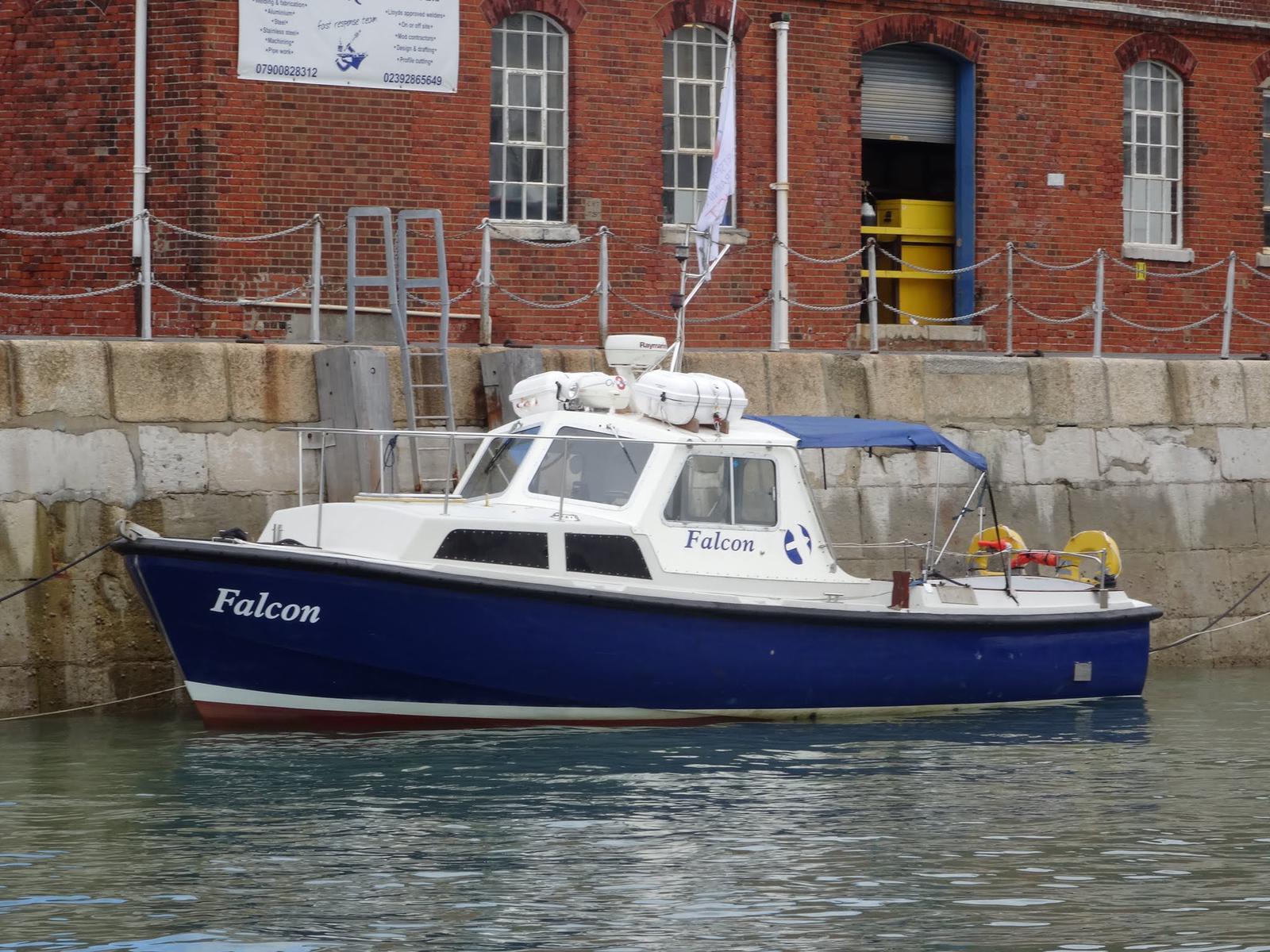
Do you have any pics of the boat? As I've been to Scilly many times, and as you know, was also Dartmouth based for many years, theres a good chance I will recognise her. What caused her to sink before you bought her? And what was her name?

An interesting project, please keep the pics and updates coming.
 
I guess either way will work, as you say, wouldn't like foam in there, I'd always think of it being there and either be worried or annoyed (or both)
how rough is the surface of this cavity when cleaned, and how clean can you get it? I mean clean enough to have some decent adhesion for the resin?
if you go shingles route (guess no asphalt on top layer?), you might as well get a scrap flat piece of an old cutup deck or whatnot from a grp construction (boat?), cut a couple of pieces and "swim" them in resin...
 
Like LJS says a sump is important for a pump to sit in, I'd opt to leave it as a void space though and make up a mold out of plywood or whatever, laminate the new 'bilge' and then glass it into position. Perhaps have a drain plug so the void can be dipped in the event of grounding etc.
 
Do you have any pics of the boat? As I've been to Scilly many times, and as you know, was also Dartmouth based for many years, theres a good chance I will recognise her. What caused her to sink before you bought her? And what was her name?

Ah! Long Pants dear chap. I didnt think to ask you.

She was Grampus in 1999 in Plymouth, went to Scilly and was renamed Falcon, used as Bryher ferry, then around 2004 she went to the Dart as a dive charter boat still Falcon.

IMG-20201008-WA0002-1.jpg
 
Last edited:
I don't see why sand wouldn't work, capped with thin ply and GRP over. This came about when I faced the prospect of removing several hundred kg of resin and punchings round a stern tube. Didn't come to that in the end, but i thought sand, it would keep the whole thing quiet as resin does, fill the space, but easily removed. I used it to fill and level the bilge outside the engine beds. A sealed over ply deck in a dinghy inevitably breathes with temp changes. Air blows out of a pinhole at the top, water comes in through a pinhole at the bottom: better be sure your keel doesn't do the same, or have a drain and bung somewhere.
 
I don't see why sand wouldn't work, capped with thin ply and GRP over. This came about when I faced the prospect of removing several hundred kg of resin and punchings round a stern tube. Didn't come to that in the end, but i thought sand, it would keep the whole thing quiet as resin does, fill the space, but easily removed. I used it to fill and level the bilge outside the engine beds. A sealed over ply deck in a dinghy inevitably breathes with temp changes. Air blows out of a pinhole at the top, water comes in through a pinhole at the bottom: better be sure your keel doesn't do the same, or have a drain and bung somewhere.

I guess sand makes a lot of sense since sand is glass and the boat is made of ....glass!
 
Yes, I know it shouldnt, but plenty of internet discusion suggests that long term it does.

I'm liking the shingle idea, its cheap, heavy and ballast low down is ok, plenty of old wood and steel hulls have concrete ballast.
I used concrete to fill the void in my keel on an old wooden cutter I once owned, she was a bit tender but the concrete helped
I have had ccfoam in my current boat for the last 7 years, it's still fine and hard. People get mixed up with open and closed cell foam in my experience
 
Yes, I know it shouldnt, but plenty of internet discusion suggests that long term it does.

I'm liking the shingle idea, its cheap, heavy and ballast low down is ok, plenty of old wood and steel hulls have concrete ballast.
Why not use concrete? Would you be able to cast it in place in bags so that it could be easily removed if the need arises. Could still glass over the top plus an inspection point just to make sure that it is relatively dry.
 
Use closed cell foam, it shouldn't get soggy
I tried to get closed cell foam. The answer I got was if I made some two pot foam it would be closed cell until the skin got poked through.
Going back to a dinghy deck, I decided it's better to have a void, with a drain bung, for the reasons I gave above, pinholes, temp changes, blow air, suck water.
 
Why not use concrete? Would you be able to cast it in place in bags so that it could be easily removed if the need arises. Could still glass over the top plus an inspection point just to make sure that it is relatively dry.
It's a one off expense, so stainless punchings, loose, or lead in any suitable form if ballast is desirable. Thin ply cap and GRP, easily removed, but I guarantee there will be water after a while.
 
I tried to get closed cell foam. The answer I got was if I made some two pot foam it would be closed cell until the skin got poked through.
Going back to a dinghy deck, I decided it's better to have a void, with a drain bung, for the reasons I gave above, pinholes, temp changes, blow air, suck water.
I used the two pot system. Poured into a bucket and stirred....and poured before it explodes. Filled all the voids the surveyor wanted filled. I got it online from a firm in Exeter, they assured me it could be cut once cured and remain water proof ?
 
I used the two pot system. Poured into a bucket and stirred....and poured before it explodes. Filled all the voids the surveyor wanted filled. I got it online from a firm in Exeter, they assured me it could be cut once cured and remain water proof ?
I would be interested to try it in that case, I have a small boat to refit. I'll make some and sink it in the water butt.
Foam and Fibre in Exeter?
 
Ah! Long Pants dear chap. I didnt think to ask you.

She was Grampus in 1999 in Plymouth, went to Scilly and was renamed Falcon, used as Bryher ferry, then around 2004 she went to the Dart as a dive charter boat still Falcon.

IMG-20201008-WA0002-1.jpg
Aha, yes I do know her and I also knew the chap that ran her onto the rocks just outside Dartmouth. Iirc he used to post on here. Always admired her. You’ve bought a good one, look forward to seeing pics after you’ve finished.
 
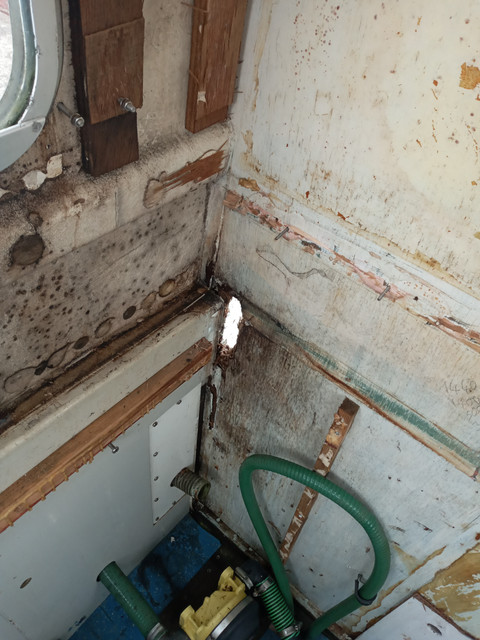
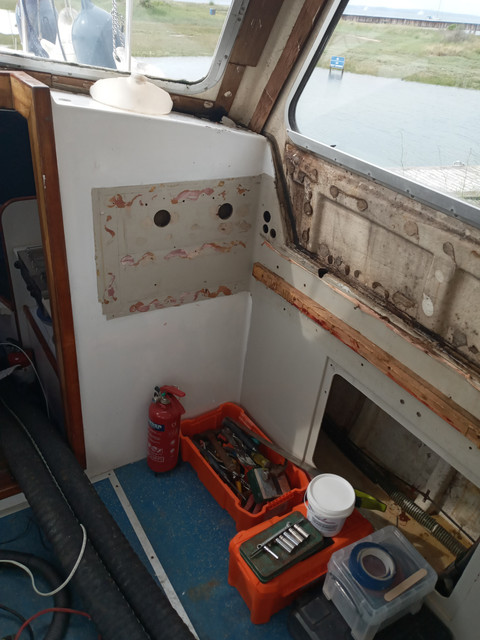
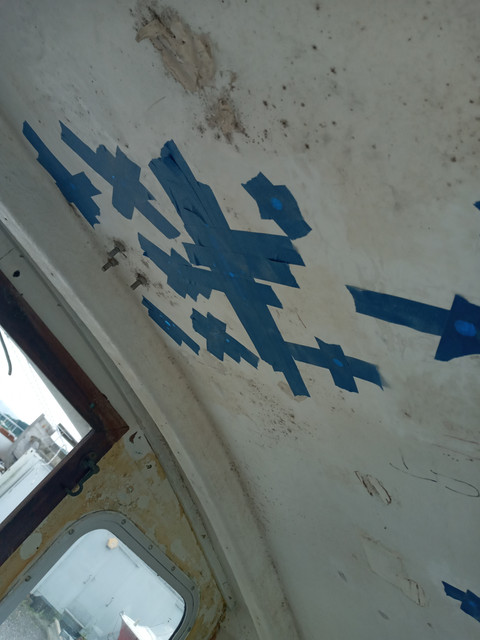
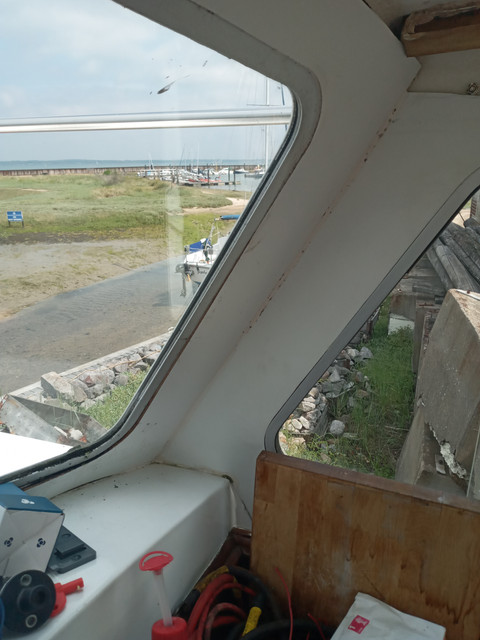
I had a whole day to work on the boat.

I removed a load of redundant fittings in the wheelhouse roof, prepped and epoxy filled 63 holes.

Tore out a lot of soggy plywood caused by leaking windows.

I think one more day of demolition and I'll be putting her back together.


photo upload site
 
Top